
ASTM F67 / F136 Certified Titanium Material for Orthopedic & Dental Implants And Surgical Devices High-precision CP ...
View DetailsNickel Titanium Alloy
A unique class of intermetallic compounds, primarily Nitinol (NiTi), renowned for their shape memory effect and superelasticity, enabling innovative solutions in medical and engineering fields.
Product Overview
Bokang's Nickel Titanium Alloy is manufactured using advanced vacuum arc remelting technology, ensuring exceptional purity and consistent mechanical properties.
Nickel titanium alloy, most notably the near-equiatomic Nitinol (Nickel Titanium Naval Ordnance Laboratory), is a functional material whose properties are dominated by a reversible, diffusionless martensitic phase transformation. Unlike conventional metals selected for static strength, this alloy is chosen for its dynamic, temperature- and stress-dependent behavior.
Its two most significant phenomena are the Shape Memory Effect (SME), where a deformed material in its low-temperature martensitic phase returns to a pre-defined shape upon heating above its transformation temperature, and Superelasticity (SE), where the material can undergo large, reversible strains (up to 8%) via stress-induced martensite formation at a constant temperature above Af. The transformation temperatures (Ms, Mf, As, Af) and mechanical properties are exquisitely sensitive to the exact Ni/Ti ratio and thermomechanical processing.
Technical Support & Documentation
Related Products
Explore our other high-performance materials

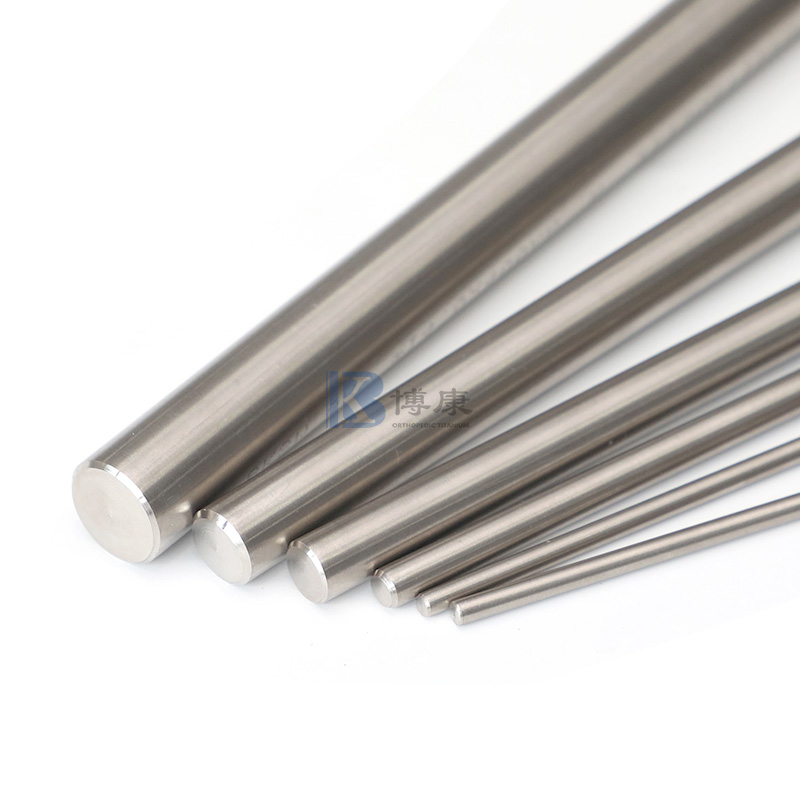
Premium Titanium Round Bars / Rods for Medical, Industrial, and Aerospace Applications Unmatched Quality & Certifica...
View Details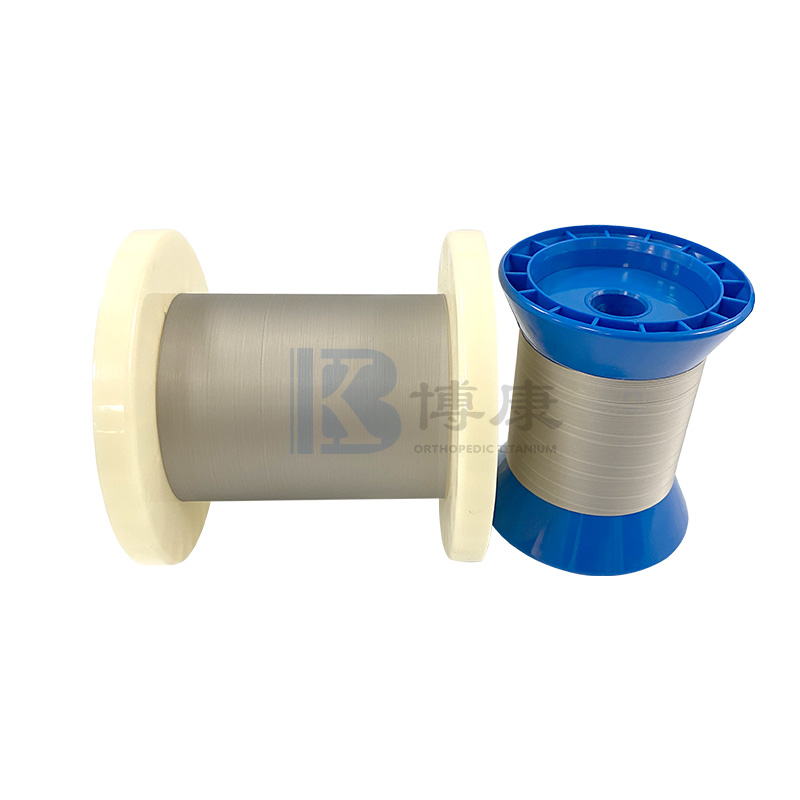
High-Purity Titanium Wire for Surgical Sutures, Staples, and Precision Medical Instruments Bokang offers premium medical...
View Details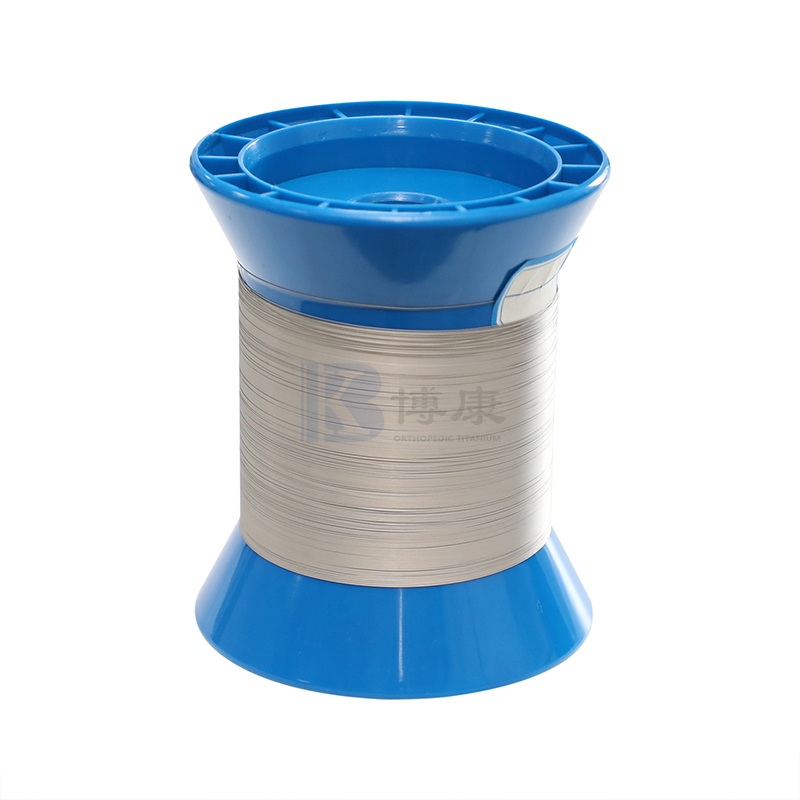
Bokang Titanium offers a wide range of high-quality titanium wires, manufactured through multiple drawing processes. Our...
View Details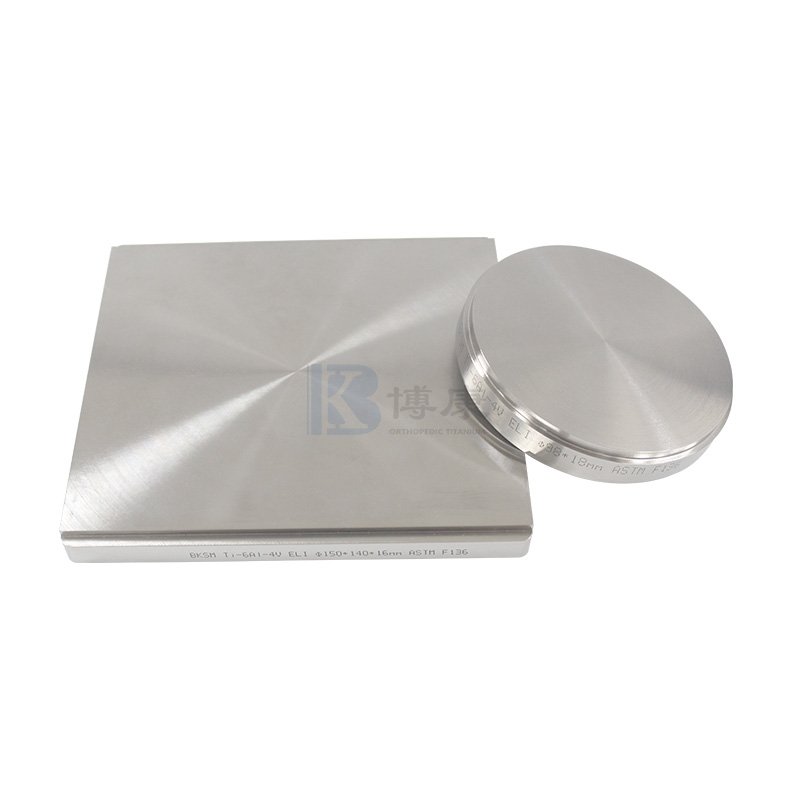
Dental Titanium Discs & Blocks – Medical Grade for CAD/CAM Milling High-quality dental titanium discs and blocks d...
View Details
Titanium Ingot (Ti Ingot) Description Our titanium ingots are made from high-purity sponge titanium and premium interme...
View DetailsTechnical Specifications
Detailed specifications for our Nickel Titanium Alloy
| Primary Alloy | Nitinol (Near-equiatomic NiTi) |
| Key Phenomena | Shape Memory Effect (SME), Superelasticity (SE/Pseudoelasticity) |
| Transformation Temperatures | Typically adjustable between -100°C to +100°C |
| Recoverable Strain | Up to 8% for SE, ~4-8% for SME (one-way) |
| Density | ~6.45 g/cm³ |
| Common Forms | Wire, Tube, Sheet, Bar |
| Biocompatibility | Excellent (ISO 10993, ASTM F2063) |
Key Advantages of Bokang Nickel Titanium Alloy
Discover why our titanium wire stands out in the industry
Large, Reversible Deformation
Capable of undergoing and recovering from significant strains far exceeding the elastic limit of spring steel, enabling compact designs with large actuation strokes.
Tunable Transformation Response
The critical temperatures (Af, As) and mechanical properties can be precisely adjusted through composition control and specific heat treatment schedules.
Intrinsic Biocompatibility & MRI Compatibility
Exhibits excellent corrosion resistance and biocompatibility in physiological environments, and is non-ferromagnetic, making it safe for MRI scans.
Material Comparison
Nickel Titanium Alloy vs. Competitive Alternatives
| Feature | Nickel Titanium (Nitinol) | Stainless Steel 304 (Spring) | Beryllium Copper |
|---|---|---|---|
| Primary Functional Mechanism | Phase Transformation | Elastic Deformation | Elastic Deformation |
| Elastic/Recoverable Strain Limit | Up to 8% (Superelastic) | < 1% | < 2% |
| Hysteresis | Significant (Energy dissipation) | Minimal | Minimal |
| Temperature Sensitivity of Properties | Extremely High | Low | Moderate |
| Damping Capacity | High | Low | Low |
Applications
Nickel Titanium Alloy applications across various industries
Medical Devices
- Self-expanding stents and stent grafts for cardiovascular repair
- Archwires and files in orthodontics and endodontics
- Bone anchors, staples, and compression devices
Actuation & Robotics
- Compact linear and rotary actuators for micro-robotics
- Thermal valves and fluidic control devices
- Deployable structures for satellites (antennas, solar panels)
Consumer & Aerospace
- Eyeglass frames with superelastic temples
- Actuators for automotive and aerospace latching systems
- Vibration dampers and couplings
Material Selection Guide
How to choose the right titanium wire for your application
1
Define the Primary Functional Requirement
Determine if the application requires superelasticity (constant temperature, cyclic deformation) or the shape memory effect (temperature-triggered, one-time or two-way actuation).
2
Specify Critical Transformation Temperatures
For SME, define the Austenite finish (Af) temperature relative to the operating environment. For SE, ensure Af is below the minimum service temperature.
3
Consider Thermo-Mechanical History Sensitivity
Acknowledge that any subsequent processing (cutting, welding, shaping) after final heat treatment can alter transformation properties. Final shape setting is often the last step.
4
Evaluate Long-Term Cyclic Performance
For dynamic applications (e.g., actuators), request data on functional fatigue life (cycles to failure) and transformation stability over repeated cycles.
Production Process & Quality Control
Our rigorous manufacturing process ensures consistent quality
Vacuum Induction Melting
High-purity nickel and titanium are melted under vacuum or inert atmosphere to prevent oxidation and achieve precise composition control, critical for setting transformation temperatures.
→
Ingot Casting & Homogenization
The melt is cast into an ingot, which is then homogenized at high temperature for extended periods to ensure uniform distribution of elements.
→
Hot Working & Forming
The ingot is forged, extruded, or hot rolled at elevated temperatures to break down the structure and form intermediate products like rod or slab.
→
Cold Working with Interpass Anneals
The material is drawn or rolled to near-final size with multiple intermediate annealing steps to manage work hardening and prepare for final heat treatment.
→
Final Heat Treatment (Aging/Shape Setting)
The most critical step. The alloy is constrained in its desired "memory" shape and heat-treated at a specific temperature/time to set the transformation characteristics and final properties.
→
Surface Treatment & Inspection
Oxide layer removal via pickling or electropolishing. Final inspection includes DSC (Differential Scanning Calorimetry) to verify transformation temperatures and tensile testing.
Frequently Asked Questions
Common questions about pure titanium wire
One-way memory: A deformed part remembers and returns to its original shape only upon heating. Two-way memory: The part remembers two shapes—one at low temperature and a different one at high temperature—cycling between them with temperature change. Two-way memory requires specialized "training" during heat treatment.
Welding is challenging due to the formation of brittle intermetallics in the weld zone, which degrade memory properties. Laser welding with precise control is possible for thin sections. Soldering requires active fluxes and specific techniques; adhesive bonding is often preferred for joining.
In superelastic mode, operating temperature must be above Af. As temperature increases, the stress required to induce martensite (plateau stress) increases linearly (~5-20 MPa/°C). Performance is highly sensitive to even small temperature changes.
Nitinol forms a stable, protective titanium oxide (TiO2) surface layer that effectively isolates the nickel within the bulk alloy. When properly processed and electropolished, nickel release rates are exceptionally low, meeting stringent biocompatibility standards for long-term implants.
It refers to the degradation of the shape memory or superelastic performance over repeated cycles, such as a decrease in recovery strain or a shift in transformation temperatures, ultimately leading to failure. This is distinct from structural fatigue (crack initiation and growth).
Why Choose Bokang Titanium?
18+ years of experience in high-quality titanium materials
18+
Years Experience
28+
Patents & Certifications
200+
Skilled Employees
ISO 13485:2016
Medical Device Certification
Our Commitment to Quality
Changzhou Bokang Special Material Technology Co., Ltd. is Wholesale Nickel Titanium Alloy Manufacturers and Custom Nickel Titanium Alloy Suppliers. At Bokang Titanium, we adhere to the strictest quality control protocols throughout our manufacturing process. Every batch of pure titanium wire undergoes rigorous testing including dimensional verification, mechanical property testing, surface quality inspection, and chemical analysis to ensure compliance with international standards.
Our quality management system is certified to ISO 9001:2015 and ISO 13485:2016 for medical device applications, ensuring full traceability from raw material to finished product. We maintain comprehensive documentation including material certifications, test reports, and process validation records.
With 18+ years of experience in titanium material production, we have developed specialized expertise in medical-grade, aerospace-grade, and industrial-grade titanium alloys. Our products are trusted by leading medical device manufacturers, aerospace companies, and industrial clients worldwide. We offer OEM/ODM Nickel Titanium Alloy for sale.