
ASTM F67 / F136 Certified Titanium Material for Orthopedic & Dental Implants And Surgical Devices High-precision CP ...
View DetailsNickel Titanium Alloy Wire
Precision-drawn Nitinol wire, the enabling form for minimally invasive medical devices and compact superelastic mechanisms, offering controlled deformation and recovery.
Product Overview
Bokang's Nickel Titanium Alloy Wire is manufactured using advanced vacuum arc remelting technology, ensuring exceptional purity and consistent mechanical properties.
Nickel titanium alloy wire is the most commercially significant product form of Nitinol, valued for its combination of superelasticity, shape memory, and high fatigue life in a flexible, continuous format. It is produced through a series of precise drawing and heat treatment steps that control its diameter, surface finish, and most importantly, its functional properties.
This wire is the backbone of the minimally invasive medical device industry. Its ability to be straightened for delivery through a catheter and then recover a complex, pre-set shape inside the body (e.g., a stent, a filter, a clot retriever) is transformative. Beyond medicine, it is used in superelastic springs, actuators, and robotic elements where space constraints and large deflections are critical. The wire's performance is specified by diameter, transformation temperatures, tensile properties, and surface condition (e.g., black oxide, electropolished).
Technical Support & Documentation
Related Products
Explore our other high-performance materials

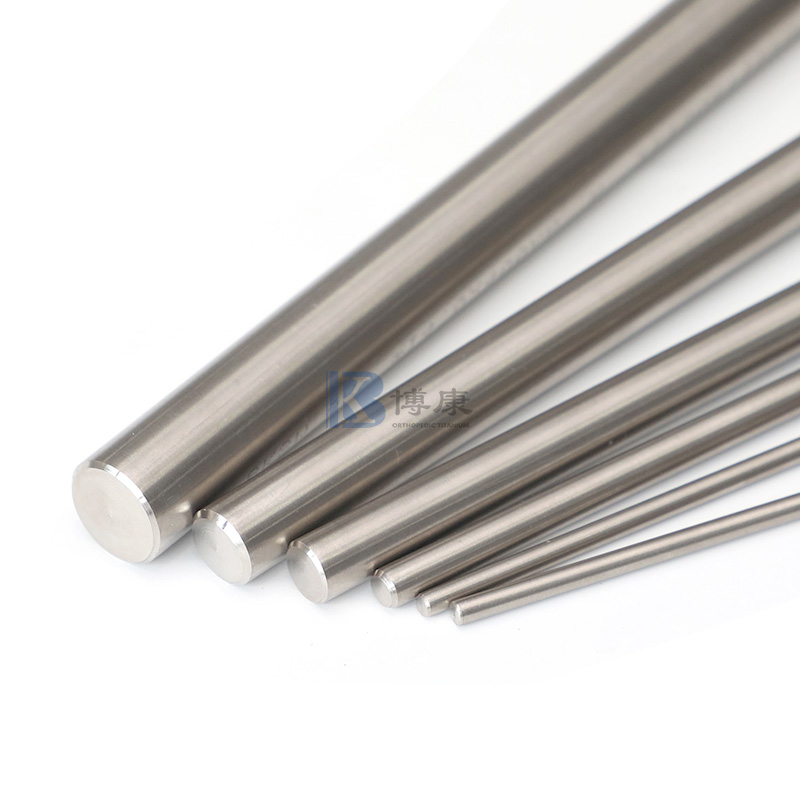
Premium Titanium Round Bars / Rods for Medical, Industrial, and Aerospace Applications Unmatched Quality & Certifica...
View Details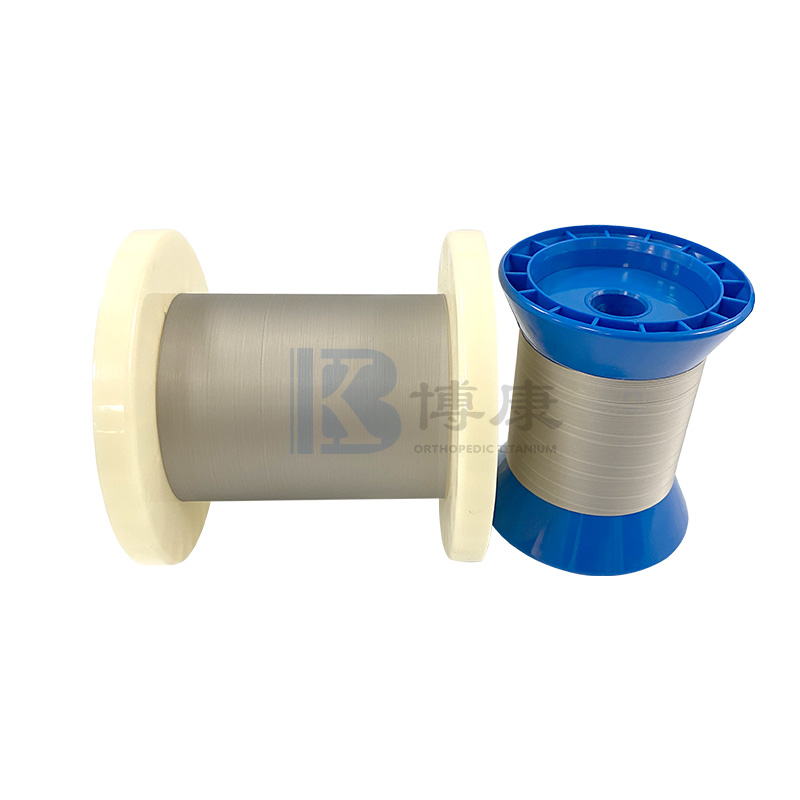
High-Purity Titanium Wire for Surgical Sutures, Staples, and Precision Medical Instruments Bokang offers premium medical...
View Details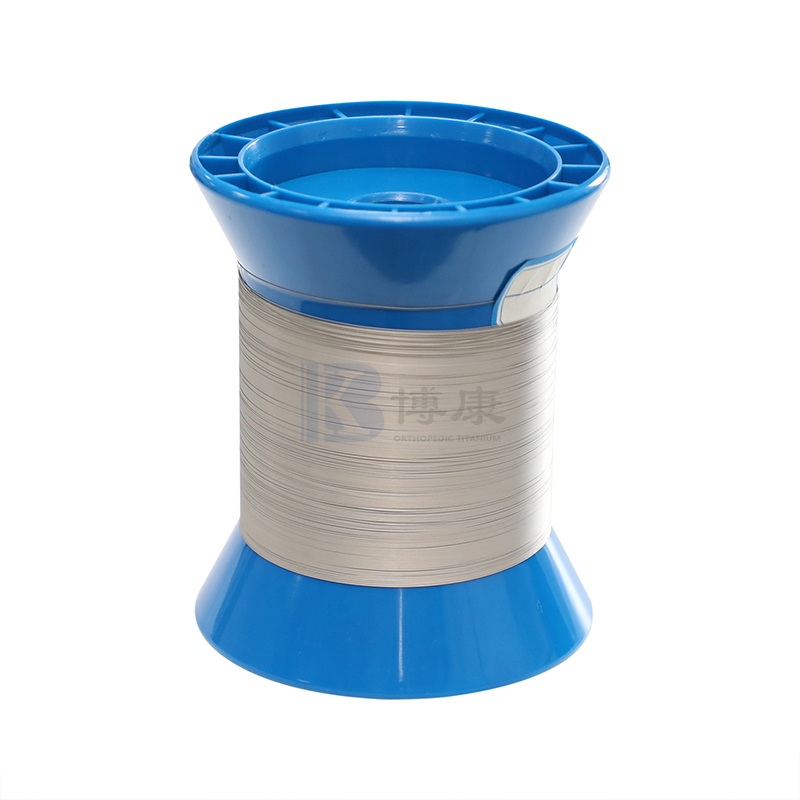
Bokang Titanium offers a wide range of high-quality titanium wires, manufactured through multiple drawing processes. Our...
View Details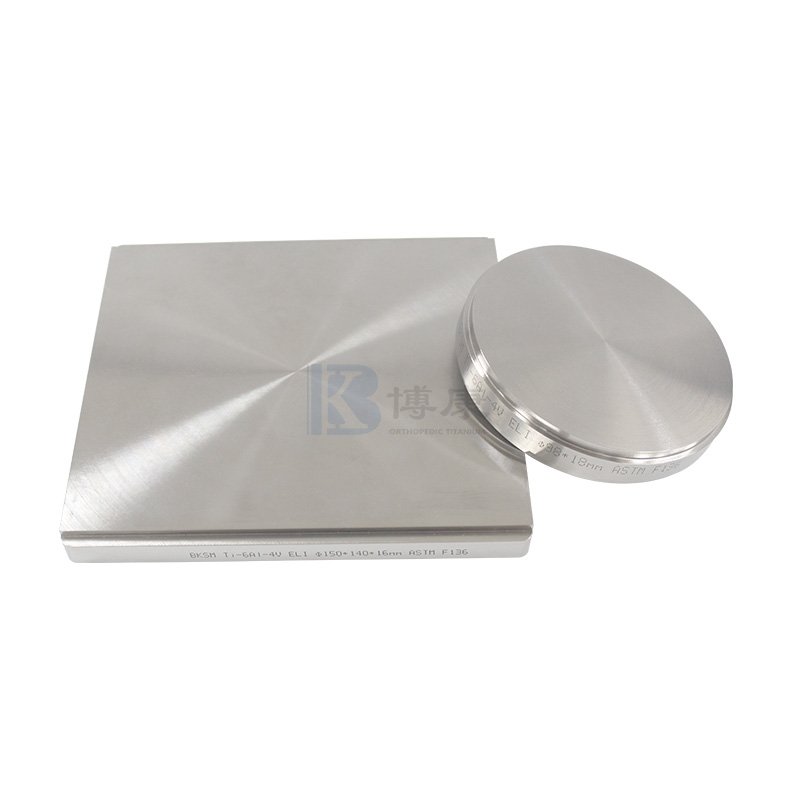
Dental Titanium Discs & Blocks – Medical Grade for CAD/CAM Milling High-quality dental titanium discs and blocks d...
View Details
Titanium Ingot (Ti Ingot) Description Our titanium ingots are made from high-purity sponge titanium and premium interme...
View DetailsTechnical Specifications
Detailed specifications for our Nickel Titanium Alloy Wire
| Standard Diameters | 0.05 mm to 2.0 mm (and larger) |
| Tolerances | As tight as ±0.0005" (±0.0127 mm) for medical grade |
| Available Conditions | Superelastic, Shape Memory (One-way, Two-way) |
| Transformation Temp (Af) | Customizable, typically -20°C to +50°C for superelastic |
| Surface Finishes | As-drawn (oxidized), Pickled, Electropolished, Coated |
| Packaging | Spools, Coils, Straightened & Cut Lengths |
| Key Standards | ASTM F2063, ASTM F2516, ISO 22456 |
Key Advantages of Bokang Nickel Titanium Alloy Wire
Discover why our titanium wire stands out in the industry
Ultra-High Functional Fatigue Resistance
Engineered to withstand millions of cycles of bending or torsion in the superelastic regime, which is essential for durable medical implants and dynamic components.
Precision Diameter & Surface Control
Manufactured to micron-level tolerances with optimized surface finishes (e.g., electropolished) to minimize friction during delivery and improve corrosion resistance.
Predictable Mechanical Response
Exhibits a characteristic flag-shaped stress-strain curve with defined plateau stresses, enabling reliable and repeatable mechanical design in superelastic applications.
Material Comparison
Nickel Titanium Alloy Wire vs. Competitive Alternatives
| Feature | Nickel Titanium Superelastic Wire | Stainless Steel 316LVM Spring Wire | Cobalt Chromium Alloy Wire |
|---|---|---|---|
| Elastic Modulus | ~30-80 GPa (varies with phase) | ~193 GPa | ~210-230 GPa |
| Recoverable Bending Strain | Extremely High (up to 8% tensile equiv.) | Low | Low |
| Kink Resistance | Excellent (recovers from sharp bends) | Poor (permanent deformation) | Fair |
| Radial Force (for same diameter spring) | Constant over a wide range | Linear (Hookean) | Linear (Hookean) |
| Primary Medical Use | Guidewires, Stents, Orthodontics | Sutures, Guidewires (core) | Stents, Guidewires |
Applications
Nickel Titanium Alloy Wire applications across various industries
Interventional Medicine
- Guidewires for navigating vasculature in cardiology and neurology
- Core wire for steerable catheters
- Embolic protection filters and retrieval devices
Orthodontics
- Superelastic archwires providing continuous, gentle tooth-moving forces
- Coil springs for space closure or opening
- Ligation wires
Industrial & Robotics
- Actuation tendons for soft robotics and anthropomorphic hands
- Superelastic antenna elements in communications
- Vibration damping springs in precision instruments
Material Selection Guide
How to choose the right titanium wire for your application
1
Define the In-Service Strain Range
Determine the maximum strain the wire will experience. For superelastic applications, ensure this is within the recoverable plateau region (typically 2-6%) and consider the effects of cycling.
2
Select Af Temperature Relative to Body/Ambient Temp
For body-temperature superelasticity (e.g., stents), specify Af slightly below 37°C. For ambient-temperature superelasticity, specify Af below the minimum operating temperature.
3
Specify Surface Finish for Application
Choose electropolished for low friction and enhanced biocompatibility in vascular devices. As-drawn or pickled finishes may be suitable for industrial or non-implantable uses.
4
Consider Wire Straightness & Packaging
Specify if wire is needed on spools for automated processing or in straightened, cut lengths for manual assembly. For long, straightened wires, define the allowable curvature.
Production Process & Quality Control
Our rigorous manufacturing process ensures consistent quality
Alloy Preparation & Rod Drawing
Vacuum-melted Nitinol ingot is hot forged and rolled into rod, then cold drawn to an intermediate size with interpass annealing to manage work hardening.
→
Final Cold Drawing
The rod is drawn through a series of progressively smaller diamond dies under precise lubrication and speed control to achieve the target final diameter.
→
Intermediate Heat Treatment (for properties)
The drawn wire undergoes a specific heat treatment (aging) to establish the preliminary transformation temperatures and mechanical properties.
→
Shape Setting & Final Heat Treat
For shape memory wires, they are wound on mandrels or constrained in fixtures and heat-treated to "set" the memorized shape (straight or coiled). This step also finalizes transformation temps.
→
Surface Finishing
Oxide scale is removed via chemical pickling or electrochemical etching. For medical grade, a mirror-like electropolished finish is applied to improve surface quality and biocompatibility.
→
Spooling, Straightening & Testing
Wire is spooled under controlled tension. Straightened lengths are cut and heat-set straight. 100% dimensional inspection and sampling for DSC and tensile testing are performed.
Frequently Asked Questions
Common questions about pure titanium wire
Electropolishing removes surface imperfections, micro-cracks, and contaminants, resulting in a smooth, uniform titanium oxide layer. This drastically improves corrosion resistance, reduces thrombogenicity (blood clotting), and minimizes friction during device delivery through catheters.
No, the transformation temperature is essentially "locked in" during the final heat treatment/shape setting process. Any subsequent high-temperature exposure can alter it. Design must be finalized before this last processing step.
It is the relatively constant stress level at which the wire undergoes a stress-induced martensitic transformation during loading (loading plateau) and reverses during unloading (unloading plateau). The difference between these plateaus is the hysteresis. This value is critical for designing devices with predictable deployment forces.
While the fundamental transformation behavior is a material property, the apparent stiffness and force output of a wire or spring scale with diameter. Thicker wires generate higher forces for the same strain. Functional fatigue life may also be influenced by diameter due to surface-to-volume ratio effects.
Direct welding is problematic. Mechanical joints (crimping, swaging) are common. Specialized techniques like laser micro-welding with compatible interlayers or brazing with specific alloys can be used but require extensive validation, as the heat-affected zone will lose its memory properties.
Why Choose Bokang Titanium?
18+ years of experience in high-quality titanium materials
18+
Years Experience
28+
Patents & Certifications
200+
Skilled Employees
ISO 13485:2016
Medical Device Certification
Our Commitment to Quality
Changzhou Bokang Special Material Technology Co., Ltd. is Wholesale Nickel Titanium Alloy Wire Manufacturers and Custom Nickel Titanium Alloy Wire Suppliers. At Bokang Titanium, we adhere to the strictest quality control protocols throughout our manufacturing process. Every batch of pure titanium wire undergoes rigorous testing including dimensional verification, mechanical property testing, surface quality inspection, and chemical analysis to ensure compliance with international standards.
Our quality management system is certified to ISO 9001:2015 and ISO 13485:2016 for medical device applications, ensuring full traceability from raw material to finished product. We maintain comprehensive documentation including material certifications, test reports, and process validation records.
With 18+ years of experience in titanium material production, we have developed specialized expertise in medical-grade, aerospace-grade, and industrial-grade titanium alloys. Our products are trusted by leading medical device manufacturers, aerospace companies, and industrial clients worldwide. We offer OEM/ODM Nickel Titanium Alloy Wire for sale.