
ASTM F67 / F136 Certified Titanium Material for Orthopedic & Dental Implants And Surgical Devices High-precision CP ...
View DetailsShape Memory Nickel Titanium Alloy
Nitinol alloys that "remember" a programmed shape, recovering it when heated above a specific transformation temperature.
Product Overview
Bokang's Shape Memory Nickel Titanium Alloy is manufactured using advanced vacuum arc remelting technology, ensuring exceptional purity and consistent mechanical properties.
Shape Memory Nickel Titanium Alloy, most famously known as Nitinol, is a functional material that exhibits the Shape Memory Effect (SME). In its most common form (one-way SME), the alloy can be deformed while in its low-temperature martensitic phase, and upon heating above its Austenite Finish (Af) temperature, it will recover its original, pre-deformed "memorized" shape. This recovery can generate significant force.
The effect is based on a reversible, diffusionless solid-state phase transformation between martensite (low-symmetry, deformable) and austenite (high-symmetry, rigid). The memorized shape is set by constraining the alloy in the desired geometry and applying a specific heat treatment. Beyond one-way memory, through specialized "training," Nitinol can be made to demonstrate two-way memory, changing shape upon both heating and cooling. Shape memory Nitinol is primarily used as a compact, solid-state actuator, a smart material for responsive structures, and in applications requiring thermal sensing and actuation in one component.
Technical Support & Documentation
Related Products
Explore our other high-performance materials

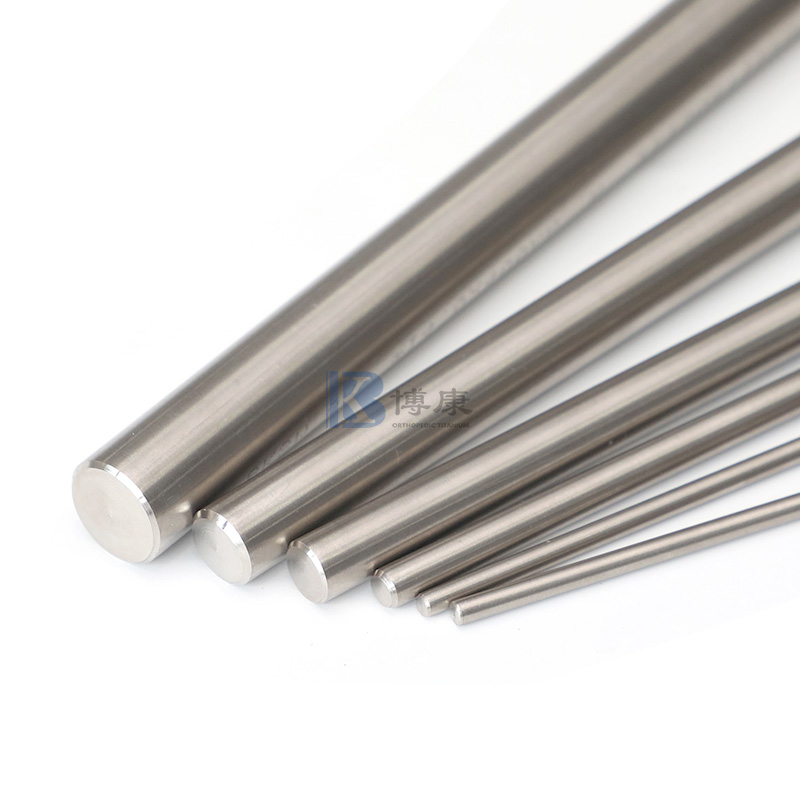
Premium Titanium Round Bars / Rods for Medical, Industrial, and Aerospace Applications Unmatched Quality & Certifica...
View Details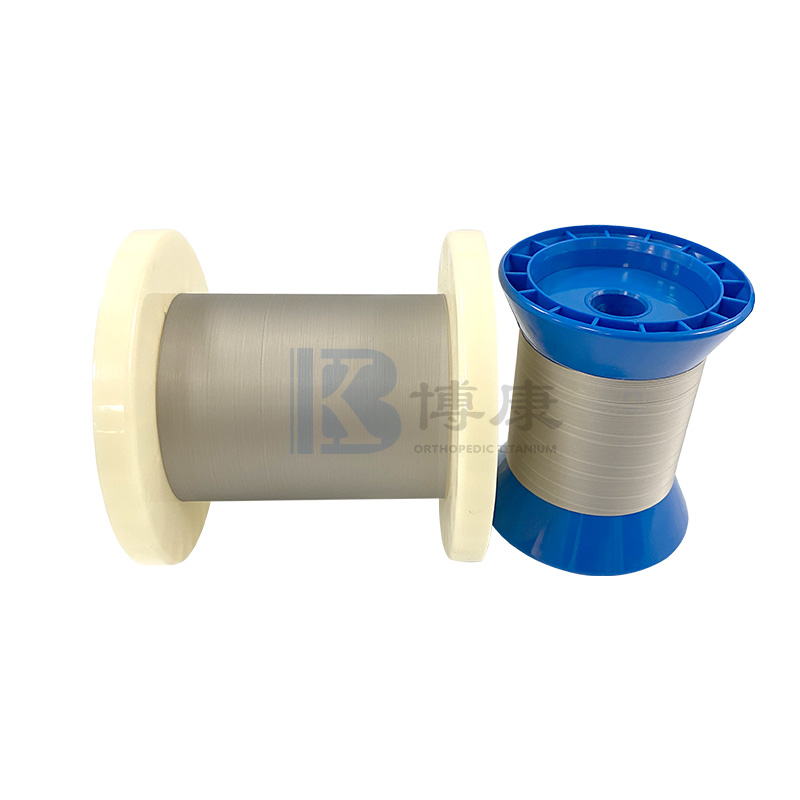
High-Purity Titanium Wire for Surgical Sutures, Staples, and Precision Medical Instruments Bokang offers premium medical...
View Details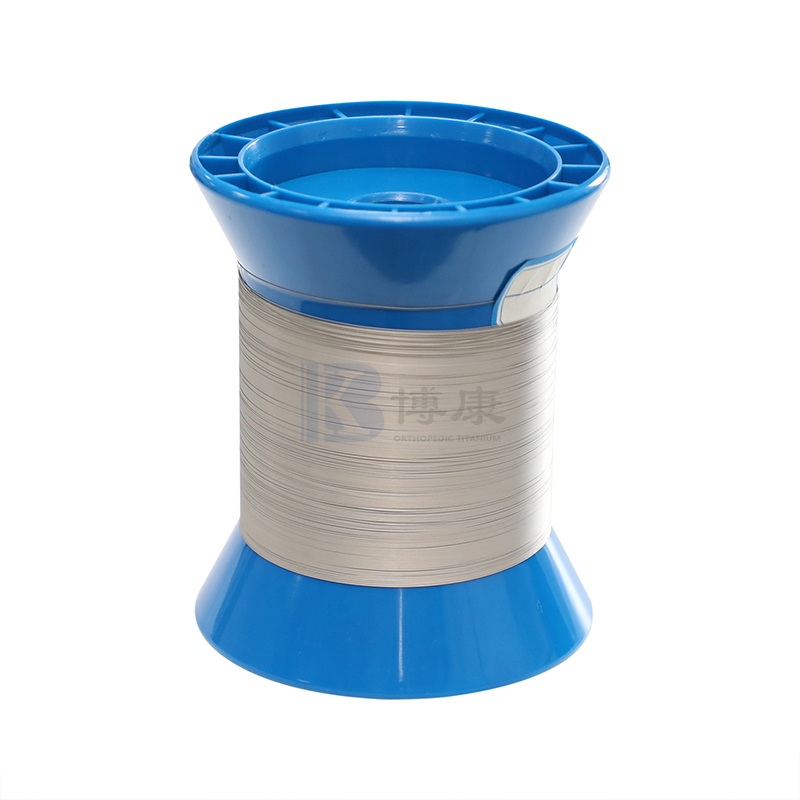
Bokang Titanium offers a wide range of high-quality titanium wires, manufactured through multiple drawing processes. Our...
View Details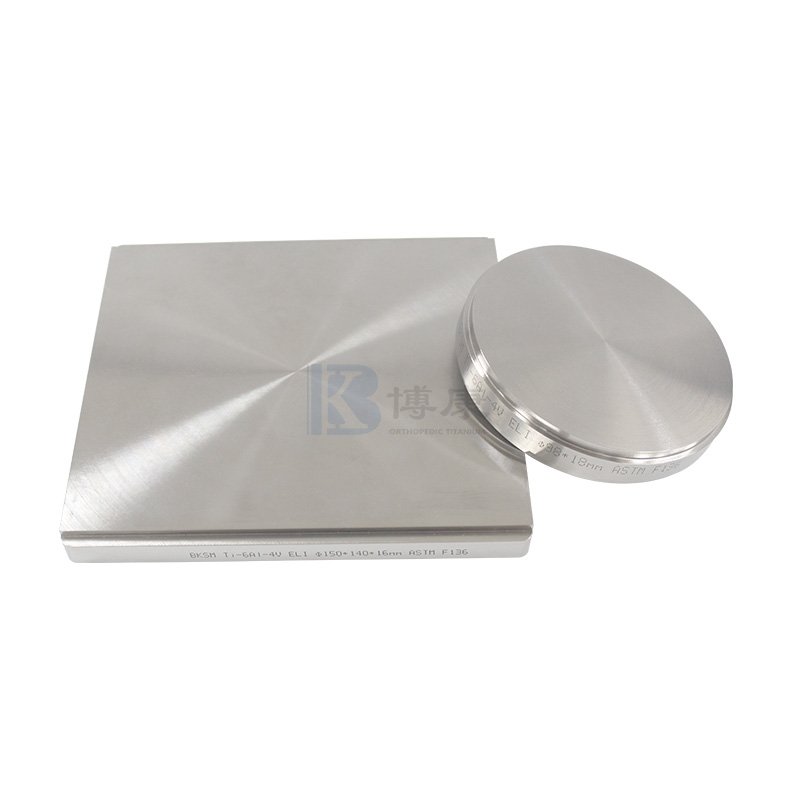
Dental Titanium Discs & Blocks – Medical Grade for CAD/CAM Milling High-quality dental titanium discs and blocks d...
View Details
Titanium Ingot (Ti Ingot) Description Our titanium ingots are made from high-purity sponge titanium and premium interme...
View DetailsTechnical Specifications
Detailed specifications for our Shape Memory Nickel Titanium Alloy
| Common Designations | Nitinol, NiTi, Shape Memory Alloy (SMA), ASTM F2063 (covers shape memory forms) |
| Core Mechanism | Thermally-Induced Martensite to Austenite Phase Transformation |
| Key Temperatures | Martensite Start (Ms), Martensite Finish (Mf), Austenite Start (As), Austenite Finish (Af) |
| Shape Recovery Strain | Typically 4-8% (depending on processing) |
| Recovery Stress | Can exceed 500 MPa, generating high actuation force |
| Actuation Energy | Thermal (Heating via ambient, resistive, fluid, etc.) |
Key Advantages of Bokang Shape Memory Nickel Titanium Alloy
Discover why our titanium wire stands out in the industry
Intrinsic Sensor & Actuator
Combines sensing (temperature) and actuation (motion/force) in a single material element, simplifying device design.
High Recovery Force & Work Output
Can perform substantial mechanical work upon heating, enabling the movement of loads or release of mechanisms without external motors.
Compact & Quiet Operation
Provides actuation in a very small package without gears, motors, or hydraulics, resulting in silent operation.
Material Comparison
Shape Memory Nickel Titanium Alloy vs. Competitive Alternatives
| Feature | Shape Memory Nitinol (One-Way) | Bimetallic Strip | Wax Motor (Thermal Actuator) |
|---|---|---|---|
| Actuation Principle | Solid-State Phase Change | Differential Thermal Expansion | Expansion of Phase-Change Material |
| Strain/Displacement | Large (4-8%) | Small (0.1-1%) | Medium (1-5%) |
| Force Output | Very High | Low | Medium |
| Cycle Life | Good to Excellent (10^3-10^6 cycles) | Excellent | Limited (Seal wear) |
| Hysteresis | Wide (10-30°C) | Very Narrow | Moderate |
Applications
Shape Memory Nickel Titanium Alloy applications across various industries
Automotive
- Thermostats and coolant flow valves that open at precise temperatures.
- De-icing flaps or louvers on engine intakes.
- Actuators for active aerodynamics or latching mechanisms.
Consumer Products
- Auto-shutoff valves for electric kettles, coffee makers, and hair straighteners.
- Shape-changing toys and novelty items.
- Thermal fuses and overload protection devices.
Industrial Actuators & Controls
- Fire safety: actuators for smoke damper releases and sprinkler heads.
- Thermal valves for HVAC and process control systems.
- Passive solar tracker actuators for photovoltaic panels.
Material Selection Guide
How to choose the right titanium wire for your application
1
Identify the Activation Temperature (Af)
Define the precise temperature at which the shape recovery must occur. This drives the alloy composition selection (Ni/Ti ratio) to set the Af point.
2
Determine Mechanical Requirements
Calculate the required recovery force and stroke (displacement). This defines the amount and form (wire diameter, spring geometry) of Nitinol needed.
3
Select One-Way vs. Two-Way Memory
Choose one-way memory for single-actuation or reset-by-force applications. Choose two-way memory (trained) for applications requiring reversible motion with temperature cycling.
4
Design the Activation & Reset Method
Plan how the alloy will be heated (ambient, resistive, fluid) and, for one-way memory, how it will be reset to its deformed state (by an external force or bias spring).
Production Process & Quality Control
Our rigorous manufacturing process ensures consistent quality
Alloy Production & Primary Working
Standard Nitinol melting and hot-working processes are used to produce rod, wire, or sheet stock with the base transformation temperature range.
→
Fabrication into Component Form
The stock is machined, formed, or wound into its initial component shape (e.g., a straight wire, a coiled spring).
→
Shape Setting Heat Treatment
The component is firmly constrained in its desired "memorized" shape using jigs or mandrels and heated in a furnace (typically 450-550°C) for a set time, then cooled.
→
Training (For Two-Way Memory)
The component undergoes repeated thermomechanical cycles (deformation at low temperature, release and heating) to establish a two-way shape memory effect.
→
Functional & Quality Testing
Each part or batch is tested to verify the Af temperature, measure recovery strain and force, and ensure it meets performance specifications.
→
Integration into Final Assembly
Components are assembled with bias springs (for one-way), electrical contacts (for resistive heating), or mounting hardware as part of the final product.
Frequently Asked Questions
Common questions about pure titanium wire
The shape is "programmed" through a process called Shape Setting. The alloy is physically constrained in the desired final geometry (e.g., bent, coiled) using a fixture. It is then heated to a high temperature (typically 450-550°C) for several minutes and cooled. This heat treatment aligns the crystal structure of the high-temperature austenite phase with the constrained shape, which then becomes the "remembered" shape.
Yes, the memorized shape can be erased and reprogrammed. By heating the alloy above its shape setting temperature without any constraint, the previous memory is erased. A new shape can then be set by constraining it in a new geometry and repeating the shape setting heat treatment cycle.
In a one-way shape memory actuator, the Nitinol element only moves when heated. To return it to its starting position upon cooling, a "bias" spring (often a conventional steel spring) is used to apply a constant force opposing the Nitinol's recovery direction. This creates a cyclic actuator: heat = Nitinol overcomes spring, cool = spring returns Nitinol to deformed state.
The actuation speed is limited by heat transfer. For thin wires resistively heated, actuation can occur in less than a second. For larger components or ambient heating, it may take seconds to minutes. Cooling (reset) is generally slower as it relies on passive heat dissipation, unless active cooling is employed.
Cycle life is primarily limited by functional fatigue—gradual changes in the transformation temperatures and strains due to microstructural evolution (dislocation accumulation, precipitate coarsening) with repeated cycling. Proper alloy processing, avoiding excessive strain per cycle, and operating within a controlled temperature range maximize cycle life, which can range from thousands to millions of cycles.
Why Choose Bokang Titanium?
18+ years of experience in high-quality titanium materials
18+
Years Experience
28+
Patents & Certifications
200+
Skilled Employees
ISO 13485:2016
Medical Device Certification
Our Commitment to Quality
Changzhou Bokang Special Material Technology Co., Ltd. is Wholesale Shape Memory Nickel Titanium Alloy Manufacturers and Custom Shape Memory Nickel Titanium Alloy Suppliers. At Bokang Titanium, we adhere to the strictest quality control protocols throughout our manufacturing process. Every batch of pure titanium wire undergoes rigorous testing including dimensional verification, mechanical property testing, surface quality inspection, and chemical analysis to ensure compliance with international standards.
Our quality management system is certified to ISO 9001:2015 and ISO 13485:2016 for medical device applications, ensuring full traceability from raw material to finished product. We maintain comprehensive documentation including material certifications, test reports, and process validation records.
With 18+ years of experience in titanium material production, we have developed specialized expertise in medical-grade, aerospace-grade, and industrial-grade titanium alloys. Our products are trusted by leading medical device manufacturers, aerospace companies, and industrial clients worldwide. We offer OEM/ODM Shape Memory Nickel Titanium Alloy for sale.