
ASTM F67 / F136 Certified Titanium Material for Orthopedic & Dental Implants And Surgical Devices High-precision CP ...
View DetailsTitanium Metal Bar
A versatile solid form of titanium, available in various cross-sections and sizes, serving as the primary stock for machining, forging, and structural fabrication.
Product Overview
Bokang's Titanium Metal Bar is manufactured using advanced vacuum arc remelting technology, ensuring exceptional purity and consistent mechanical properties.
The term "titanium metal bar" broadly encompasses solid, long products with a consistent cross-sectional shape, primarily round, but also including square, rectangular, and hexagonal profiles. It is a fundamental semi-finished product supplied by mills and distributors, acting as the raw material input for countless manufacturing processes. Bars are produced via hot rolling, forging, or extrusion from large titanium ingots, resulting in a wrought microstructure with grain flow aligned along the length of the bar.
This product form is characterized by its dimensional versatility (from a few millimeters to over a meter in diameter or width), availability in all common titanium grades, and various surface conditions (from as-rolled scale to precision ground). Titanium bar is the preferred starting point for components that require significant material removal (CNC machining), those needing the isotropic properties of a solid section, or for use as stock for further hot forging. Its selection is driven by the final part's mechanical requirements, fabrication method, and cost considerations related to material yield and machining time.
Technical Support & Documentation
Related Products
Explore our other high-performance materials

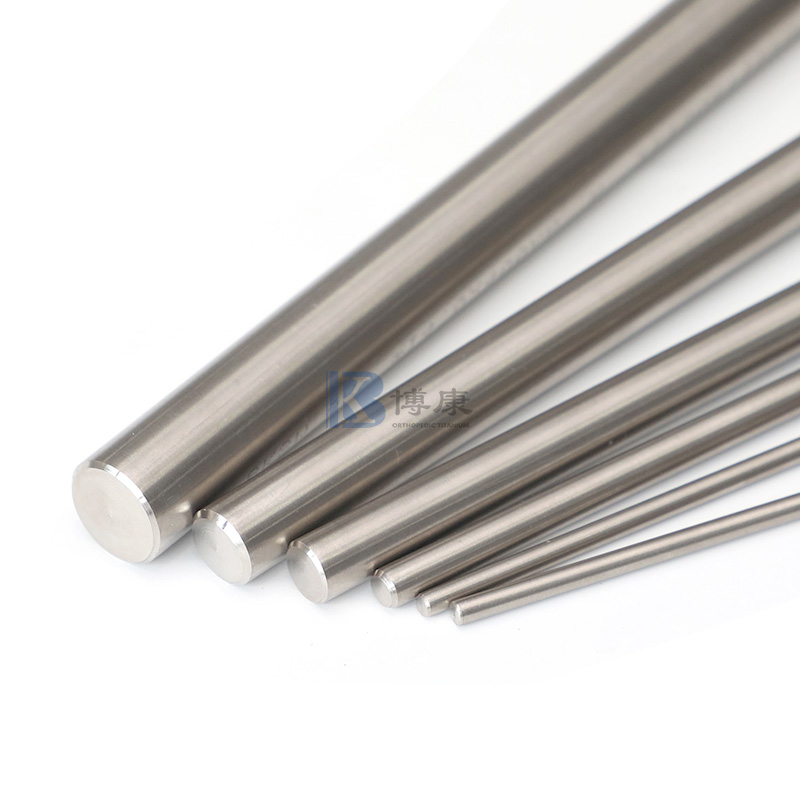
Premium Titanium Round Bars / Rods for Medical, Industrial, and Aerospace Applications Unmatched Quality & Certifica...
View Details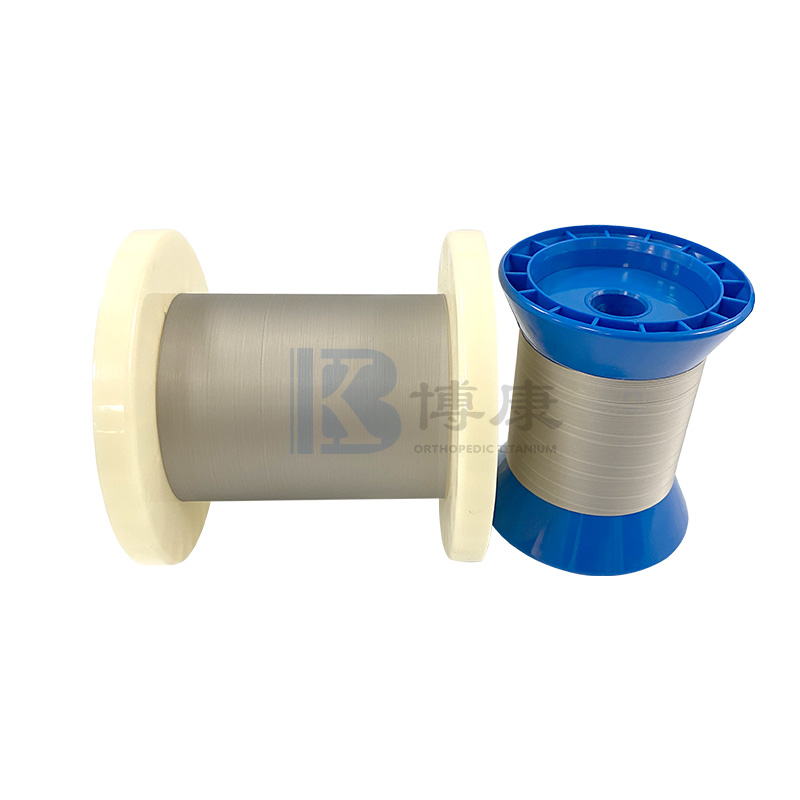
High-Purity Titanium Wire for Surgical Sutures, Staples, and Precision Medical Instruments Bokang offers premium medical...
View Details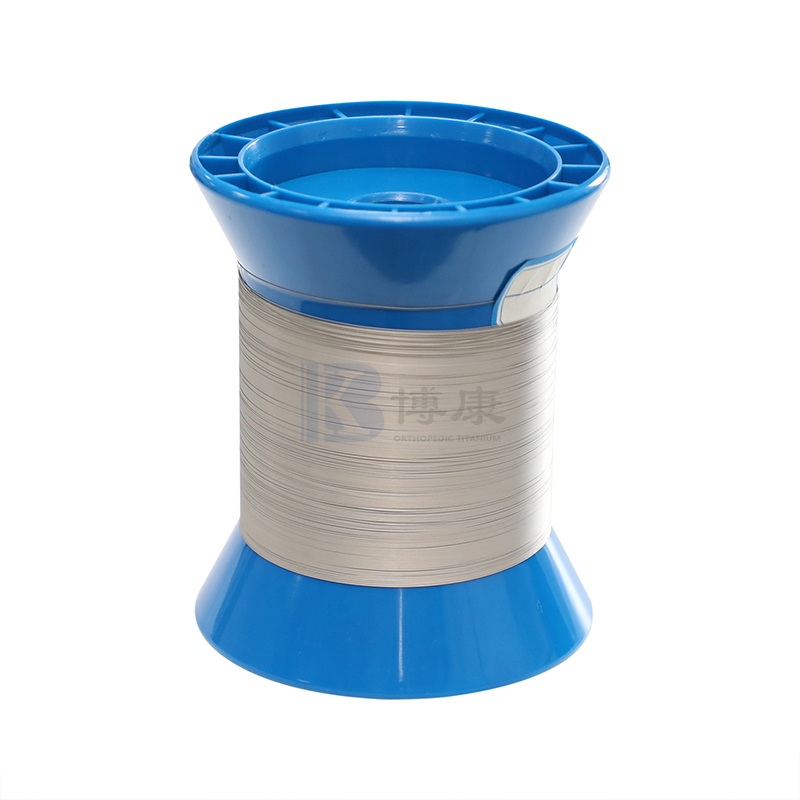
Bokang Titanium offers a wide range of high-quality titanium wires, manufactured through multiple drawing processes. Our...
View Details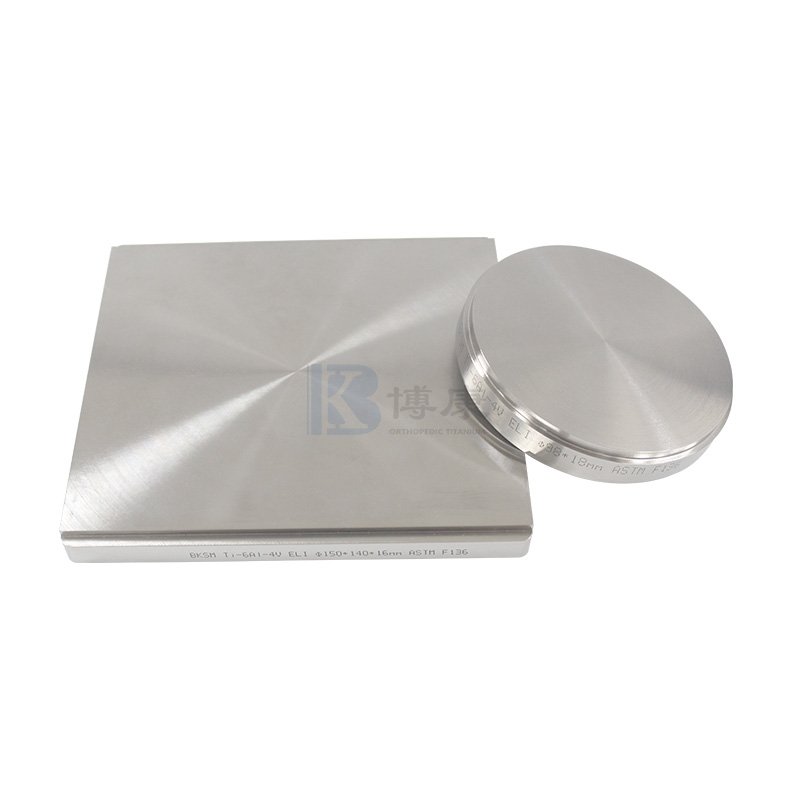
Dental Titanium Discs & Blocks – Medical Grade for CAD/CAM Milling High-quality dental titanium discs and blocks d...
View Details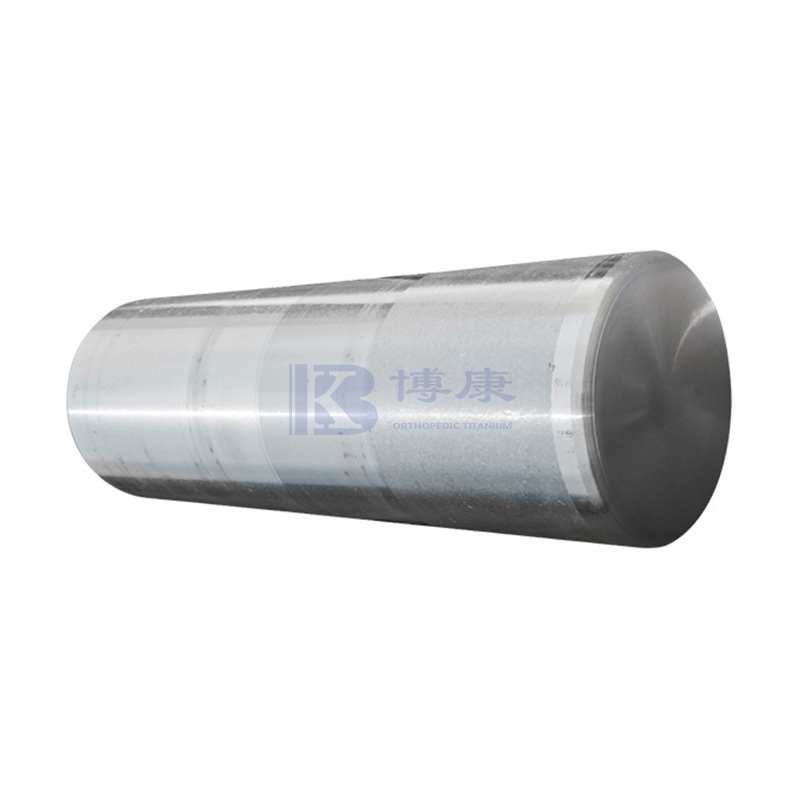
Titanium Ingot (Ti Ingot) Description Our titanium ingots are made from high-purity sponge titanium and premium interme...
View DetailsTechnical Specifications
Detailed specifications for our Titanium Metal Bar
| Standard Cross-Sections | Round Bar, Square Bar, Flat Bar (Rectangular), Hexagonal Bar |
| Size Range (Example: Round) | Small: 3mm – 20mm dia.; Medium: 20mm – 100mm dia.; Large: 100mm – 500mm+ dia. |
| Production Methods | Hot Rolling (most common), Forging (for large or high-integrity bars), Extrusion |
| Surface Conditions | Hot Rolled (with scale), Peeled/Turned, Rough Machined, Centerless Ground, Polished |
| Common Lengths | Random Mill Lengths (3-6 meters), Cut-to-Length, Double and Triple Random Lengths |
| Key Supply Standards | ASTM B348 (Standard Specification for Titanium and Titanium Alloy Bars and Billets) |
Key Advantages of Bokang Titanium Metal Bar
Discover why our titanium wire stands out in the industry
Foundation for Manufactured Components
Provides a reliable, stock-keeping unit (SKU) from which a vast array of custom parts can be machined, forged, or fabricated, enabling flexible production.
Predictable Material Properties
As a wrought product, it offers uniform and well-documented mechanical properties along its length, crucial for engineering calculations and quality assurance.
Optimized for Machining Yield
Available in dimensions that can be closely matched to the final part's envelope, minimizing expensive titanium scrap generated during machining.
Material Comparison
Titanium Metal Bar vs. Competitive Alternatives
| Feature | Titanium Metal Bar (Hot Rolled) | Titanium Plate | Titanium Casting |
|---|---|---|---|
| Primary Manufacturing Route From | Hot Rolling/Forging of Ingot | Hot Rolling of Slab | Melting & Pouring into Mold |
| Typical Use Case | Input for machining, shafts, fasteners | Structural panels, pressure vessels | Complex shapes, low-volume parts |
| Microstructure | Wrought, directional grain flow | Wrought, directional grain flow | As-cast, equiaxed or columnar grains |
| Relative Strength & Fatigue Life | High (best for wrought products) | High | Lower than wrought (typically) |
| Lead Time for Custom Shapes | Short (from stock) to Medium (mill order) | Short to Medium | Long (pattern/tooling required) |
Applications
Titanium Metal Bar applications across various industries
General Machining
- CNC machining of valve bodies, pump housings, and fluid system components.
- Production of shafts, rollers, and spindles for rotating equipment.
- Fabrication of custom fasteners, fittings, and connectors.
Forging Stock
- Billet for open-die or closed-die forging of aerospace components (landing gear, discs).
- Pre-forms for drop forging of hand tools or industrial hardware.
- Input material for extrusion processes to create complex profiles.
Construction & Fabrication
- Solid railings, posts, and architectural features in corrosive environments.
- Anode bars and busbars for electrochemical and cathodic protection systems.
- Solid stock for fabricating custom jigs, fixtures, and tooling for other processes.
Material Selection Guide
How to choose the right titanium wire for your application
1
Match Bar Size to Final Part Dimensions
Select a bar diameter or width that minimizes machining waste. A good rule is to choose stock that is 2-5mm larger than the largest dimension of the finished part to allow for cleanup and tolerance.
2
Specify Surface Condition Based on Next Operation
For parts where the bar surface will be completely machined away, hot-rolled (HR) bar is most economical. If the bar surface will remain exposed (e.g., as a shaft OD), specify turned, ground, or polished finish.
3
Select Alloy and Temper for Fabrication
Choose CP titanium (Grade 2) for excellent machinability and formability. Choose Ti-6Al-4V (Grade 5) annealed for high strength and good machinability, or solution treated and aged (STA) for maximum strength but more difficult machining.
4
Consider Purchasing Form for Efficiency
For prototype or small batch, purchase cut-to-length blanks to reduce in-house handling. For production, buying full random lengths and cutting in-house may be cheaper. For small, high-volume parts, coil stock (small diameters) can enable automation.
Production Process & Quality Control
Our rigorous manufacturing process ensures consistent quality
Ingot Reheating & Breakdown Forging
The titanium ingot is heated and forged on a large press to break the cast structure and form a rectangular "bloom" or round "billet."
→
Hot Rolling in Bar Mill
The bloom/billet is reheated and passed through a series of rolling stands with shaped grooves, progressively reducing its cross-section to form a long bar of the desired shape.
→
Controlled Cooling
The hot bar exits the mill and is cooled in air or controlled environments to prevent excessive oxidation and to set the initial microstructure.
→
Heat Treatment (Annealing)
The bar is batch-annealed in a furnace to achieve the specified mechanical properties (e.g., annealed condition) and to relieve internal stresses from rolling.
→
Descaling & Straightening
The scaled surface is removed via pickling in acid or shot blasting. The bar is then straightened using gag presses or rotary straighteners.
→
Sawing, Inspection & Bundling
The continuous bar is cut to standard mill lengths. It undergoes visual and dimensional inspection, is marked with grade and heat number, and bundled for shipment.
Frequently Asked Questions
Common questions about pure titanium wire
The terms are often used interchangeably, but in formal specifications and industry practice, "rod" typically refers to smaller diameter product, often coilable (e.g., under 10-15mm), while "bar" refers to larger, straight-length product. ASTM B348 covers both "bars and billets," with smaller diameters sometimes called "rod." The key distinction is the intended use and ability to coil, not a strict diameter cutoff.
The black scale is titanium oxide (TiO2) that forms during hot rolling or forging when the metal is exposed to air at high temperature. This "hot-rolled" condition is the most basic and economical. The scale must be removed by pickling or machining before the bar can be used in most applications, as it is brittle and can hide surface defects. Mills also supply "peeled" or "turned" bars where this scale has been mechanically removed.
Straightness is typically specified as a maximum deviation over a given length (e.g., 3mm per 1 meter). Mills control it through proper cooling practices and mechanical straightening (gag presses, rotary straighteners). For precision applications, centerless grinding can also improve straightness. The required straightness should be agreed upon with the supplier, as tighter tolerances increase cost.
Yes, but it is generally not recommended for load-bearing structural applications unless the weld is fully qualified. Titanium bar can be welded using TIG (GTAW) or electron beam welding. However, the weld creates a heat-affected zone (HAZ) with different properties, and the weldment loses the continuous grain flow of the original bar. It's better practice to source a single piece of bar of the required length if possible.
"Double random length" is a standard mill shipping length where bars are supplied in lengths that are typically between 20 to 40 feet (6 to 12 meters). The exact length within that range is not specified and will vary from bar to bar. It is more economical than "cut to length." "Single random" is usually 10-20 feet. Ordering DRL is cost-effective if you have the capability to cut the bars to your required sizes in-house.
Why Choose Bokang Titanium?
18+ years of experience in high-quality titanium materials
18+
Years Experience
28+
Patents & Certifications
200+
Skilled Employees
ISO 13485:2016
Medical Device Certification
Our Commitment to Quality
Changzhou Bokang Special Material Technology Co., Ltd. is Wholesale Titanium Metal Bar Manufacturers and Custom Titanium Metal Bar Suppliers. At Bokang Titanium, we adhere to the strictest quality control protocols throughout our manufacturing process. Every batch of pure titanium wire undergoes rigorous testing including dimensional verification, mechanical property testing, surface quality inspection, and chemical analysis to ensure compliance with international standards.
Our quality management system is certified to ISO 9001:2015 and ISO 13485:2016 for medical device applications, ensuring full traceability from raw material to finished product. We maintain comprehensive documentation including material certifications, test reports, and process validation records.
With 18+ years of experience in titanium material production, we have developed specialized expertise in medical-grade, aerospace-grade, and industrial-grade titanium alloys. Our products are trusted by leading medical device manufacturers, aerospace companies, and industrial clients worldwide. We offer OEM/ODM Titanium Metal Bar for sale.