
ASTM F67 / F136 Certified Titanium Material for Orthopedic & Dental Implants And Surgical Devices High-precision CP ...
View DetailsTitanium Grade 7
A palladium-enhanced commercially pure titanium grade offering unmatched corrosion resistance in reducing acid environments and high-chloride media.
Product Overview
Bokang's Titanium Grade 7 is manufactured using advanced vacuum arc remelting technology, ensuring exceptional purity and consistent mechanical properties.
Titanium Grade 7 is a unique alloy within the commercially pure (CP) family, distinguished by the addition of 0.12% to 0.25% palladium. This small but critical addition dramatically enhances the material's corrosion resistance, particularly in environments where standard CP titanium (Grades 1-4) may be susceptible, such as non-oxidizing or reducing acids (e.g., sulfuric, hydrochloric, phosphoric) and hot concentrated chlorides.
The palladium acts as a cathodic modifier, significantly lowering the corrosion rate by shifting the alloy's electrochemical potential into a more noble, passive region. This makes Grade 7 one of the most universally corrosion-resistant titanium alloys available. It retains all the favorable fabrication characteristics of CP titanium, including excellent weldability and formability. While its mechanical strength is similar to Grade 2, its primary value lies in its ability to handle the most aggressive chemical processing environments, often outperforming highly alloyed stainless steels and nickel alloys. It is the material of choice for critical components where failure due to corrosion is not an option.
Technical Support & Documentation
Related Products
Explore our other high-performance materials

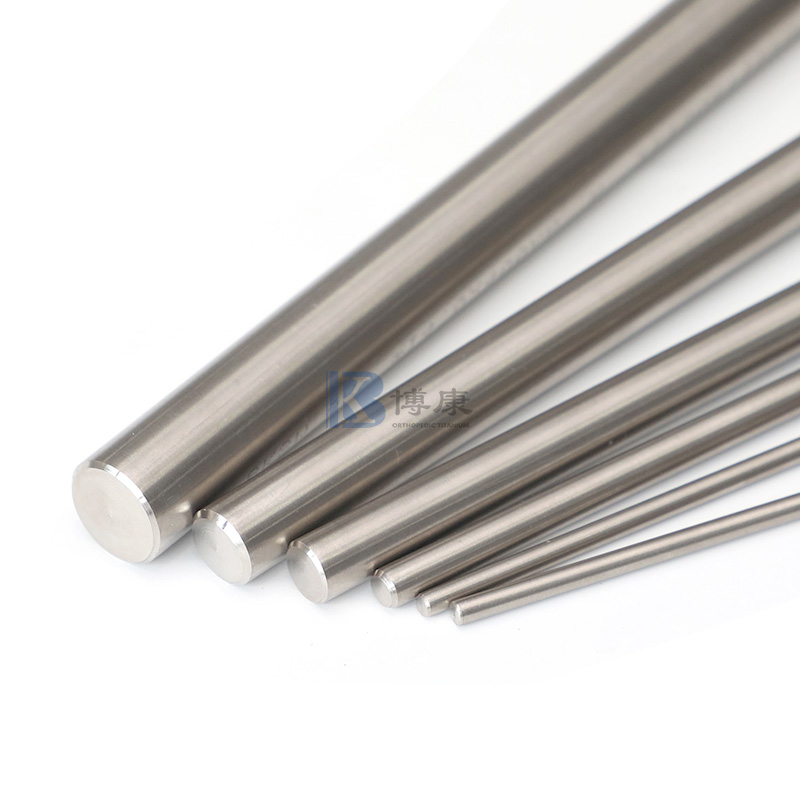
Premium Titanium Round Bars / Rods for Medical, Industrial, and Aerospace Applications Unmatched Quality & Certifica...
View Details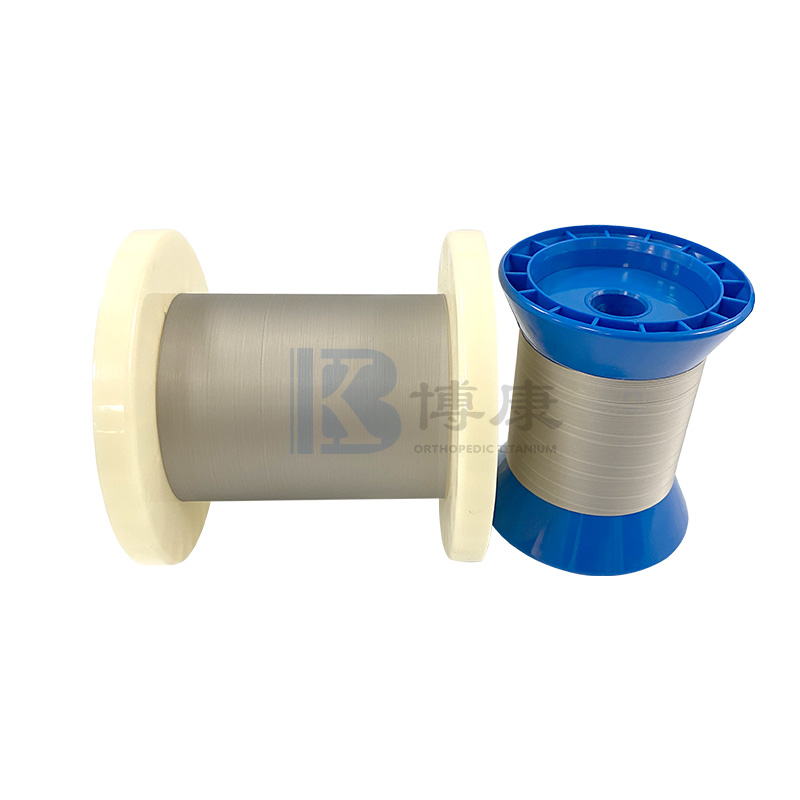
High-Purity Titanium Wire for Surgical Sutures, Staples, and Precision Medical Instruments Bokang offers premium medical...
View Details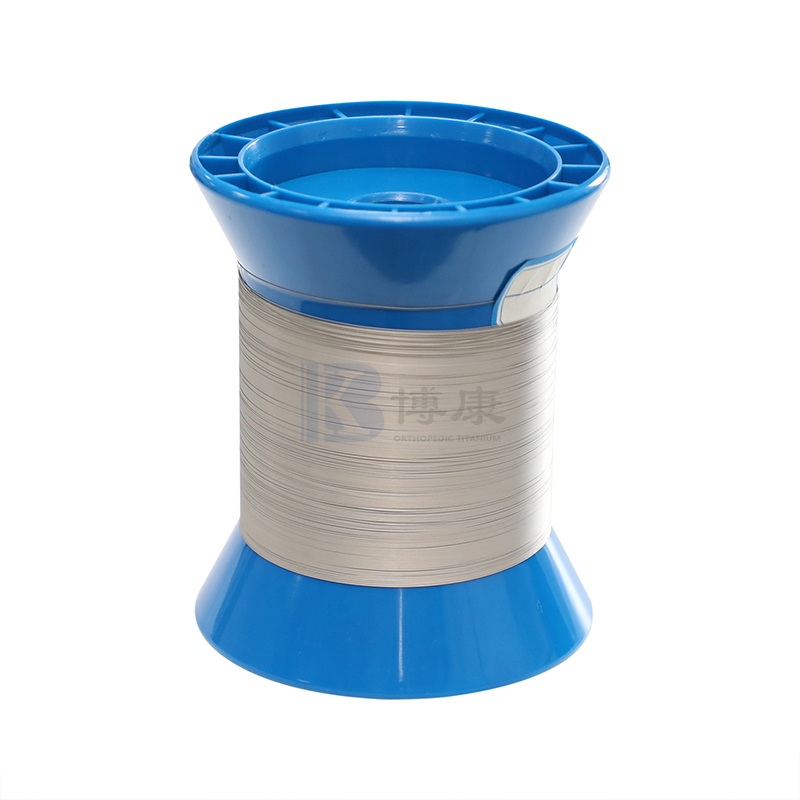
Bokang Titanium offers a wide range of high-quality titanium wires, manufactured through multiple drawing processes. Our...
View Details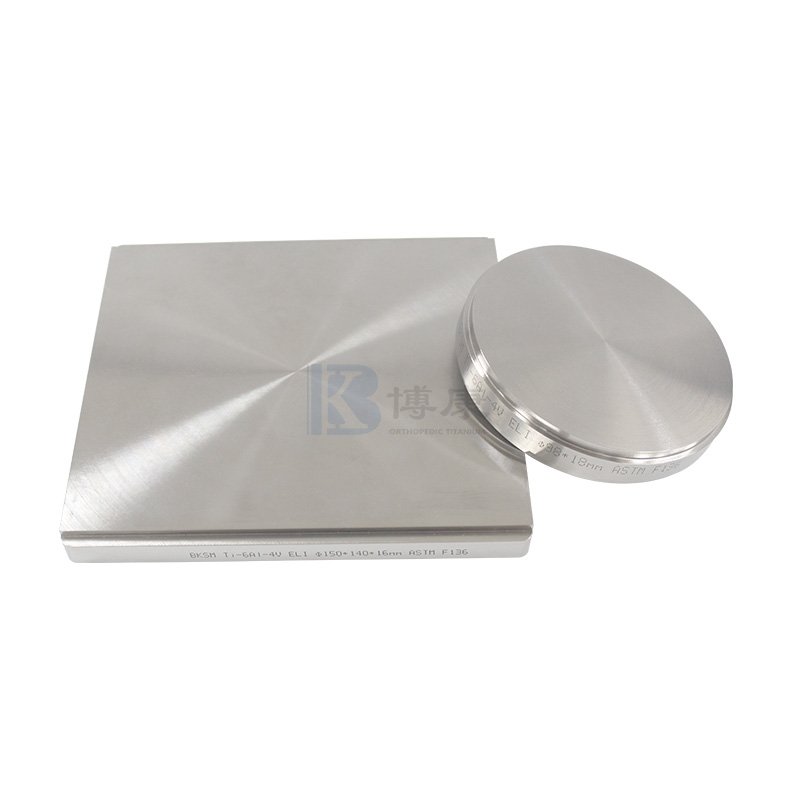
Dental Titanium Discs & Blocks – Medical Grade for CAD/CAM Milling High-quality dental titanium discs and blocks d...
View Details
Titanium Ingot (Ti Ingot) Description Our titanium ingots are made from high-purity sponge titanium and premium interme...
View DetailsTechnical Specifications
Detailed specifications for our Titanium Grade 7
| Common Designations | Ti-0.15Pd, Grade 7, UNS R52400, 3.7235 |
| Nominal Composition | Ti (Bal.), Pd (0.12-0.25%), O (max 0.25%), Fe (max 0.30%), N, C, H (low) |
| Mechanical Properties (Annealed) | Tensile Strength: 345 MPa min, Yield Strength: 275 MPa min, Elongation: 20% min |
| Corrosion Key | Exceptionally resistant to crevice corrosion in hot chlorides and to reducing acids. |
| Forms Available | Sheet, Plate, Tube, Pipe, Fittings, Wire, Anodes |
| Key Standards | ASTM B265 (Sheet/Plate), ASTM B337 (Pipe), ASTM B338 (Tube), NACE MR0175/ISO 15156 |
Key Advantages of Bokang Titanium Grade 7
Discover why our titanium wire stands out in the industry
Unrivaled Reducing Acid Resistance
Palladium addition provides stable passivation in non-oxidizing acids like sulfuric and hydrochloric, where other titanium grades corrode.
Superior Crevice Corrosion Resistance
Exhibits a dramatically higher critical crevice temperature (CCT) in chloride solutions compared to standard CP grades, often exceeding 150°C.
Enhanced Safety Margin in Upset Conditions
Provides robust performance even if process conditions temporarily deviate from design (e.g., loss of oxidizer, temperature spikes), reducing risk of failure.
Material Comparison
Titanium Grade 7 vs. Competitive Alternatives
| Feature | Grade 7 (Ti-0.15Pd) | Grade 2 Titanium | Hastelloy C-276 |
|---|---|---|---|
| Primary Corrosion Resistance | Reducing Acids, Hot Chlorides | Oxidizing Media, Seawater | Broad Spectrum, including oxidizing |
| Resistance to 10% Sulfuric Acid at 70°C | Excellent (<0.13 mm/yr) | Poor (Rapid corrosion) | Good |
| Crevice Corrosion in 10% NaCl at 100°C | Resistant | May Occur | Resistant |
| Relative Material Cost | High (Due to Pd) | Low (Benchmark) | Very High |
| Fabricability (Welding, Forming) | Excellent (like CP Ti) | Excellent | Good (but specialized) |
Applications
Titanium Grade 7 applications across various industries
Chemical Processing
- Heat exchangers, reactors, and piping for sulfuric, hydrochloric, and phosphoric acid production and handling.
- Columns and internals for wet chlorine gas and chlorine dioxide service.
- Equipment for organic chemical synthesis involving halides or reducing conditions.
Pickling & Metal Finishing
- Heating coils, tanks, and baskets for hot pickling lines (steel, titanium, zirconium) using mixed acids.
- Anode baskets and fixtures for electroplating in aggressive acid baths.
- Spinnerets and components for synthetic fiber production involving acidic spin baths.
Offshore & Pulp/Paper
- Critical components in deep-sea oil & gas production where hot, high-pressure brines are present.
- Bleach washers, mixers, and piping in pulp mills using chlorine dioxide (ClO2) bleaching.
- Seawater cooling system components where biofouling creates crevice conditions.
Material Selection Guide
How to choose the right titanium wire for your application
1
Analyze the Process Chemistry Precisely
Select Grade 7 when the environment contains reducing acids (low or no oxidizers), hot concentrated chlorides (>80°C), or when crevices are unavoidable in chloride service.
2
Conduct a Lifecycle Cost Analysis (LCA)
Justify the higher upfront cost of Grade 7 against alternatives (like rubber-lined steel or nickel alloys) by calculating the total cost of ownership, factoring in longer service life, reduced maintenance, and elimination of unplanned downtime.
3
Consider Welding and Filler Metal Selection
For welded construction, use matching Grade 7 filler wire (ERTi-7) to preserve corrosion resistance in the weld zone. Improper filler (e.g., Grade 2) can create galvanic cells and localized attack.
4
Evaluate Alternative Forms of Protection
For large, simple structures, assess if Grade 2 with anodic protection (external potential) or palladium-treated surfaces could be a more economical solution than solid Grade 7.
Production Process & Quality Control
Our rigorous manufacturing process ensures consistent quality
Palladium Master Alloy Preparation
High-purity palladium is pre-alloyed with titanium to create a Ti-Pd master alloy for precise and uniform addition during melting.
→
Precise Alloying & Melting
Titanium sponge is blended with the Ti-Pd master alloy and compacted into electrodes. The charge is vacuum arc remelted (VAR) to achieve a homogeneous distribution of palladium.
→
Hot Working & Forming
The ingot is forged and hot-rolled into intermediate forms. Palladium's presence does not significantly alter the hot working behavior from standard CP titanium.
→
Cold Working & Intermediate Annealing
Material is cold-rolled or drawn to final dimensions with intermediate anneals in vacuum or inert gas to prevent oxidation and maintain palladium in solid solution.
→
Corrosion Validation Testing
Samples from the heat undergo accelerated corrosion tests in specified media (e.g., boiling HCl or FeCl3 crevice tests) to verify the enhanced performance.
→
Certification & Marking
Material is certified to ASTM specifications with palladium content explicitly verified. It is often marked with a distinct color code or stamp ("Gr7") to prevent mix-up with other grades.
Frequently Asked Questions
Common questions about pure titanium wire
Grade 11 is essentially the same as Grade 7 (Ti-0.15Pd) but is produced to have lower levels of interstitial elements (oxygen, iron), making it slightly more ductile. Grade 11 is sometimes specified for applications requiring the corrosion resistance of Grade 7 along with enhanced formability or weld zone ductility, though Grade 7 itself is already very fabricable.
It can, but it is often not cost-effective for standard seawater service (below ~80°C). Grade 2 performs excellently in most seawater applications. Grade 7 is justified in seawater when crevices are present and temperatures are high (e.g., under deposits, in heat exchanger tube-to-tubesheet joints), or when chlorination is used, which can create locally reducing conditions.
Grade 7 is more expensive than standard CP titanium (due to palladium) and high-performance stainless steels (e.g., super duplex). However, it is often less expensive than nickel-based alloys like Hastelloy C-276 or titanium-palladium-ruthenium alloys (Grade 24) for applications where its specific corrosion advantages are needed. The decision is based on the specific corrosive environment.
Proper melting (VAR) ensures a uniform, solid-solution distribution of palladium. Non-uniform distribution (segregation) would create micro-galvanic cells and could actually promote localized corrosion. Reputable mills use multiple melts and rigorous testing to ensure homogeneity. This is why sourcing Grade 7 from qualified suppliers is critical.
Welding itself, if done correctly with proper shielding, does not degrade the bulk corrosion resistance. However, it is imperative to use a matching palladium-containing filler metal (ERTi-7). Using a non-palladium filler (like ERTi-2) creates a weld metal that is anodic to the Grade 7 base metal, leading to preferential corrosion of the weld bead in aggressive environments.
Why Choose Bokang Titanium?
18+ years of experience in high-quality titanium materials
18+
Years Experience
28+
Patents & Certifications
200+
Skilled Employees
ISO 13485:2016
Medical Device Certification
Our Commitment to Quality
Changzhou Bokang Special Material Technology Co., Ltd. is Wholesale Titanium Grade 7 Manufacturers and Custom Titanium Grade 7 Suppliers. At Bokang Titanium, we adhere to the strictest quality control protocols throughout our manufacturing process. Every batch of pure titanium wire undergoes rigorous testing including dimensional verification, mechanical property testing, surface quality inspection, and chemical analysis to ensure compliance with international standards.
Our quality management system is certified to ISO 9001:2015 and ISO 13485:2016 for medical device applications, ensuring full traceability from raw material to finished product. We maintain comprehensive documentation including material certifications, test reports, and process validation records.
With 18+ years of experience in titanium material production, we have developed specialized expertise in medical-grade, aerospace-grade, and industrial-grade titanium alloys. Our products are trusted by leading medical device manufacturers, aerospace companies, and industrial clients worldwide. We offer OEM/ODM Titanium Grade 7 for sale.