
ASTM F67 / F136 Certified Titanium Material for Orthopedic & Dental Implants And Surgical Devices High-precision CP ...
View DetailsTitanium Grade 23
Ti-6Al-4V ELI, an Extra Low Interstitial version of Grade 5, offering enhanced ductility, fracture toughness, and fatigue resistance for critical medical and aerospace applications.
Product Overview
Bokang's Titanium Grade 23 is manufactured using advanced vacuum arc remelting technology, ensuring exceptional purity and consistent mechanical properties.
Grade 23 titanium, designated as Ti-6Al-4V ELI (Extra Low Interstitial), is a high-purity variant of the standard Grade 5 alloy. The "ELI" designation signifies stricter control over interstitial elements, specifically oxygen (max 0.13% vs. 0.20% in Grade 5) and iron (max 0.25% vs. 0.40% in Grade 5). This reduction in impurities is achieved through specialized melting practices.
The primary benefit of this tighter chemistry is a significant improvement in ductility, fracture toughness, and resistance to fatigue crack growth, while maintaining the high strength of the Ti-6Al-4V system. It also exhibits improved impact strength at cryogenic temperatures. These properties make Grade 23 the material of choice for applications where structural integrity under dynamic loading or in the presence of flaws is paramount. It is the internationally recognized standard for surgical implant materials (per ASTM F136) due to its excellent biocompatibility and enhanced safety margins.
Technical Support & Documentation
Related Products
Explore our other high-performance materials

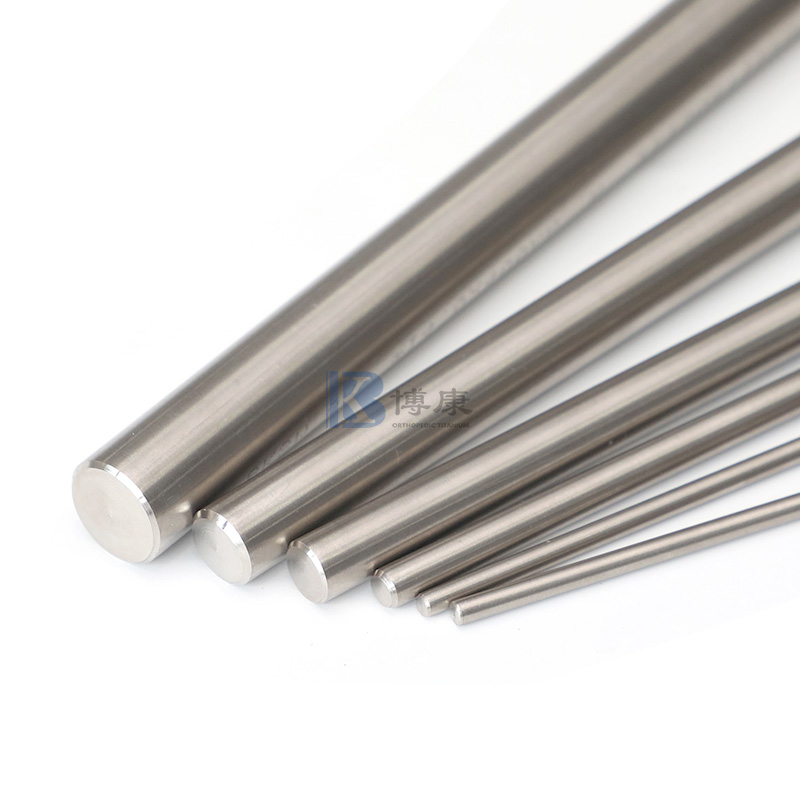
Premium Titanium Round Bars / Rods for Medical, Industrial, and Aerospace Applications Unmatched Quality & Certifica...
View Details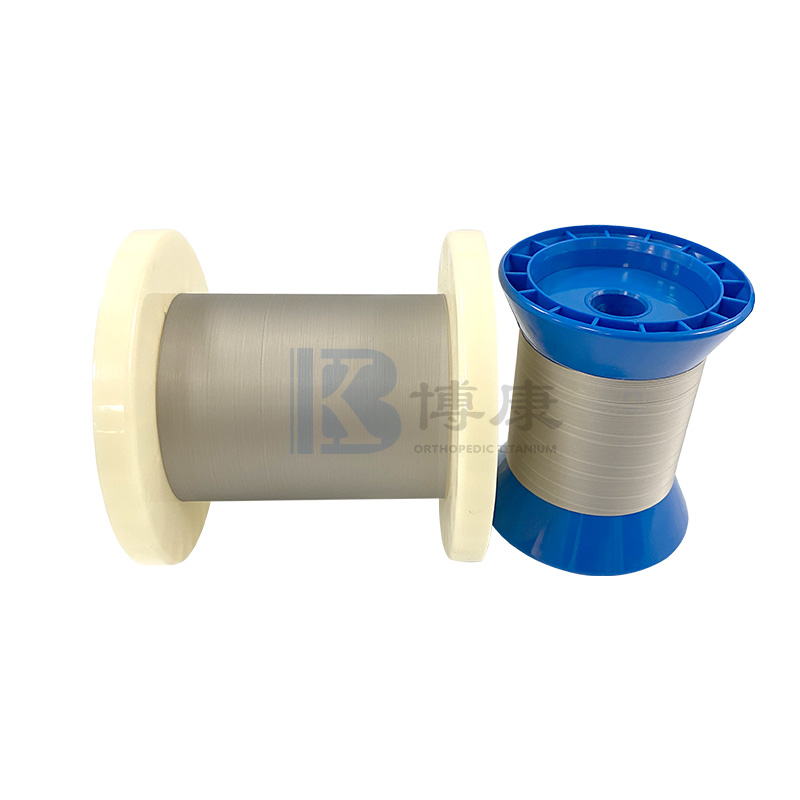
High-Purity Titanium Wire for Surgical Sutures, Staples, and Precision Medical Instruments Bokang offers premium medical...
View Details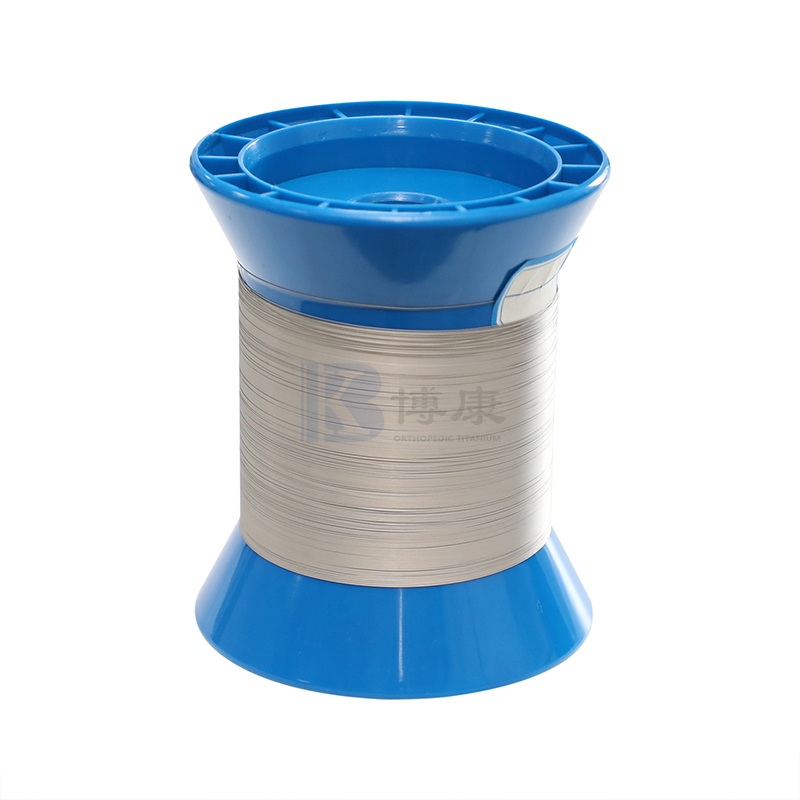
Bokang Titanium offers a wide range of high-quality titanium wires, manufactured through multiple drawing processes. Our...
View Details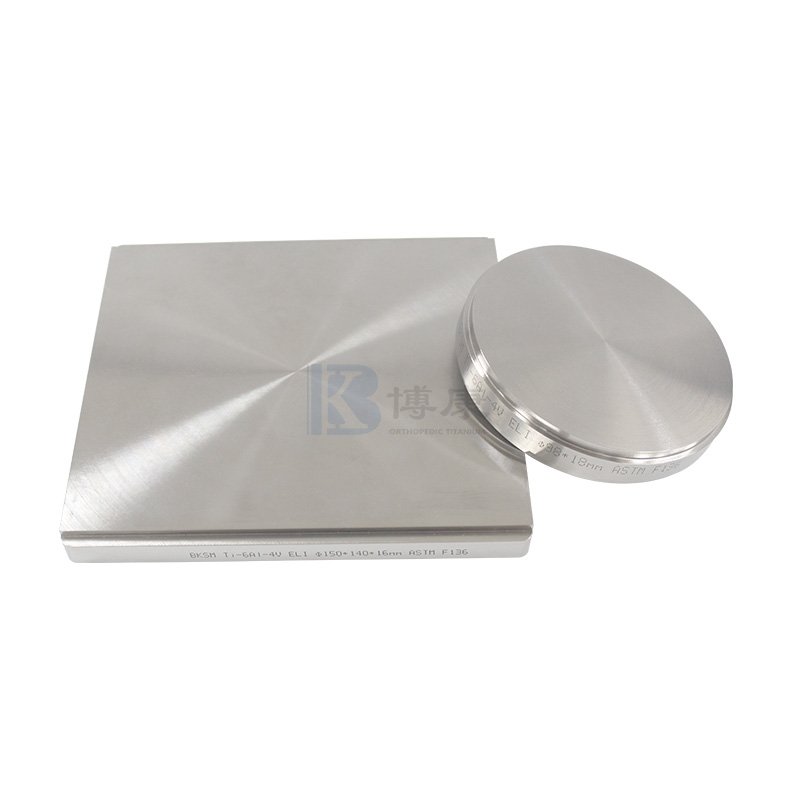
Dental Titanium Discs & Blocks – Medical Grade for CAD/CAM Milling High-quality dental titanium discs and blocks d...
View Details
Titanium Ingot (Ti Ingot) Description Our titanium ingots are made from high-purity sponge titanium and premium interme...
View DetailsTechnical Specifications
Detailed specifications for our Titanium Grade 23
| Common Designations | Ti-6Al-4V ELI, Grade 23, UNS R56401, ASTM F136 |
| Nominal Composition | Ti (Bal.), Al (5.5-6.5%), V (3.5-4.5%), Fe (max 0.25%), O (max 0.13%), C, N, H (extra low) |
| Mechanical Properties (Annealed, per F136) | Tensile Strength: 860 MPa min, Yield Strength: 795 MPa min, Elongation: 10% min, Reduction of Area: 25% min |
| Key Property Advantage | Higher Fracture Toughness, Lower Fatigue Crack Growth Rate vs. Std. Gr. 5 |
| Primary Forms | Bar, Wire, Forging Stock, Additive Manufacturing Powder |
| Key Standards | ASTM F136 (Medical Implants), AMS 4907, ASTM B348 (Bar) |
Key Advantages of Bokang Titanium Grade 23
Discover why our titanium wire stands out in the industry
Superior Biocompatibility & Safety
The ELI chemistry minimizes risk of adverse tissue reaction and provides enhanced mechanical reliability for long-term implantable devices.
Enhanced Damage Tolerance
Improved fracture toughness and fatigue crack propagation resistance increase the component's tolerance to flaws or stress concentrations.
Improved Cryogenic Performance
Retains better ductility and impact strength at very low temperatures compared to standard Grade 5, suitable for space applications.
Material Comparison
Titanium Grade 23 vs. Competitive Alternatives
| Feature | Grade 23 (Ti-6Al-4V ELI) | Grade 5 (Ti-6Al-4V) | Cobalt-Chromium Alloy (e.g., CoCrMo) |
|---|---|---|---|
| Primary Application Focus | Medical Implants, Fracture-Critical Aerospace | General Aerospace & Industrial | Wear-Resistant Medical Implants (Knees) |
| Fracture Toughness (KIC) | Higher | Standard | Lower |
| Fatigue Strength (Rotating Bending) | Similar or Slightly Higher | High | Very High |
| Elastic Modulus | ~110 GPa (Closer to bone) | ~110 GPa | ~230 GPa |
| MRI Compatibility | Excellent (Non-ferromagnetic) | Excellent | Variable (Can cause artifacts) |
Applications
Titanium Grade 23 applications across various industries
Medical Implants
- Total joint replacements: hip stems, femoral knees, shoulder implants.
- Spinal implants: interbody fusion cages, pedicle screws, rods.
- Trauma implants: bone plates, intramedullary nails, compression screws.
Aerospace (Fracture Critical)
- Critical airframe fasteners and fittings.
- Landing gear components subject to high dynamic stresses.
- Satellite and spacecraft structural members where reliability is paramount.
Biotech & Surgical Devices
- Bone drill guides and cutting jigs for orthopedic surgery.
- Housings for implantable drug pumps and neurostimulators.
- Custom patient-specific implants fabricated via additive manufacturing.
Material Selection Guide
How to choose the right titanium wire for your application
1
Verify Regulatory & Standard Requirements
For medical devices intended for implantation, specify ASTM F136 certified material. Ensure the supplier provides full traceability and mill certification.
2
Assess Criticality of Toughness
Select Grade 23 for components where resistance to crack initiation and propagation is critical, or where the consequence of a brittle fracture is severe.
3
Consider Manufacturing Method
For additive manufacturing (3D printing) of implants, Grade 23 (ELI) powder is the standard to ensure final part chemistry meets F136 requirements after processing.
4
Evaluate Total Lifecycle Cost
While Grade 23 has a premium over Grade 5, its use in critical applications can reduce risk, improve product longevity, and lower liability, justifying the higher initial cost.
Production Process & Quality Control
Our rigorous manufacturing process ensures consistent quality
Ultra-High Purity Raw Materials
Selection of titanium sponge, aluminum, and vanadium with inherently low oxygen and iron content to meet ELI starting chemistry.
→
Specialized Electrode Preparation
Precise weighing and mixing in an inert environment to prevent interstitial pickup during compaction.
→
Multiple Vacuum Arc Remelting (VAR)
Typically triple melting to achieve exceptional homogeneity and further reduce interstitial elements through vacuum distillation.
→
Controlled Thermomechanical Processing
Forging and rolling at specific temperatures and strains to develop a fine, uniform alpha-beta microstructure conducive to high toughness.
→
Verification Heat Treatment & Testing
Material is annealed and subjected to extended mechanical testing, including fracture toughness and fatigue crack growth rate, to verify ELI properties.
→
Certification & Cleanroom Handling
Final certification per ASTM F136. For medical products, subsequent processing often occurs in cleanrooms to maintain surface integrity.
Frequently Asked Questions
Common questions about pure titanium wire
For most machining operations, the difference is minimal. Grade 23 may exhibit slightly less tendency to work harden due to its lower oxygen content, potentially allowing for marginally improved tool life or feeds. However, the fundamental machining strategies (low speed, high feed, ample coolant) required for Ti-6Al-4V apply to both.
For critical applications, especially medical implants, it is recommended to use filler wire that also meets ELI specifications (such as ERTi-23 or ERTi-5ELI). Using standard Grade 5 filler could locally increase the interstitial content in the weld metal, potentially reducing its ductility and toughness below the base metal's ELI level.
The powder used for Laser Powder Bed Fusion (LPBF) or Electron Beam Melting (EBM) must meet the final implant chemistry specifications. Starting with Grade 23 ELI powder accommodates for potential minor oxygen/nitrogen pickup during the printing process, ensuring the final as-printed or heat-treated part still complies with ASTM F136 limits.
Not significantly. Both grades offer excellent and very similar corrosion resistance in physiological and most industrial environments. The primary driver for Grade 23 is enhanced mechanical reliability (toughness, fatigue) rather than improved corrosion performance.
Require a Material Test Report (MTR) or Certificate of Conformance from the mill. This document must certify the heat chemistry meets ASTM F136 or AMS 4907, including the low oxygen (≤0.13%) and iron (≤0.25%) limits. For implants, additional biological safety certificates (e.g., ISO 10993) may also be required.
Why Choose Bokang Titanium?
18+ years of experience in high-quality titanium materials
18+
Years Experience
28+
Patents & Certifications
200+
Skilled Employees
ISO 13485:2016
Medical Device Certification
Our Commitment to Quality
Changzhou Bokang Special Material Technology Co., Ltd. is Wholesale Titanium Grade 23 Manufacturers and Custom Titanium Grade 23 Suppliers. At Bokang Titanium, we adhere to the strictest quality control protocols throughout our manufacturing process. Every batch of pure titanium wire undergoes rigorous testing including dimensional verification, mechanical property testing, surface quality inspection, and chemical analysis to ensure compliance with international standards.
Our quality management system is certified to ISO 9001:2015 and ISO 13485:2016 for medical device applications, ensuring full traceability from raw material to finished product. We maintain comprehensive documentation including material certifications, test reports, and process validation records.
With 18+ years of experience in titanium material production, we have developed specialized expertise in medical-grade, aerospace-grade, and industrial-grade titanium alloys. Our products are trusted by leading medical device manufacturers, aerospace companies, and industrial clients worldwide. We offer OEM/ODM Titanium Grade 23 for sale.