
ASTM F67 / F136 Certified Titanium Material for Orthopedic & Dental Implants And Surgical Devices High-precision CP ...
View DetailsNitinol Shape Memory Alloy
A functional material system, primarily Nitinol, engineered to exhibit repeatable and controllable shape change in response to thermal stimuli, enabling smart, adaptive designs.
Product Overview
Bokang's Nitinol Shape Memory Alloy is manufactured using advanced vacuum arc remelting technology, ensuring exceptional purity and consistent mechanical properties.
Nitinol shape memory alloy represents a systems-level perspective on the material, emphasizing the engineering design and integration of its shape-changing capability. It encompasses not just the base alloy but the understanding of its thermomechanical training, constraint design, and activation methodology to create reliable "smart" components.
This field deals with exploiting both one-way and two-way memory effects. Two-way memory, where the alloy cycles between two distinct shapes with temperature without external force, requires specialized thermomechanical training. Engineers work with transformation temperatures, recovery stresses, strain limits, and fatigue life to design actuators, releases, and adaptive structures. The integration often involves electrical resistive heating for control, biasing springs for reset, and thermal interface design for efficiency. It is the cornerstone of applications demanding autonomous, temperature-responsive action or compact, solid-state actuation.
Technical Support & Documentation
Related Products
Explore our other high-performance materials

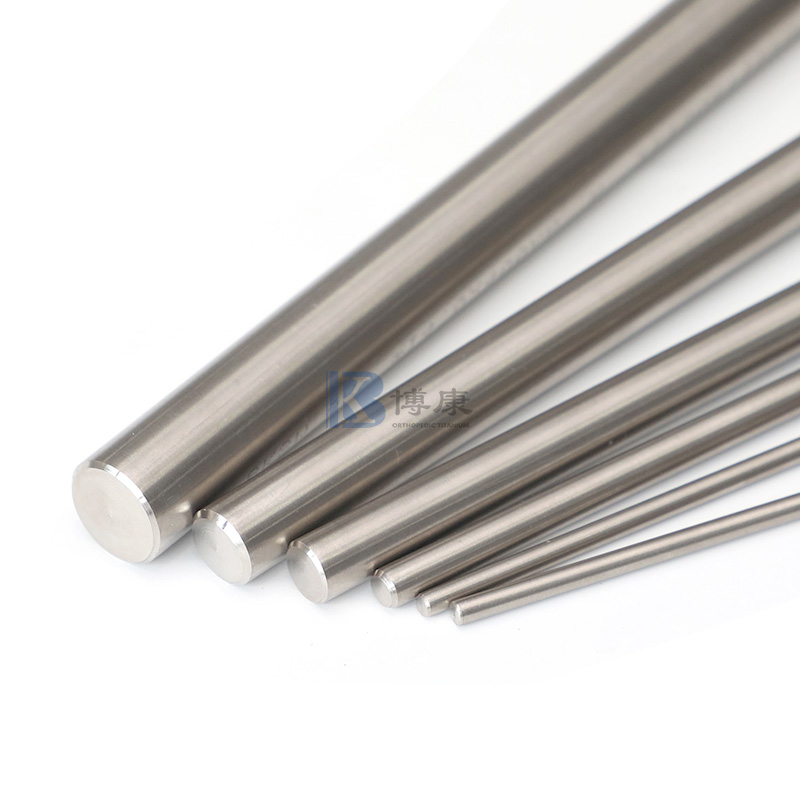
Premium Titanium Round Bars / Rods for Medical, Industrial, and Aerospace Applications Unmatched Quality & Certifica...
View Details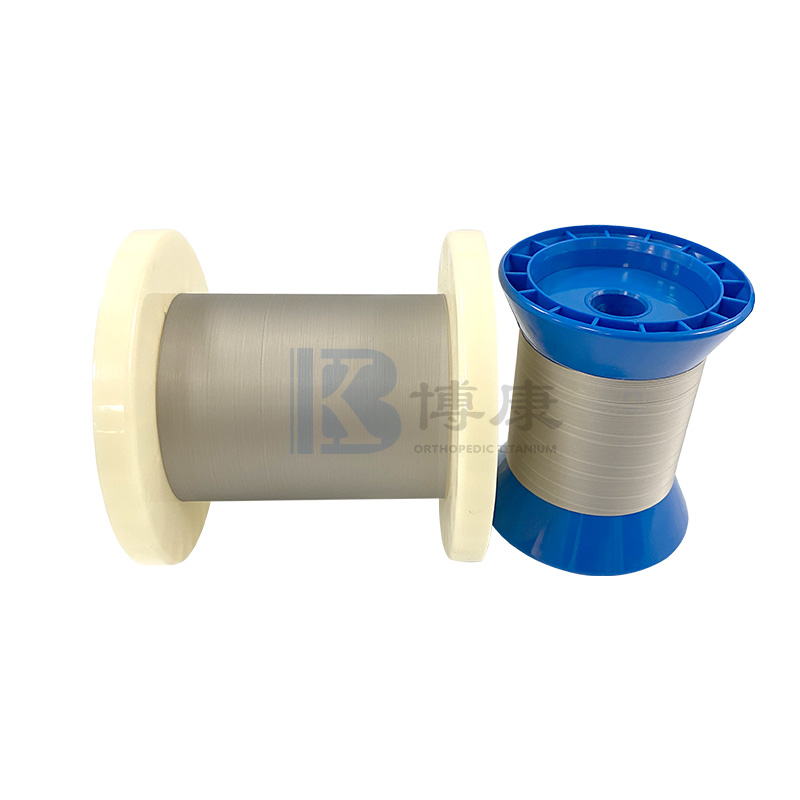
High-Purity Titanium Wire for Surgical Sutures, Staples, and Precision Medical Instruments Bokang offers premium medical...
View Details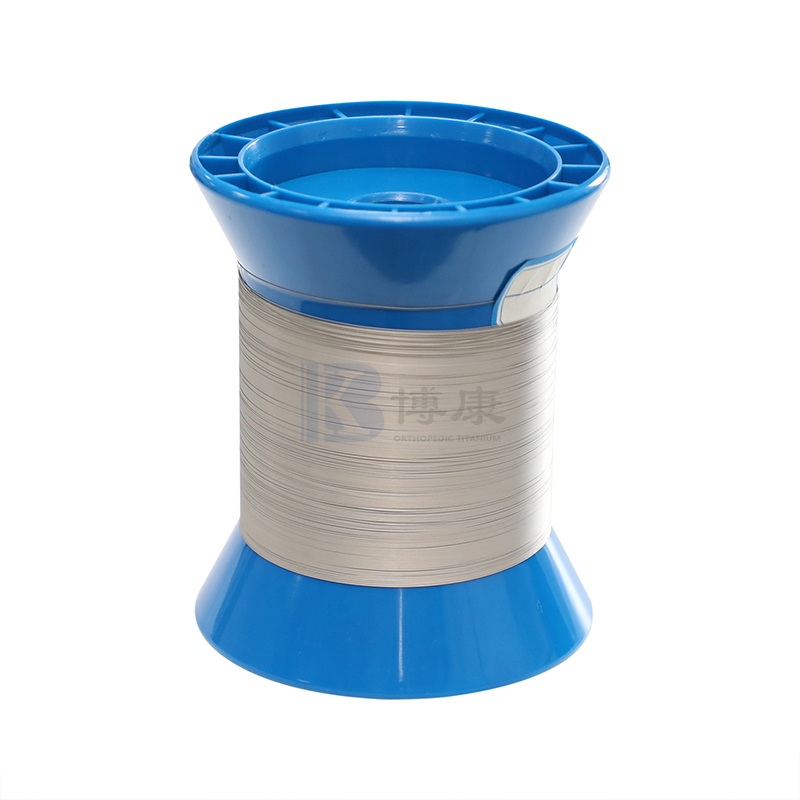
Bokang Titanium offers a wide range of high-quality titanium wires, manufactured through multiple drawing processes. Our...
View Details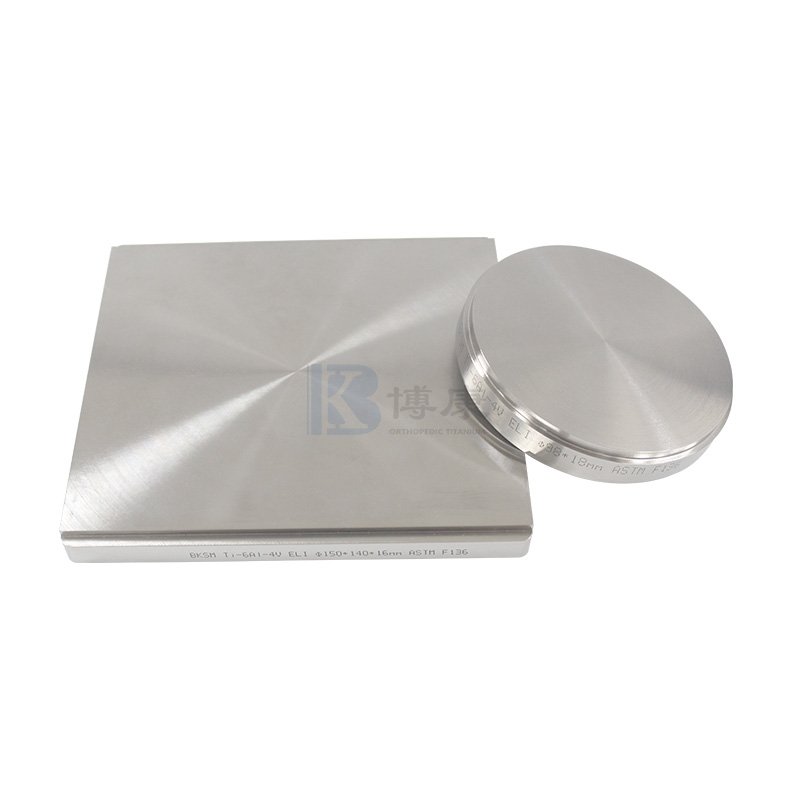
Dental Titanium Discs & Blocks – Medical Grade for CAD/CAM Milling High-quality dental titanium discs and blocks d...
View Details
Titanium Ingot (Ti Ingot) Description Our titanium ingots are made from high-purity sponge titanium and premium interme...
View DetailsTechnical Specifications
Detailed specifications for our Nitinol Shape Memory Alloy
| System Capabilities | One-Way Actuation, Two-Way Cycling, Constrained Recovery (Force) |
| Key Design Parameters | Af, Ms, Hysteresis, Recovery Stress, Training Stability |
| Actuation Methods | Joule (Resistive) Heating, Convective/Conductive Heating, Ambient |
| Cycle Life (Trained Two-Way) | 10^4 to >10^6 cycles, depending on strain and design |
| Common Product Forms | Wires, Springs, Strips, Torsional Tubes |
| Integration Considerations | Heat sinking, Electrical insulation, Biasing mechanisms |
Key Advantages of Bokang Nitinol Shape Memory Alloy
Discover why our titanium wire stands out in the industry
Repeatable Two-Way Actuation
Through training processes, can be engineered to reliably cycle between two programmed shapes with temperature change, enabling true cyclic solid-state motion.
High Work Output per Volume
Delivers substantial force and displacement from a small volume, offering a superior power-to-weight ratio compared to many small motors or solenoids.
Silent and EMI-Free Operation
As a thermally activated solid-state material, it produces no audible noise or electromagnetic interference, ideal for sensitive electronic or acoustic environments.
Material Comparison
Nitinol Shape Memory Alloy vs. Competitive Alternatives
| Feature | Nitinol Shape Memory System | Piezoelectric Actuator | Solenoid (Electromagnetic) |
|---|---|---|---|
| Actuation Principle | Thermal Phase Change | Electric Field Induced Strain | Electromagnetic Force |
| Stroke | Long (mm to cm range) | Very Short (µm to mm range) | Long |
| Force | High | High (at short stroke) | Moderate |
| Speed | Slow to Moderate (sec) | Very Fast (ms) | Fast (ms) |
| Energy Efficiency | Low (Most energy is heat) | High | Moderate |
| Control Complexity | Moderate (Temperature control) | High (High-voltage driver) | Low (Current control) |
Applications
Nitinol Shape Memory Alloy applications across various industries
Robotics & Grippers
- Artificial muscles and actuators for bio-inspired soft robotics
- Compact grippers for micro-assembly and handling delicate objects
- Actuators for anthropomorphic hand and finger movements
Aerospace Adaptive
- Morphing winglets or vortex generators for optimized aerodynamics
- Deployable seals and covers for spacecraft
- Actively controlled inlet geometries for engines
Consumer Products
- Auto-adjusting damping systems in sports equipment
- Thermostatic mixer valves in showers and faucets
- Actuators for adaptive eyewear or wearables
Material Selection Guide
How to choose the right titanium wire for your application
1
Choose Between One-Way and Two-Way Memory
For simple deployment or single actuation, one-way is sufficient and more robust. For repeated cycling between two positions, specify two-way memory and discuss training requirements with the supplier.
2
Design the Activation & Reset Mechanism
For one-way, plan how to deform the martensite (manual, spring bias). For two-way, ensure the thermal cycle (heating/cooling) is achievable. For electrical heating, calculate resistance and current needs.
3
Model Thermal Dynamics
Simulate heat flow into and out of the SMA element. Cooling is often the limiting factor for cycle time. Consider active cooling (airflow, liquid) or heat sinking if high frequency is needed.
4
Account for Functional Fatigue in Lifecycle
Define the required number of cycles and the allowable degradation in stroke or force over time. Request supplier data on functional fatigue under conditions similar to your application.
Production Process & Quality Control
Our rigorous manufacturing process ensures consistent quality
Application-Specific Alloy Development
Alloy composition is fine-tuned to achieve the exact transformation temperatures (Af, Ms) and hysteresis width required for the device's operating environment and cycle speed.
→
Component Fabrication
The alloy is processed into the specific actuator form: wire for linear pull, spring for push/pull, strip for bending, or tube for torsion.
→
Primary Shape Setting
The component is constrained in its high-temperature "Austenite" shape and heat-treated to imprint this memory.
→
Thermo-Mechanical Training (for Two-Way)
For two-way memory, the component undergoes repeated cycles of deformation at low temperature and constrained recovery at high temperature to "teach" it the low-temperature shape.
→
System Integration & Characterization
The trained SMA element is integrated with biasing springs, electrical contacts, and heat sinks. Its force-stroke-temperature characteristics are fully mapped.
→
Lifecycle & Environmental Testing
The complete actuator undergoes extended cycling tests under simulated operational conditions (temperature, load) to validate performance stability and predict service life.
Frequently Asked Questions
Common questions about pure titanium wire
One-way memory only recovers the high-temperature shape upon heating; it must be mechanically deformed again upon cooling. Two-way memory automatically changes shape upon both heating (to Shape A) and cooling (to Shape B) without external force, due to internal stresses created during training.
The thermodynamic efficiency (mechanical work output / heat energy input) is relatively low, typically only 3-5%. However, its appeal lies in its high work density (J/cm³), simplicity, and silent operation, not in energy efficiency.
Significantly changing the actuation temperature (Af) after final training is not possible, as it is set by the composition and final heat treatment. Minor adjustments can be made by applying constant stress (Clausius-Clapeyron relationship).
Common methods include applying a thin, flexible insulating coating (e.g., polyimide, Parylene), sleeving it with insulating tubing, or using it in a dry environment with proper spacing. Direct electrical contact with other conductors must be prevented.
1) Functional fatigue: Gradual loss of recovery stroke or force. 2) Structural fatigue: Crack initiation and growth leading to fracture. 3) Overheating: Erasure of memory or oxidation. 4) Instability in two-way cycling: Drift of the low or high-temperature positions over time.
Why Choose Bokang Titanium?
18+ years of experience in high-quality titanium materials
18+
Years Experience
28+
Patents & Certifications
200+
Skilled Employees
ISO 13485:2016
Medical Device Certification
Our Commitment to Quality
Changzhou Bokang Special Material Technology Co., Ltd. is Wholesale Nitinol Shape Memory Alloy Manufacturers and Custom Nitinol Shape Memory Alloy Suppliers. At Bokang Titanium, we adhere to the strictest quality control protocols throughout our manufacturing process. Every batch of pure titanium wire undergoes rigorous testing including dimensional verification, mechanical property testing, surface quality inspection, and chemical analysis to ensure compliance with international standards.
Our quality management system is certified to ISO 9001:2015 and ISO 13485:2016 for medical device applications, ensuring full traceability from raw material to finished product. We maintain comprehensive documentation including material certifications, test reports, and process validation records.
With 18+ years of experience in titanium material production, we have developed specialized expertise in medical-grade, aerospace-grade, and industrial-grade titanium alloys. Our products are trusted by leading medical device manufacturers, aerospace companies, and industrial clients worldwide. We offer OEM/ODM Nitinol Shape Memory Alloy for sale.