
ASTM F67 / F136 Certified Titanium Material for Orthopedic & Dental Implants And Surgical Devices High-precision CP ...
View DetailsNitinol Memory Alloy
The original and most prevalent shape memory alloy, Nitinol, characterized by its ability to "remember" and recover a pre-determined shape upon thermal activation.
Product Overview
Bokang's Nitinol Memory Alloy is manufactured using advanced vacuum arc remelting technology, ensuring exceptional purity and consistent mechanical properties.
Nitinol memory alloy specifically refers to the utilization of Nickel-Titanium alloys for their Shape Memory Effect (SME). In this mode, the alloy is deformed while in its low-temperature, malleable martensitic phase. Upon heating above its Austenite finish (Af) temperature, it undergoes a phase transformation back to the stronger austenitic phase, recovering its original, "memorized" shape with considerable force.
This one-way shape memory is the basis for many simple, reliable actuators and deployable structures. The "memory" is not a magnetic or electronic recording, but a crystallographic one, imprinted during a final shape-setting heat treatment where the alloy is constrained in its desired high-temperature shape. Applications range from thermal fuses and couplers to deployable satellite antennas and cardiovascular stents that expand with body heat. The reliability of this effect hinges on precise control of composition and the thermomechanical training process.
Technical Support & Documentation
Related Products
Explore our other high-performance materials

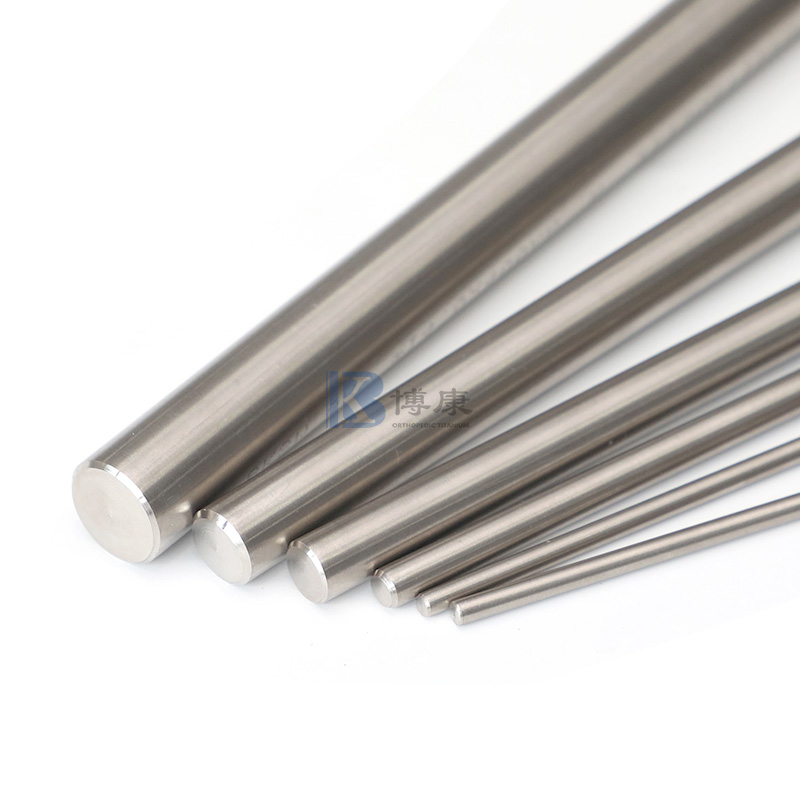
Premium Titanium Round Bars / Rods for Medical, Industrial, and Aerospace Applications Unmatched Quality & Certifica...
View Details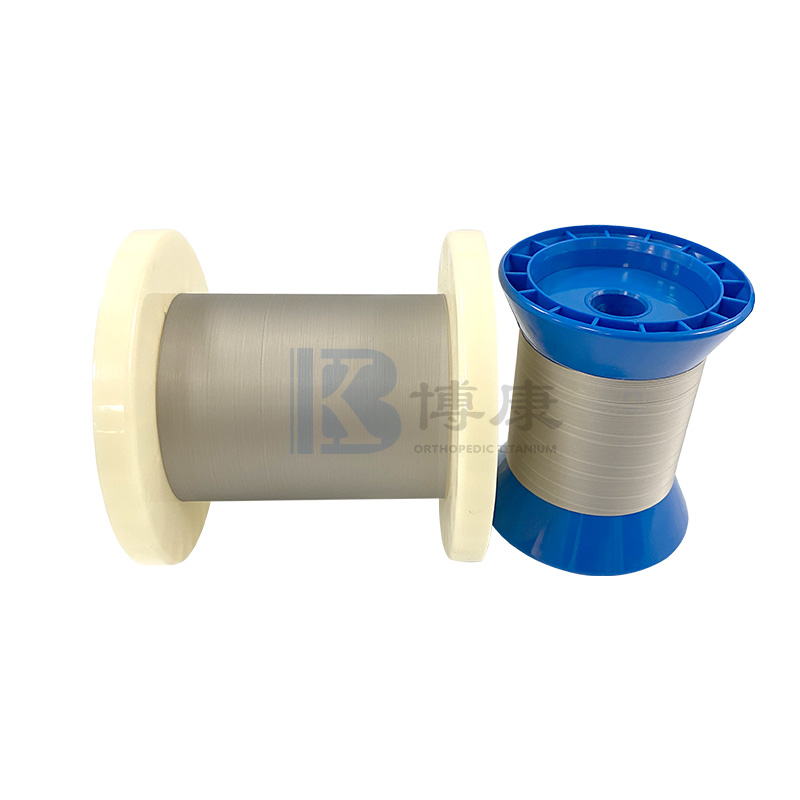
High-Purity Titanium Wire for Surgical Sutures, Staples, and Precision Medical Instruments Bokang offers premium medical...
View Details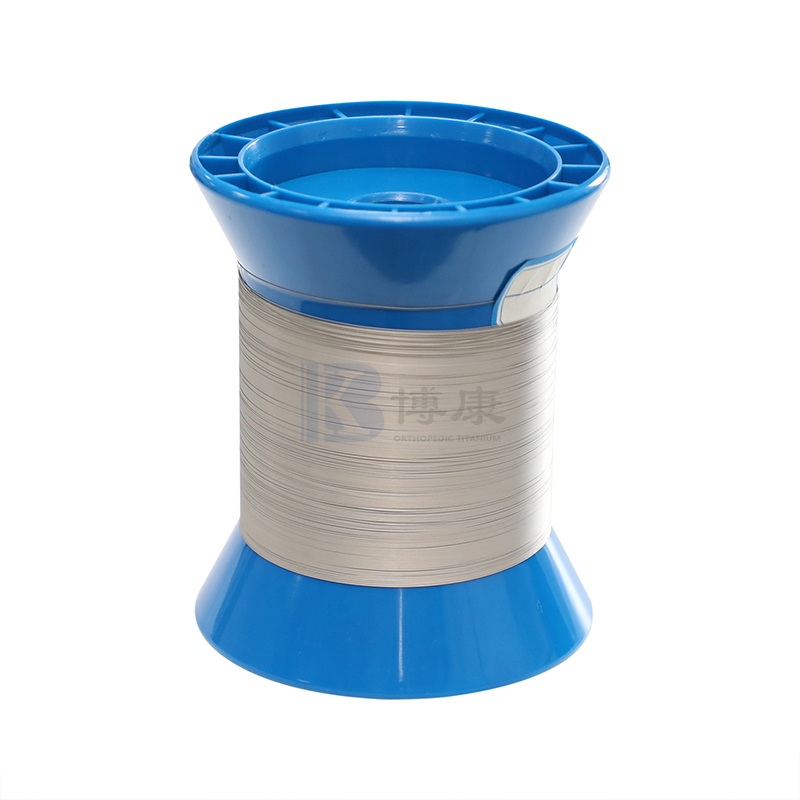
Bokang Titanium offers a wide range of high-quality titanium wires, manufactured through multiple drawing processes. Our...
View Details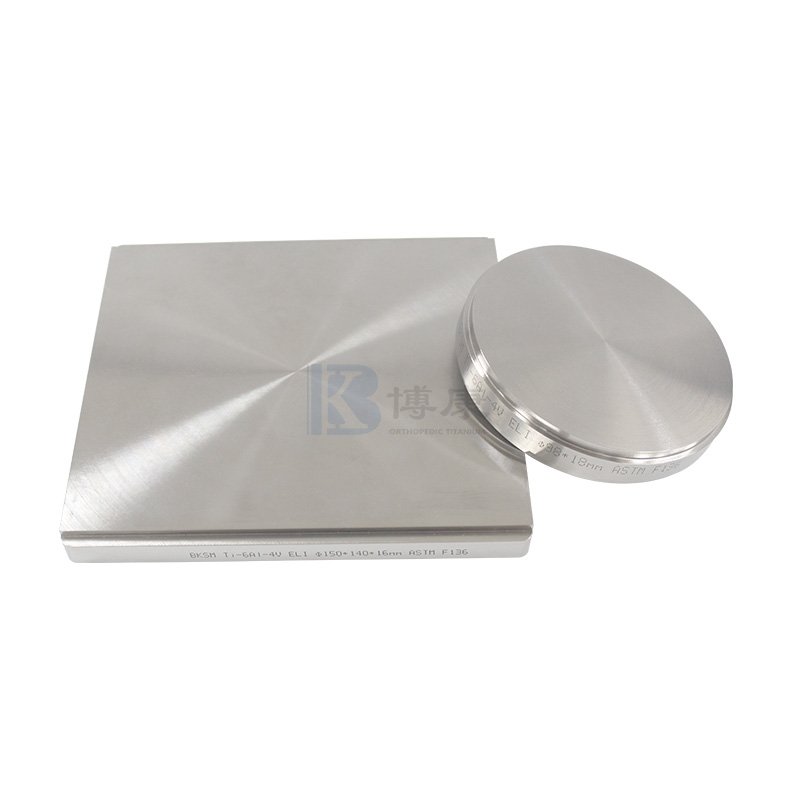
Dental Titanium Discs & Blocks – Medical Grade for CAD/CAM Milling High-quality dental titanium discs and blocks d...
View Details
Titanium Ingot (Ti Ingot) Description Our titanium ingots are made from high-purity sponge titanium and premium interme...
View DetailsTechnical Specifications
Detailed specifications for our Nitinol Memory Alloy
| Alloy Focus | NiTi (Near 50 at.% Ni), Ternary alloys (NiTiCu, NiTiFe) |
| Key Property | One-Way Shape Memory Effect (SME) |
| Shape Recovery Strain | Typically 4% to 8% |
| Recovery Force | High (Up to several hundred MPa of recovery stress) |
| Actuation Trigger | Thermal (Heating above Af) |
| Hysteresis (As-Af) | Typically 20-50°C for NiTi, can be narrower with ternary additions |
| Cyclic Stability | Good for limited cycles; training can improve two-way effect. |
Key Advantages of Bokang Nitinol Memory Alloy
Discover why our titanium wire stands out in the industry
High-Strain Actuation & Recovery
Capable of producing significant linear or angular displacement upon heating, converting thermal energy directly into mechanical work in a compact form factor.
Permanent Shape Programming
The high-temperature austenite shape is permanently set during manufacturing, allowing for complex 3D geometries to be recovered from a compact, deformed state.
Passive & Fail-Safe Operation
Functions as a passive actuator triggered by ambient temperature changes (e.g., thermal release mechanisms) or can be designed as a fail-safe device that reverts to a safe shape upon overheating.
Material Comparison
Nitinol Memory Alloy vs. Competitive Alternatives
| Feature | Nitinol (Memory Effect) | Bimetallic Strip | Wax or Polymer Actuator |
|---|---|---|---|
| Actuation Mechanism | Solid-State Phase Transformation | Differential Thermal Expansion | Volume Change (Phase Change/Expansion) |
| Strain/Displacement | High (Several %) | Low (< 1%) | Moderate to High |
| Force Output | Very High | Low | Low to Moderate |
| Response Speed | Fast (Heat transfer limited) | Fast | Slow (Heat transfer limited) |
| Cycle Life | Good to Excellent | Excellent | Limited |
Applications
Nitinol Memory Alloy applications across various industries
Thermal Management
- Thermal fuses and circuit breakers for overheat protection
- Actuators for ventilation flaps in appliances and electronics
- Self-regulating valves in fluidic systems
Automotive & Aerospace
- Shape memory couplings for fluid lines (ease assembly, then shrink-fit)
- De-icing system components on aircraft
- Actuators for variable geometry components in engines
Deployable Structures
- Self-deploying antennas and solar arrays for satellites (CuBe)
- Deployable booms and trusses for space exploration
- Actuators for morphing wing structures
Material Selection Guide
How to choose the right titanium wire for your application
1
Define the Activation Temperature (Af)
Precisely specify the Austenite finish temperature required for the application. Consider the heat source (ambient, electrical, fluid) and ensure Af is reliably achievable.
2
Calculate Required Recovery Stress & Stroke
Determine the force needed to overcome the system's resistance and the geometric displacement (stroke) required. This dictates the cross-sectional area and length of the memory element.
3
Consider Constraint During Recovery
If the memory element is partially or fully constrained during heating, it generates recovery stress instead of strain. Design must account for these high internal stresses to avoid failure.
4
Plan for the "Trained" Shape & Reset Mechanism
Define the final, high-temperature shape with the supplier. Also, design how the component will be reset to its martensitic (deformed) state for the next cycle, often requiring mechanical force at low temperature.
Production Process & Quality Control
Our rigorous manufacturing process ensures consistent quality
Composition Specification for Af
The nickel-to-titanium ratio is carefully calculated and controlled during melting, as it is the primary determinant of the transformation temperature range.
→
Melting & Primary Forming
Alloy is vacuum melted and processed into a general form (bar, sheet) via standard hot working techniques.
→
Fabrication to Near-Net Shape
The material is machined, cut, or formed into the final component geometry in its austenitic state (high temperature form is easier to machine).
→
Shape Setting Heat Treatment
The single most critical step. The component is firmly constrained in its desired memory shape using fixtures and subjected to a precise time-temperature profile (e.g., 500°C for 5-30 mins).
→
Training (for Two-Way Memory, if needed)
For two-way effect, the component undergoes a cyclic thermo-mechanical "training" process to instill memory of both the high- and low-temperature shapes.
→
Functional Testing & Verification
Each batch is tested by deforming a sample at low temperature and verifying full recovery upon heating above Af. Recovery force and strain are measured.
Frequently Asked Questions
Common questions about pure titanium wire
During the shape-setting heat treatment, while constrained in the desired form, the alloy's austenite crystal structure adopts a specific orientation and arrangement aligned with that shape. When cooled to martensite, it can deform easily. Upon reheating, the martensite reverts to the exact same austenite orientation, recovering the original shape.
Excessive overheating can erase the memory by causing recrystallization or grain growth, effectively resetting the internal crystal arrangement. The component may not recover properly or may recover to a different shape. Operating temperature must stay well below the shape-setting temperature.
The intrinsic phase transformation is very fast. The overall actuation speed is limited by the rate of heat transfer into the alloy. Speed can be controlled by adjusting the heating method (resistive, convective, fluid), power input, and thermal mass of the component.
No, it is inherently repeatable. After recovering its shape, the component can be cooled back to martensite, plastically deformed again, and will recover upon subsequent heating. However, functional fatigue may limit the number of reliable cycles.
Copper substitution for some nickel narrows the transformation hysteresis (As to Af gap), making actuation more precise. It can also improve cyclic stability and lower the sensitivity of transformation temperatures to composition variations. However, it may reduce the maximum recoverable strain.
Why Choose Bokang Titanium?
18+ years of experience in high-quality titanium materials
18+
Years Experience
28+
Patents & Certifications
200+
Skilled Employees
ISO 13485:2016
Medical Device Certification
Our Commitment to Quality
Changzhou Bokang Special Material Technology Co., Ltd. is Wholesale Nitinol Memory Alloy Manufacturers and Custom Nitinol Memory Alloy Suppliers. At Bokang Titanium, we adhere to the strictest quality control protocols throughout our manufacturing process. Every batch of pure titanium wire undergoes rigorous testing including dimensional verification, mechanical property testing, surface quality inspection, and chemical analysis to ensure compliance with international standards.
Our quality management system is certified to ISO 9001:2015 and ISO 13485:2016 for medical device applications, ensuring full traceability from raw material to finished product. We maintain comprehensive documentation including material certifications, test reports, and process validation records.
With 18+ years of experience in titanium material production, we have developed specialized expertise in medical-grade, aerospace-grade, and industrial-grade titanium alloys. Our products are trusted by leading medical device manufacturers, aerospace companies, and industrial clients worldwide. We offer OEM/ODM Nitinol Memory Alloy for sale.