
ASTM F67 / F136 Certified Titanium Material for Orthopedic & Dental Implants And Surgical Devices High-precision CP ...
View DetailsNickel Titanium Orthodontic Wires
Superelastic and shape memory archwires that deliver continuous, gentle forces for efficient and controlled tooth movement in orthodontic treatment.
Product Overview
Bokang's Nickel Titanium Orthodontic Wires is manufactured using advanced vacuum arc remelting technology, ensuring exceptional purity and consistent mechanical properties.
Nickel titanium (NiTi) orthodontic wires represent a transformative advancement in dentistry, utilizing the unique properties of nickel-titanium shape memory alloys to apply optimal forces to teeth. These wires exist in two primary functional types: superelastic (or pseudoelastic) and thermoactive (shape memory). Superelastic wires exhibit a wide "plateau" region in their stress-strain curve, delivering nearly constant force over a large range of deformation, which is ideal for the initial alignment of crooked teeth. Thermoactive wires are programmed to change shape (and thus applied force) as they warm to mouth temperature.
The wires are characterized by low stiffness (modulus of elasticity), high springback, and excellent resistance to permanent deformation. This allows them to be engaged in significantly misaligned brackets without generating excessive forces that could cause root resorption or patient discomfort. Their ability to deliver light, continuous forces promotes more physiological tooth movement, potentially reducing treatment time and improving patient comfort compared to traditional stainless steel wires.
Technical Support & Documentation
Related Products
Explore our other high-performance materials

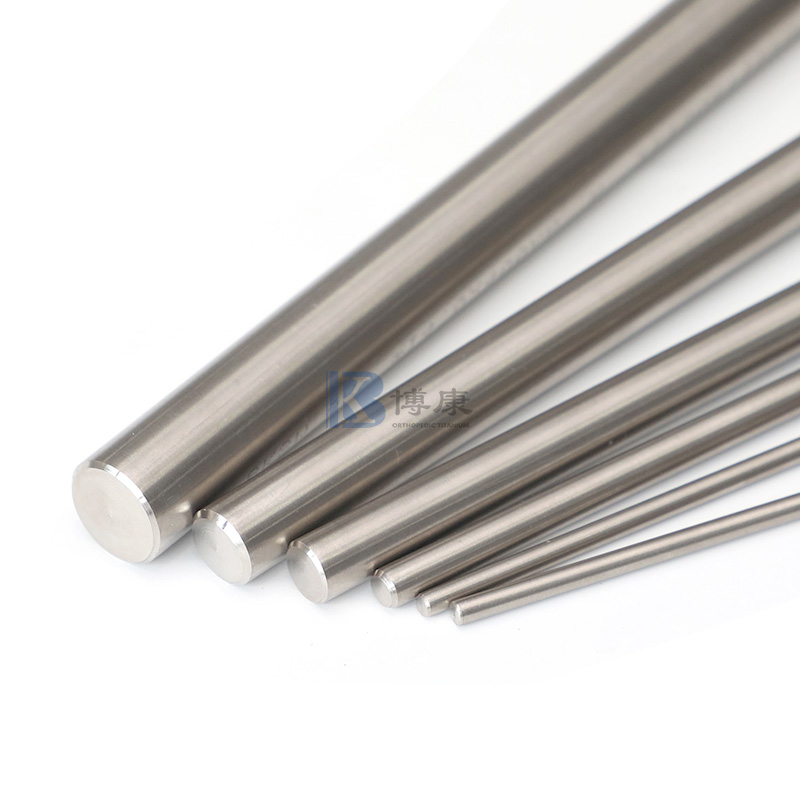
Premium Titanium Round Bars / Rods for Medical, Industrial, and Aerospace Applications Unmatched Quality & Certifica...
View Details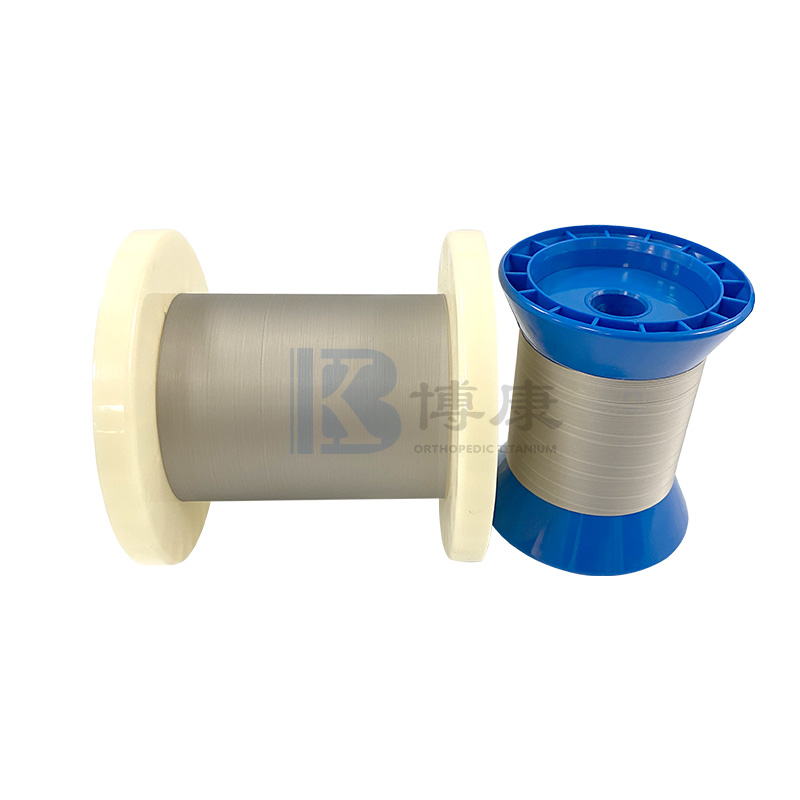
High-Purity Titanium Wire for Surgical Sutures, Staples, and Precision Medical Instruments Bokang offers premium medical...
View Details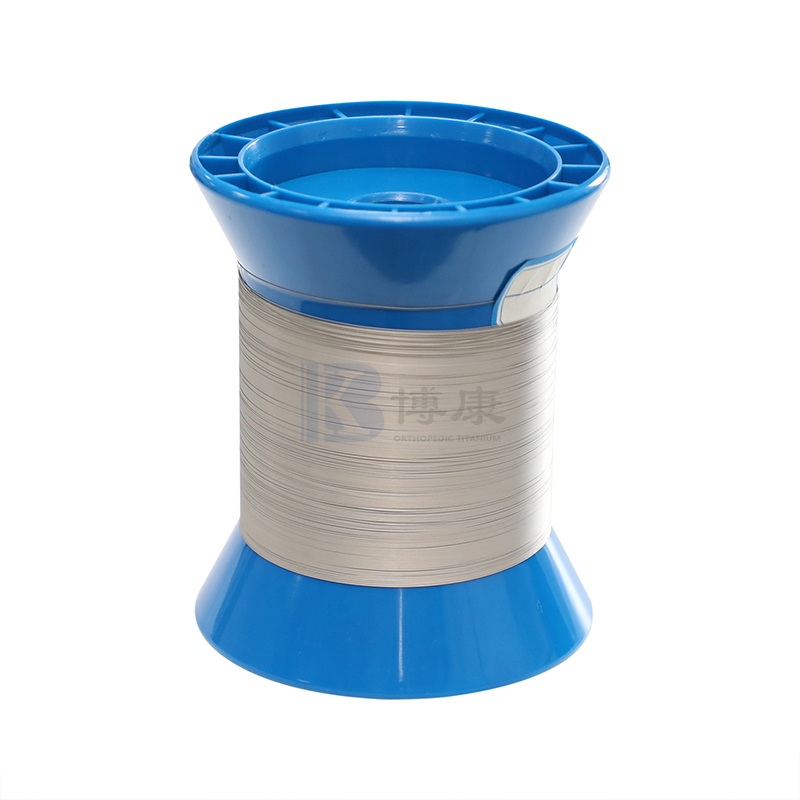
Bokang Titanium offers a wide range of high-quality titanium wires, manufactured through multiple drawing processes. Our...
View Details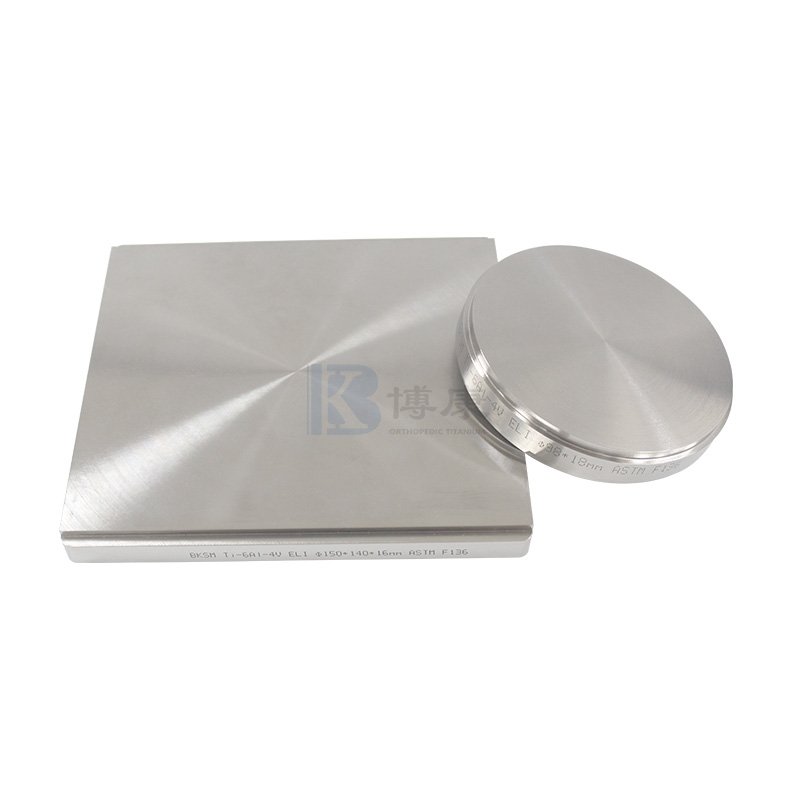
Dental Titanium Discs & Blocks – Medical Grade for CAD/CAM Milling High-quality dental titanium discs and blocks d...
View Details
Titanium Ingot (Ti Ingot) Description Our titanium ingots are made from high-purity sponge titanium and premium interme...
View DetailsTechnical Specifications
Detailed specifications for our Nickel Titanium Orthodontic Wires
| Material Composition | ~55% Nickel, ~45% Titanium (near-equiatomic NiTi), may include Copper (Cu-NiTi) for different properties |
| Common Wire Types | Superelastic (Austenitic Active), Thermoactive (Martensitic Active), Graded Thermodynamic |
| Transformation Temperatures | Austenite Finish (Af): Typically set between 25°C-37°C for intraoral activation |
| Standard Dimensions (Cross-section) | Round: 0.012" to 0.020" diameter; Rectangular: 0.016" x 0.022", 0.019" x 0.025" |
| Key Mechanical Properties | Low Modulus (~40-50 GPa), High Elastic Deflection, Plateau Stress ~200-400 MPa |
| Standards & Biocompatibility | ASTM F2063, ISO 15841; Biocompatibility per ISO 10993, Low Nickel Release |
Key Advantages of Bokang Nickel Titanium Orthodontic Wires
Discover why our titanium wire stands out in the industry
Light Continuous Forces
Exerts optimal, biologically compatible forces over extended periods, promoting efficient bone remodeling and tooth movement with reduced discomfort.
High Deflection & Memory
Can be bent or tied into significantly displaced brackets and still return to its original shape, engaging all teeth from the start of treatment.
Reduced Appointment Frequency
Maintains effective force over longer intervals, potentially allowing for longer times between orthodontic adjustments.
Material Comparison
Nickel Titanium Orthodontic Wires vs. Competitive Alternatives
| Feature | Nickel Titanium (NiTi) Wire | Stainless Steel Wire | Beta Titanium (TMA) Wire |
|---|---|---|---|
| Primary Function | Initial Alignment & Leveling | Finishing, Space Closure, Heavy Duties | Intermediate Mechanics, Torque Control |
| Stiffness (Modulus) | Very Low | Very High | Medium |
| Force Delivery Profile | Constant over large range | High, linearly increasing | Medium, predictable |
| Formability / Bendability by Clinician | Not intended for bending | Excellent, holds bends | Good, holds bends well |
| Relative Cost | High | Low | Very High |
Applications
Nickel Titanium Orthodontic Wires applications across various industries
Orthodontic Treatment Stages
- Initial Alignment: Superelastic NiTi wires for leveling and aligning crowded or rotated teeth.
- Intermediate Leveling: Copper NiTi or graded thermodynamic wires for more controlled force as alignment improves.
- Space Closure with Continuous Forces: Certain NiTi designs used with specific mechanics for gentle space closure.
Specialized Treatments
- Lingual orthodontics (behind-the-teeth) where low force is critical due to short inter-bracket distances.
- Clear aligner therapy, as an adjunct or for specific tooth movements requiring precise force application.
- Treatment of patients with reduced periodontal support where light forces are mandatory.
Retention
- Passive NiTi wires bonded behind teeth (fixed retainers) due to their flexibility and resistance to fatigue fracture.
- Active retainers for minor tooth movement post-treatment.
Material Selection Guide
How to choose the right titanium wire for your application
1
Diagnose the Malocclusion & Treatment Phase
Select superelastic NiTi for severe crowding or misalignment in the initial phase. For moderate alignment or later phases, consider thermoactive or copper-added NiTi for more graduated force.
2
Determine Wire Dimension and Shape
Choose small round wires (e.g., 0.014" or 0.016") for initial alignment in standard edgewise brackets. Larger dimensions or rectangular wires are used for later stages to control root position (torque).
3
Evaluate Patient Factors
Consider patient sensitivity: for highly sensitive patients, wires with lower plateau stress are preferable. For patients with nickel allergies, consider titanium molybdenum alloy (TMA) or coated NiTi wires, though true allergy to dental NiTi is extremely rare.
4
Select Appropriate Mechanics & LigationSuperelastic NiTi works well with both conventional ligatures and passive self-ligating brackets. Ensure the ligation method does not inhibit the wire's ability to slide or express its superelastic properties.
Production Process & Quality Control
Our rigorous manufacturing process ensures consistent quality
High-Precision Alloy Melting
Nickel and titanium of medical-grade purity are vacuum melted to create a homogenous NiTi ingot with precisely controlled transformation temperatures.
→Hot Extrusion & Drawing
The ingot is hot-extruded into a rod, then drawn through a series of progressively smaller diamond dies with intermediate heat treatments to achieve final wire diameter.
→Thermomechanical Treatment (Training)
The wire undergoes specific heating and cooling cycles while constrained to set its superelastic or shape memory properties and straighten it.
→Surface Treatment & Coating
The wire is electropolished to a smooth, glossy finish to reduce friction. Some wires receive a polymer coating (e.g., rhodium, Teflon) for aesthetics or reduced friction.
→Spooling, Cutting & Packaging
The continuous wire is spooled or cut into specific arch-length segments. It is then sterilized (gamma irradiation or ETO) and packaged in sterile, unit-dose pouches.
→Quality Control & Functional Testing
Each batch undergoes rigorous testing: dimension verification, mechanical testing (3-point bend), transformation temperature verification (DSC), and biocompatibility assurance.
Frequently Asked Questions
Common questions about pure titanium wire
Superelastic (Austenitic Active) wires are active at room temperature. When engaged in the brackets, they immediately exert a constant light force as they deflect. Thermoactive (Martensitic Active) wires are softer and more flexible at room temperature, making them easier to insert. Once in the mouth, they warm up and transform to a stiffer state, actively applying force to move teeth. They are often used when initial engagement is difficult.
Extensive clinical evidence suggests that nickel release from high-quality, surface-treated NiTi orthodontic wires in the oral environment is minimal and rarely causes allergic reactions. The titanium oxide surface layer acts as a barrier. However, for patients with a documented severe nickel allergy, alternatives like titanium molybdenum alloy (TMA), coated NiTi, or gold-plated wires are available. A consultation with an allergist is recommended.
NiTi wires derive their clinical benefit from their precisely engineered superelastic or shape memory properties. Bending the wire with pliers creates localized stress and heat that can disrupt the alloy's microstructure, "training" it to a new shape and destroying its intended force-delivery characteristics. For adjustments, the wire should be replaced.
The duration varies based on the initial tooth displacement and the wire's properties. A superelastic NiTi wire can maintain clinically useful force for 6-12 weeks. However, as teeth align, the wire's deflection decreases, and its effective force diminishes. It is typically replaced with the next size or type of wire once it becomes passive (no longer deflected) in the brackets.
No, they are single-use devices. Attempting to resterilize (autoclave) a NiTi wire would alter its transformation temperature and mechanical properties. Recycling involves reprocessing the alloy at a mill level, not clinical reuse. Using a wire on more than one patient poses cross-contamination risks and is not permitted.
Why Choose Bokang Titanium?
18+ years of experience in high-quality titanium materials
18+
Years Experience
28+
Patents & Certifications
200+
Skilled Employees
ISO 13485:2016
Medical Device Certification
Our Commitment to Quality
Changzhou Bokang Special Material Technology Co., Ltd. is Wholesale Nickel Titanium Orthodontic Wires Manufacturers and Custom Nickel Titanium Orthodontic Wires Suppliers. At Bokang Titanium, we adhere to the strictest quality control protocols throughout our manufacturing process. Every batch of pure titanium wire undergoes rigorous testing including dimensional verification, mechanical property testing, surface quality inspection, and chemical analysis to ensure compliance with international standards.
Our quality management system is certified to ISO 9001:2015 and ISO 13485:2016 for medical device applications, ensuring full traceability from raw material to finished product. We maintain comprehensive documentation including material certifications, test reports, and process validation records.
With 18+ years of experience in titanium material production, we have developed specialized expertise in medical-grade, aerospace-grade, and industrial-grade titanium alloys. Our products are trusted by leading medical device manufacturers, aerospace companies, and industrial clients worldwide. We offer OEM/ODM Nickel Titanium Orthodontic Wires for sale.
Production Process & Quality Control
Our rigorous manufacturing process ensures consistent quality
High-Precision Alloy Melting
Nickel and titanium of medical-grade purity are vacuum melted to create a homogenous NiTi ingot with precisely controlled transformation temperatures.
→
Hot Extrusion & Drawing
The ingot is hot-extruded into a rod, then drawn through a series of progressively smaller diamond dies with intermediate heat treatments to achieve final wire diameter.
→
Thermomechanical Treatment (Training)
The wire undergoes specific heating and cooling cycles while constrained to set its superelastic or shape memory properties and straighten it.
→
Surface Treatment & Coating
The wire is electropolished to a smooth, glossy finish to reduce friction. Some wires receive a polymer coating (e.g., rhodium, Teflon) for aesthetics or reduced friction.
→
Spooling, Cutting & Packaging
The continuous wire is spooled or cut into specific arch-length segments. It is then sterilized (gamma irradiation or ETO) and packaged in sterile, unit-dose pouches.
→
Quality Control & Functional Testing
Each batch undergoes rigorous testing: dimension verification, mechanical testing (3-point bend), transformation temperature verification (DSC), and biocompatibility assurance.
Frequently Asked Questions
Common questions about pure titanium wire
Superelastic (Austenitic Active) wires are active at room temperature. When engaged in the brackets, they immediately exert a constant light force as they deflect. Thermoactive (Martensitic Active) wires are softer and more flexible at room temperature, making them easier to insert. Once in the mouth, they warm up and transform to a stiffer state, actively applying force to move teeth. They are often used when initial engagement is difficult.
Extensive clinical evidence suggests that nickel release from high-quality, surface-treated NiTi orthodontic wires in the oral environment is minimal and rarely causes allergic reactions. The titanium oxide surface layer acts as a barrier. However, for patients with a documented severe nickel allergy, alternatives like titanium molybdenum alloy (TMA), coated NiTi, or gold-plated wires are available. A consultation with an allergist is recommended.
NiTi wires derive their clinical benefit from their precisely engineered superelastic or shape memory properties. Bending the wire with pliers creates localized stress and heat that can disrupt the alloy's microstructure, "training" it to a new shape and destroying its intended force-delivery characteristics. For adjustments, the wire should be replaced.
The duration varies based on the initial tooth displacement and the wire's properties. A superelastic NiTi wire can maintain clinically useful force for 6-12 weeks. However, as teeth align, the wire's deflection decreases, and its effective force diminishes. It is typically replaced with the next size or type of wire once it becomes passive (no longer deflected) in the brackets.
No, they are single-use devices. Attempting to resterilize (autoclave) a NiTi wire would alter its transformation temperature and mechanical properties. Recycling involves reprocessing the alloy at a mill level, not clinical reuse. Using a wire on more than one patient poses cross-contamination risks and is not permitted.
Why Choose Bokang Titanium?
18+ years of experience in high-quality titanium materials
18+
Years Experience
28+
Patents & Certifications
200+
Skilled Employees
ISO 13485:2016
Medical Device Certification
Our Commitment to Quality
Changzhou Bokang Special Material Technology Co., Ltd. is Wholesale Nickel Titanium Orthodontic Wires Manufacturers and Custom Nickel Titanium Orthodontic Wires Suppliers. At Bokang Titanium, we adhere to the strictest quality control protocols throughout our manufacturing process. Every batch of pure titanium wire undergoes rigorous testing including dimensional verification, mechanical property testing, surface quality inspection, and chemical analysis to ensure compliance with international standards.
Our quality management system is certified to ISO 9001:2015 and ISO 13485:2016 for medical device applications, ensuring full traceability from raw material to finished product. We maintain comprehensive documentation including material certifications, test reports, and process validation records.
With 18+ years of experience in titanium material production, we have developed specialized expertise in medical-grade, aerospace-grade, and industrial-grade titanium alloys. Our products are trusted by leading medical device manufacturers, aerospace companies, and industrial clients worldwide. We offer OEM/ODM Nickel Titanium Orthodontic Wires for sale.