All you need to know about Titanium Ligating Clips
What Are Titanium Ligating Clips?
Titanium ligating clips are small, staple-like implants used in surgery to permanently occlude blood vessels, ducts, and other tubular structures. They are the standard choice in laparoscopic and minimally invasive procedures because they combine reliable mechanical closure with outstanding biocompatibility. Once applied, the clip deforms and locks around the target tissue, cutting off flow with no need for sutures or electrocautery at that site.
Made from medical-grade titanium (ASTM F67 or equivalent), these clips are non-ferromagnetic, corrosion-resistant, and safe for long-term implantation in the human body. They are visible on X-ray and CT imaging, which helps surgeons confirm placement and aids post-operative review.
Key Material Advantages of Titanium Over Alternatives
Titanium is not the only material used for ligating clips—polymer and stainless steel options also exist—but it dominates the market for implantable applications for measurable reasons.
Biocompatibility
Excellent – inert in tissue
Good
Moderate – may corrode
MRI Compatibility
Non-ferromagnetic – safe
Fully compatible
May cause artifacts
Radiopacity
Clearly visible on X-ray/CT
Radiolucent (not visible)
Highly visible
Long-term Safety
Proven over 30+ years
Good
Risk of corrosion over time
Tissue Reaction
Minimal
Minimal
Low to moderate
Cost
Moderate
Higher
Lower
The non-ferromagnetic nature of titanium is clinically significant: patients with titanium clips can safely undergo MRI scans post-surgery, unlike those with certain stainless steel implants. Studies confirm titanium clips produce negligible MRI artifacts and do not migrate under standard magnetic field strengths up to 3 Tesla.
Types and Sizes of Titanium Ligating Clips
Titanium ligating clips are manufactured in multiple sizes to accommodate vessels and ducts of varying diameters. Correct size selection is critical: an undersized clip will not fully occlude, while an oversized clip may slip off the tissue.
Standard Size Classification
Small (S): Designed for vessels up to approximately 3 mm in diameter. Commonly used in pediatric surgery or fine tissue work.
Medium (M): Fits vessels approximately 3–5 mm. The most frequently used size in general laparoscopic procedures.
Medium-Large (ML): Suited for vessels 5–7 mm. Often selected for the cystic duct in cholecystectomy.
Large (L): Accommodates structures up to 9–11 mm. Used in vascular surgery and major duct ligation.
Single-Use vs. Reloadable Clip Appliers
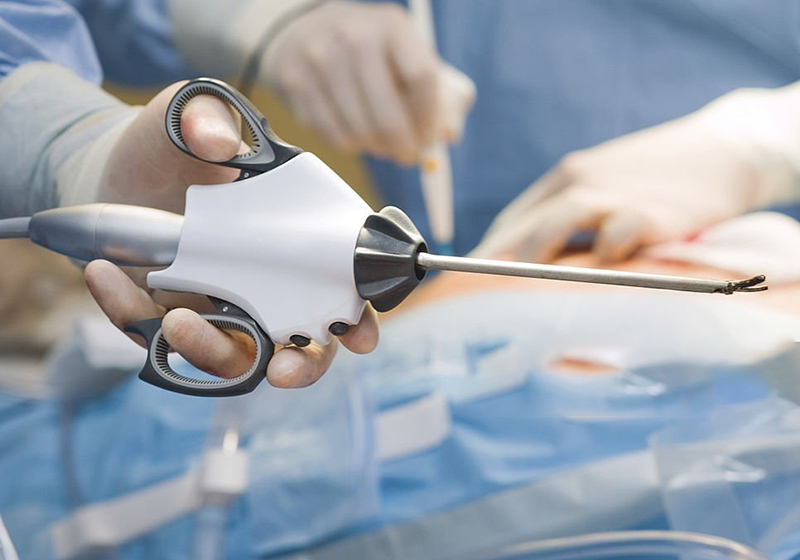
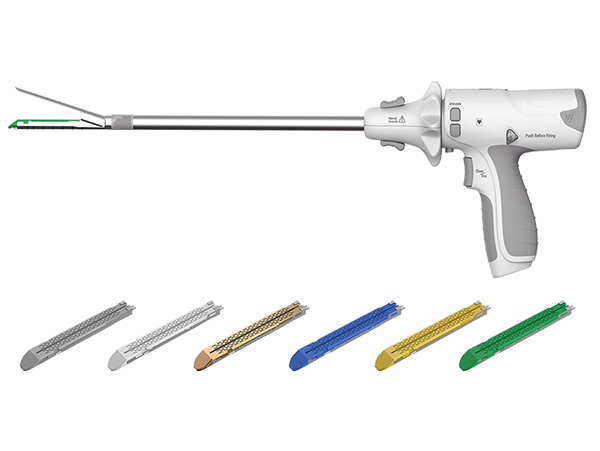
Clips are deployed via clip appliers—either disposable (single-use) or reloadable multi-fire instruments. Disposable clip appliers eliminate sterilization error, reduce cross-contamination risk, and are increasingly preferred in high-throughput surgical centers. Reloadable systems lower per-case material cost but require rigorous reprocessing protocols.
Primary Clinical Applications
Titanium ligating clips are used across a broad spectrum of surgical specialties. The following are their most established applications:
Laparoscopic Cholecystectomy
This is the single most common application. Over 750,000 laparoscopic cholecystectomies are performed annually in the United States alone, and titanium clips are the standard method for ligating the cystic duct and cystic artery. Typically, two clips are placed on the patient-side and one on the specimen-side before division.
General Hemostasis in Minimally Invasive Surgery
Clips provide rapid, reliable bleeding control for vessels that are too large for coagulation alone but too small to warrant formal suture ligation. They are routinely used in laparoscopic appendectomy, hernia repair, and bowel resection to secure mesenteric vessels.
Thoracic and Urological Procedures
In video-assisted thoracoscopic surgery (VATS), titanium clips secure bronchial vessels and lymphatic channels. In laparoscopic nephrectomy and prostatectomy, they ligate renal arteries, veins, and the vas deferens with a consistent closure force that suture techniques may not replicate in tight laparoscopic spaces.
Gynecological Surgery
Tubal ligation for sterilization has traditionally used titanium clips (Filshie and Hulka designs are titanium-based). Clips are also used in laparoscopic myomectomy and hysterectomy to control uterine vessel branches.
Oncological Resections
In cancer surgery, clips serve a dual role: hemostasis and surgical site marking. Radiologists use the postoperative clip positions as landmarks for follow-up imaging and radiation therapy planning.
How Titanium Ligating Clips Work: Mechanism of Action
When a clip applier is fired, the jaws compress the clip around the target tissue. The titanium deforms plastically—meaning it permanently holds its compressed shape without spring-back. The locking mechanism on most modern clips creates a snap-lock closure that prevents accidental reopening under normal physiological pressures.
Occlusion effectiveness depends on three factors:
Clip-to-vessel size ratio: The clip should extend at least 2 mm beyond both sides of the vessel after closure.
Tissue preparation: Fat or adventitia around the vessel must be cleared to ensure metal-to-tissue contact across the full clip width.
Application angle: Clips applied perpendicular (90°) to the vessel axis provide the most secure occlusion and the lowest slip-off rate.
Published data show that correctly applied titanium clips have a dislodgement rate below 0.5% in elective laparoscopic cholecystectomy, making them one of the most reliable vessel closure methods available.
Safety Profile and Long-Term Implantation
Titanium ligating clips are considered permanent implants and are not removed after surgery unless complications arise. The long-term safety record is well established:
Titanium undergoes passive oxidation, forming a stable TiO₂ layer that is chemically inert in biological environments.
No documented systemic toxicity or allergic sensitization from medical-grade titanium implants has been reported in large-scale clinical follow-up studies.
Clips do not interfere with subsequent endoscopic procedures such as ERCP when placed away from the bile duct orifice.
Patients with titanium clips can undergo MRI at field strengths up to 3T without special precautions, per ASTM F2503 classification standards.
Rare complications include clip migration (particularly in the bile duct, causing "clip cholelithiasis") and clip dislodgement from inadequate tissue preparation. These events are largely technique-dependent rather than material-related.
Quality Standards and Regulatory Requirements
Medical-grade titanium ligating clips intended for human implantation must meet internationally recognized standards. Buyers and procurement teams should verify compliance with:
ISO 13485: Quality management systems for medical device manufacturers.
ISO 10993: Biological evaluation of medical devices, including cytotoxicity, sensitization, and implantation testing.
ASTM F67 / ASTM F136: Material specifications for unalloyed and Ti-6Al-4V ELI titanium used in surgical implants.
CE Marking (EU MDR 2017/745): Required for sales in European markets.
FDA 510(k) clearance: Required for the US market; most titanium ligating clip systems are cleared as Class II devices.
Manufacturers such as Changzhou Bokang Special Material Technology Co., Ltd produce clips under controlled cleanroom environments with full traceability, ensuring each batch meets dimensional tolerances and closure-force specifications before release.
How to Select the Right Titanium Ligating Clip
Choosing the correct clip for a given procedure involves several practical considerations:
Match Clip Size to Vessel Diameter
Use the smallest clip that fully spans the vessel with at least 2 mm of overlap on each side. Over-sizing is a common error that reduces occlusion security.
Evaluate the Clip Applier Compatibility
Clips and appliers are system-specific. Mixing clips from one manufacturer with appliers from another is not recommended and may result in misfiring or incomplete closure. Confirm system compatibility before procurement.
Consider Procedure Volume and Sterilization Infrastructure
For high-volume centers performing more than 10 laparoscopic cases per day, disposable multi-fire clip appliers reduce turnaround time and sterilization burden. Smaller facilities may find reloadable systems more cost-effective.
Verify Regulatory Clearance for Your Market
Always confirm that the product holds the appropriate regulatory clearance (FDA 510(k), CE Mark, or national equivalent) for your country. This affects both legal compliance and insurance reimbursement eligibility.
Common Questions About Titanium Ligating Clips
Do titanium clips cause problems with airport security scanners?
No. Titanium is non-ferromagnetic and will not trigger metal detectors or full-body scanners. Patients do not need medical documentation for air travel.
Can titanium clips be used in pediatric patients?
Yes. Small-sized titanium clips are suitable for pediatric laparoscopic surgery. Their biocompatibility profile is the same regardless of patient age.
How many clips are typically used per procedure?
In a standard laparoscopic cholecystectomy, 3 to 6 clips are applied. Complex oncological or vascular procedures may require significantly more. Multi-fire clip appliers that hold 10–20 clips are standard for efficiency.
What is the shelf life of disposable titanium clip appliers?
Most manufacturers specify a shelf life of 3 to 5 years from the date of manufacture when stored under recommended conditions (temperature 10–30°C, humidity below 60%, away from direct sunlight).

 Send Inquiry


 EN
EN
 English
 日本語
日本語 한국어
한국어 Español
 عربى
عربى русский
 Deutsch
 中文简体
中文简体