 Send Inquiry
 Send Inquiry
Choosing the right industrial titanium round disc comes down to three core decisions: alloy grade, dimensional tolerances, and surface finish. Get these three right, and the disc will perform reliably in aerospace, medical, chemical, or marine environments. Get them wrong, and you risk premature failure, rejected parts, or wasted budget. This guide walks buyers through every critical factor with specific data so you can purchase with confidence.
Titanium's strength-to-weight ratio is roughly twice that of stainless steel at about 40% less weight. Its corrosion resistance in seawater, chlorine-rich environments, and human body fluids is unmatched by most common metals. For demanding industrial applications, these properties justify a price premium that typically runs 5–10× higher than 316L stainless steel per kilogram.
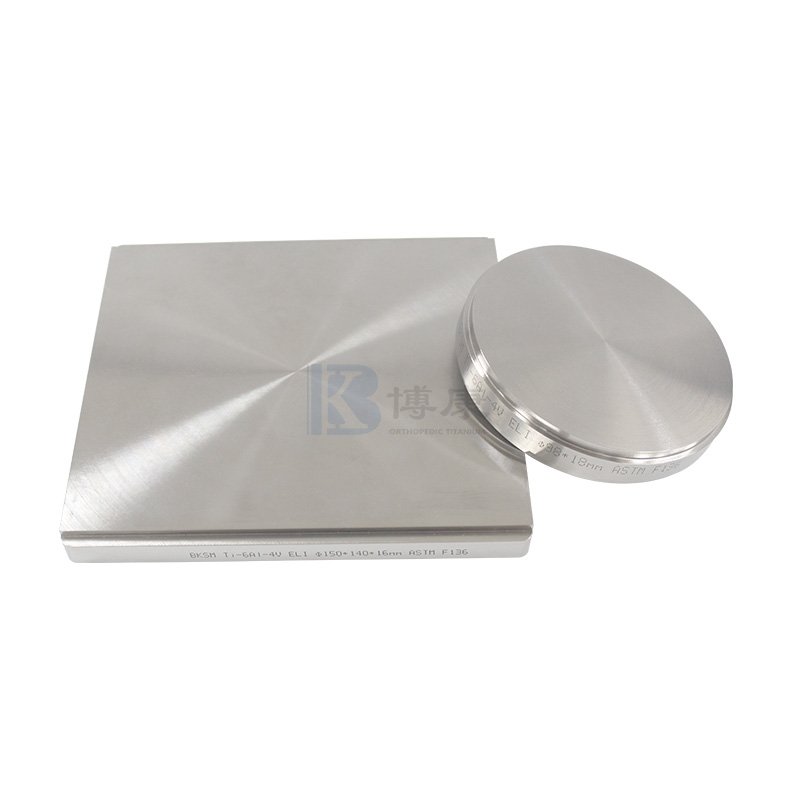
Round discs specifically are used as valve seats, pump impellers, flange blanks, heat exchanger components, surgical implant blanks, and aerospace bulkhead fittings. The geometry — flat, circular, and symmetrical — makes them versatile starting points for CNC machining.
Titanium is not a single material. There are over 30 ASTM-designated grades, but most industrial buyers work within a short list of six. Selecting the wrong grade is the single most expensive mistake you can make.
| Grade 1 | Commercially Pure (CP) | 240 MPa min | Best formability, highest corrosion resistance | Chemical processing, heat exchangers |
| Grade 2 | Commercially Pure (CP) | 345 MPa min | Most widely stocked, excellent weldability | Industrial piping, marine hardware |
| Grade 4 | Commercially Pure (CP) | 550 MPa min | Highest strength among CP grades | Surgical implants, airframe components |
| Grade 5 (Ti-6Al-4V) | Alpha-Beta Alloy | 895 MPa min | Highest strength, excellent fatigue resistance | Aerospace, motorsport, high-load structural |
| Grade 7 | CP + Palladium | 345 MPa min | Superior resistance to reducing acids | Sulfuric/hydrochloric acid environments |
| Grade 23 (Ti-6Al-4V ELI) | Alpha-Beta Alloy | 828 MPa min | Extra Low Interstitials for biocompatibility | Orthopedic implants, surgical devices |
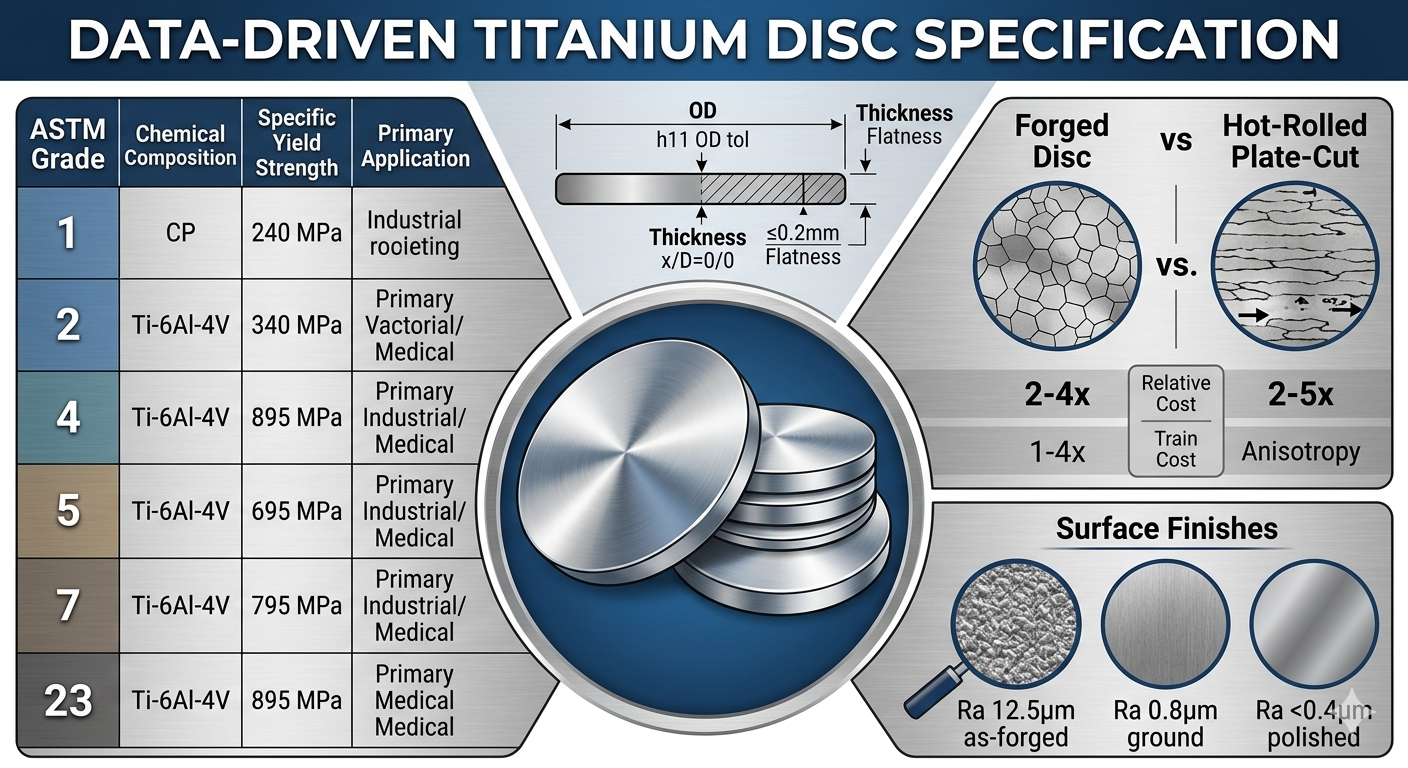
Grade 2 is the default for most industrial buyers because it balances corrosion resistance, machinability, and availability. Upgrade to Grade 5 only when structural loads demand it. Choose Grade 7 or Grade 12 when the environment includes reducing acids that would attack standard CP grades.
A titanium round disc has four key dimensions. Each must be specified clearly in your purchase order to avoid mismatched parts.
Standard stock discs are available from 10 mm to 1,000 mm OD, though most warehouse stock clusters between 50 mm and 500 mm. For ODs above 600 mm, expect custom-order lead times of 8–14 weeks. Specify tolerance class: h11 (±0.1–0.4 mm) for general industrial use, or h8/h9 for precision-fit assemblies.
Discs typically range from 1 mm to 150 mm thick. Below 3 mm, flatness becomes critical — warpage during hot rolling can cause parallelism errors exceeding 0.5 mm per 100 mm, which is unacceptable for valve or seal applications. Specify a flatness tolerance (e.g., ≤0.2 mm total indicator runout) on any disc thinner than 5 mm.
A ratio below 1:10 (thickness less than 10% of diameter) is considered a thin disc and is prone to distortion during machining and heat treatment. If your application requires a ratio below 1:15, request stress-relief annealing as part of the supply condition.
For rotating parts like impellers, mass tolerance matters as much as dimensional tolerance. Specify a maximum weight deviation of ±0.5% if the disc will be used in a balanced rotating assembly. Unbalanced discs in high-speed applications can induce vibration frequencies that damage bearings within thousands of operating hours.
How the disc was made directly affects its mechanical properties and internal integrity. Three production routes dominate the market:
For general industrial service (flanges, spacers, non-critical structural use), plate-cut discs are cost-effective. For cyclically loaded or safety-critical parts, always specify forged.
Surface finish affects sealing performance, fatigue strength, biocompatibility, and downstream machining costs. Suppliers offer several standard conditions:
Never purchase industrial titanium discs without a material test report (MTR). A legitimate MTR documents chemical composition (meeting ASTM B265, AMS 4928, or equivalent), mechanical test results (yield strength, UTS, elongation), heat/lot number, and the mill's accreditation (typically ISO 17025 or NADCAP).
For specific regulated industries, additional certifications apply:
Request full heat traceability. A reputable supplier can trace any disc back to the original melt heat number at the titanium mill — critical for failure analysis and regulatory audits.
Internal defects — porosity, inclusions, laminations — cannot be detected visually. For discs that will carry structural loads or be used in critical assemblies, specify NDE in your purchase order. Common methods include:
As a practical rule: require LPI for all safety-critical discs and UT for forged discs over 25 mm thick. For general industrial stock under moderate loads, NDE may be omitted to control cost.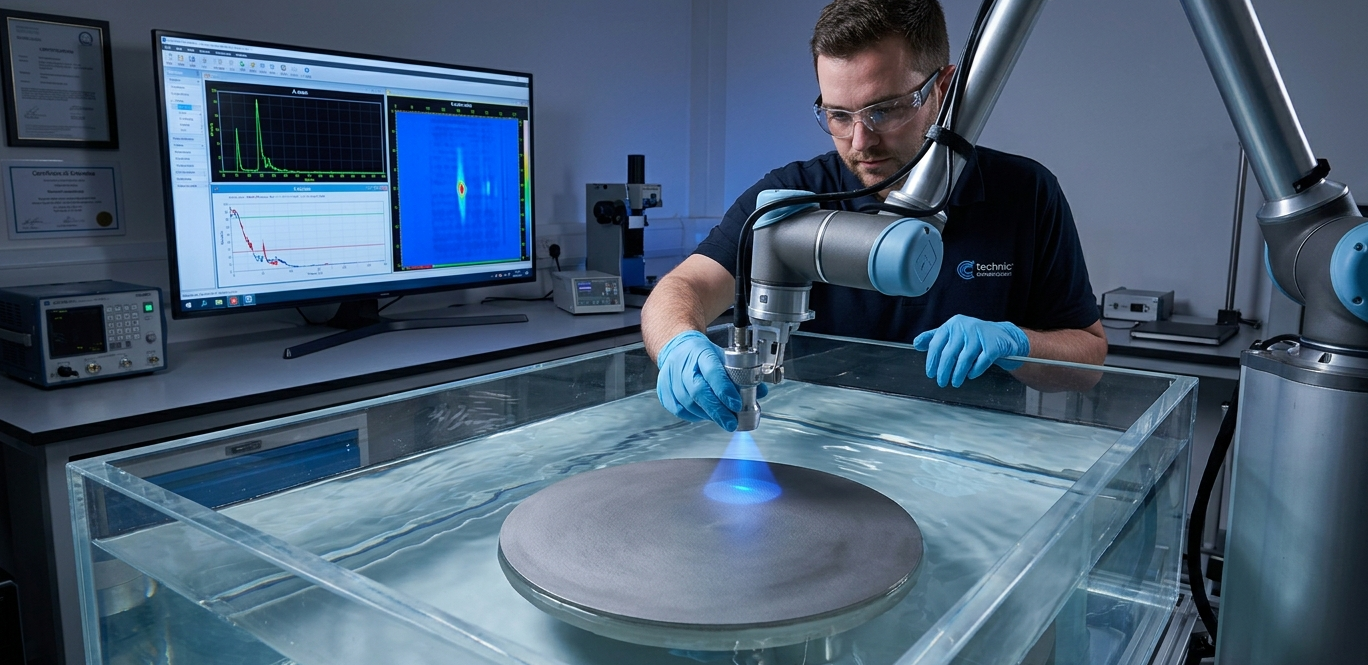
Where you buy affects price, lead time, documentation quality, and counterfeit risk — all of which are significant concerns in the titanium supply chain.
Purchasing directly from primary producers (VSMPO-AVISMA, TIMET, ATI, Kobe Steel) provides the best traceability and lowest per-kilogram price at volume. Minimum order quantities typically start at 500–2,000 kg, with lead times of 12–20 weeks for custom dimensions. Best for high-volume, long-term programs.
AS9120B- or ISO 9001-certified distributors carry cut-to-size stock with full MTR traceability. Lead times are typically 1–3 weeks for standard grades and sizes. Price premium over mill direct is 15–40%, but minimum order quantities are far lower (sometimes as little as one piece). This is the correct channel for most industrial buyers.
Online marketplaces and spot traders can offer attractive prices but carry elevated counterfeit and misgrade risk. A 2019 FAA investigation found titanium parts with falsified MTRs in the aerospace supply chain — a problem that has persisted industry-wide. Never purchase safety-critical titanium discs from unverified spot suppliers without independent chemical verification (XRF or OES analysis).
Titanium pricing is volatile and tied to raw sponge prices, energy costs, and aerospace demand cycles. However, approximate distributor price ranges for stock discs (as of recent market data) provide useful benchmarks:
| Grade 2 CP | 100 mm × 10 mm | $18–$35 | Plate-cut, as-rolled |
| Grade 2 CP | 300 mm × 20 mm | $160–$280 | Plate-cut, as-rolled |
| Grade 5 Ti-6Al-4V | 100 mm × 10 mm | $45–$80 | Bar-cut or plate-cut |
| Grade 5 Ti-6Al-4V | 200 mm × 30 mm | $350–$600 | Forged disc, AMS certified |
| Grade 23 ELI | 80 mm × 15 mm | $90–$150 | Medical grade, ASTM F136 |
The largest cost drivers beyond raw material are: NDE requirements (+10–25%), tight tolerances (+15–40%), surface grinding (+$15–$100 per disc), and certification documentation (+$50–$200 per order for NADCAP/AS9100 paperwork).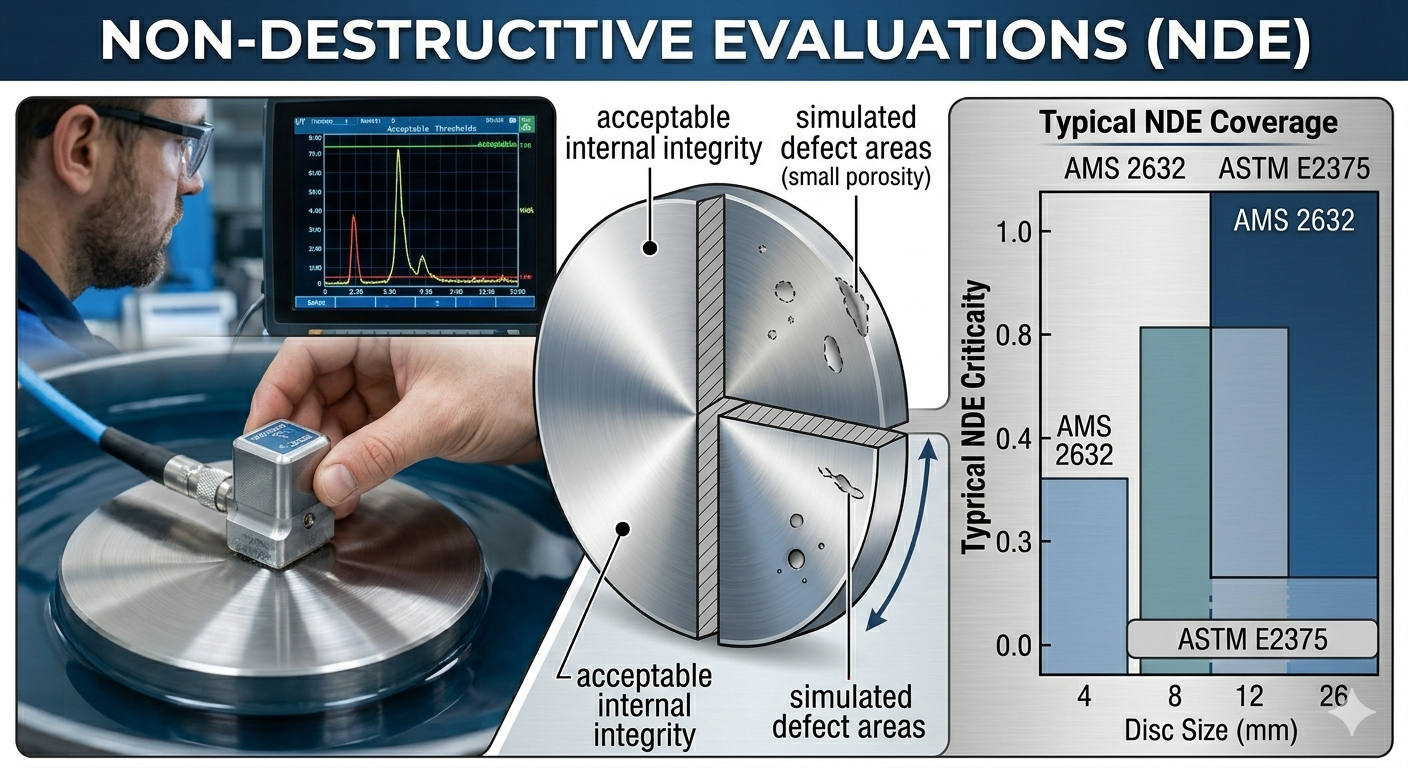
Use this checklist to verify your purchase specification is complete before sending a request for quote (RFQ):
A complete RFQ that covers all ten points will produce comparable, apples-to-apples quotes from multiple suppliers and dramatically reduce the risk of receiving parts that fail incoming inspection.

Copyright © 2024 Changzhou Bokang Special Material Technology Co., Ltd. All Rights Reserved.
Custom Round Pure Titanium Rod Manufacturers Privacy
 EN
EN
 English
 日本語
日本語 한국어
한국어 Español
 عربى
عربى русский
 Deutsch
 中文简体
中文简体