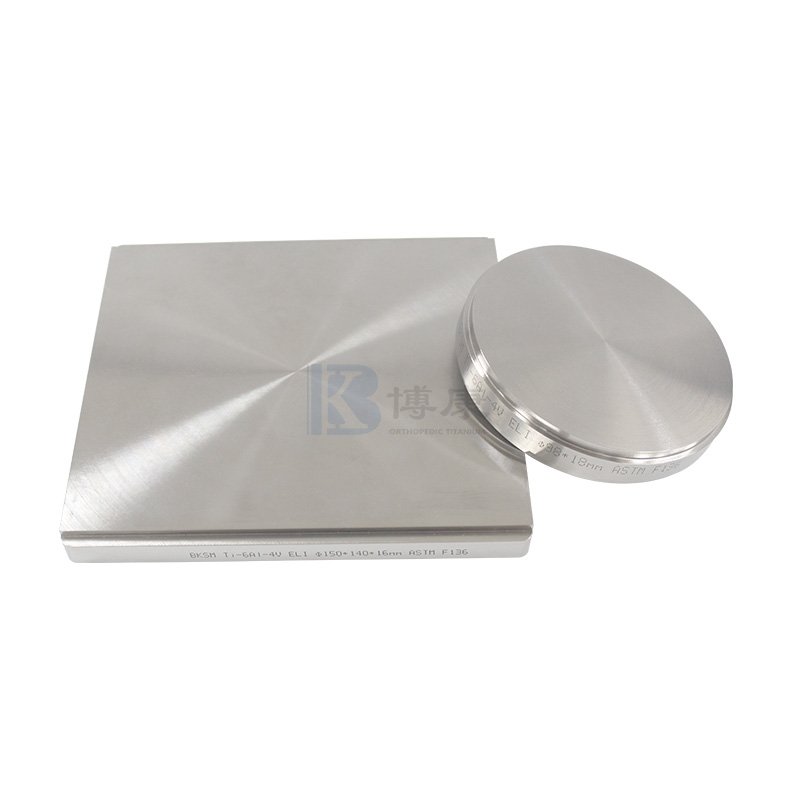
Titanium sheet plate has become an increasingly important material across multiple industrial sectors due to its balance of strength, durability, corrosion resistance, and long-term reliability. From a fabrication perspective, however, machining titanium sheet plate presents a distinct set of challenges that differ significantly from those associated with more conventional metallic materials. These challenges are not limited to tool wear or cutting speed alone, but extend to material behavior during machining, surface integrity control, dimensional stability, and overall process planning.
Poorly planned machining strategies can result in excessive scrap, unstable lead times, surface defects, or reduced service life of fabricated components. Conversely, a well-structured approach to machining titanium sheet plate supports efficient production, minimizes risk, and aligns technical outcomes with commercial expectations.
Titanium sheet plate exhibits a unique combination of mechanical and chemical characteristics that directly affect how it responds during machining operations. While it is often described as strong and lightweight, its behavior under cutting conditions is more nuanced and requires careful interpretation.
One of the most important characteristics is its relatively low thermal conductivity. During machining, heat generated at the cutting zone tends to remain concentrated near the tool edge rather than dissipating into the material or surrounding environment. This localized heat accumulation can accelerate tool degradation and influence surface finish consistency. As a result, machining strategies for titanium sheet plate must account for thermal management as a core consideration.
Another defining factor is the material’s tendency to retain strength even at elevated temperatures. Unlike some metals that soften noticeably under heat, titanium sheet plate maintains resistance to deformation, which increases cutting forces and contributes to higher stress on cutting tools. This behavior is especially relevant during continuous machining operations such as milling or trimming of thin sections.
Additionally, titanium sheet plate demonstrates a strong chemical affinity with certain tool materials at elevated temperatures. This can lead to adhesion between the cutting tool and workpiece, resulting in built-up edge formation, surface tearing, or premature tool failure. These characteristics collectively explain why machining titanium sheet plate requires approaches distinct from standard sheet metal fabrication.
From a fabrication planning perspective, these inherent material traits influence decisions related to process sequencing, tool selection, and machining parameters. Machining titanium sheet plate is rarely an isolated operation; it is often part of a broader fabrication workflow that may include forming, cutting, surface finishing, or joining.
Because machining-induced stress and heat can alter surface integrity, it is essential to determine whether machining should occur before or after forming operations. In many cases, rough machining is performed earlier in the process, while final finishing passes are reserved for later stages to ensure dimensional accuracy and surface consistency.
Tool material selection plays a central role in achieving stable and repeatable machining results when working with titanium sheet plate. The interaction between tool material and workpiece directly affects cutting efficiency, surface quality, and tool life.
Cutting tools used for titanium sheet plate fabrication must demonstrate resistance to heat concentration, maintain edge stability under sustained load, and minimize chemical interaction with the material surface. Tools designed for general-purpose steel machining often fail to meet these requirements when applied to titanium sheet plate.
Equally important is tool geometry. Sharp cutting edges with appropriate rake angles help reduce cutting forces and limit heat generation. However, excessive sharpness without adequate edge strength may lead to chipping or rapid wear. Therefore, tool design must balance sharpness with durability, particularly for operations involving thin sheet sections where vibration and deflection may occur.
Tool wear in titanium sheet plate machining does not always present gradually. Instead, it can accelerate quickly once certain thresholds are reached, especially under conditions of insufficient cooling or excessive feed pressure. This makes proactive monitoring essential.
Wear patterns often include flank wear, edge rounding, and localized adhesion. These forms of wear can compromise dimensional accuracy and surface finish before catastrophic tool failure becomes visible. For this reason, machining plans should incorporate scheduled inspections and defined tool replacement intervals rather than relying solely on visual cues.
When machining titanium sheet plate, cutting speed and feed rate must be determined with particular care. Excessively high cutting speeds can rapidly increase tool temperature, while overly conservative speeds may reduce productivity without necessarily improving surface quality.
A controlled and stable approach to cutting speed helps manage heat concentration at the tool-workpiece interface. Similarly, feed rates should be selected to ensure continuous cutting action without inducing chatter or excessive pressure on thin sections of the sheet plate.
Unlike more forgiving materials, titanium sheet plate responds poorly to inconsistent parameters. Sudden changes in feed or speed can lead to surface irregularities, dimensional deviation, or tool damage. Therefore, process stability is more critical than aggressive material removal rates.
Depth of cut decisions are closely linked to both sheet thickness and the desired final geometry. For thin titanium sheet plate, shallow and consistent passes are generally preferred to reduce deflection and maintain dimensional control. Deeper cuts may be feasible for thicker plates but still require careful consideration of tool capacity and thermal load.
Pass strategy also influences surface integrity. Roughing passes should be designed to remove material efficiently while leaving sufficient allowance for finishing operations. Finishing passes, in turn, focus on achieving specified tolerances and surface conditions without introducing additional stress or heat.
These considerations are particularly relevant for buyers seeking tight tolerance metal fabrication or components requiring high consistency across production batches.
Thermal management is one of the most critical aspects of machining titanium sheet plate. As noted earlier, the material’s low thermal conductivity leads to heat accumulation at the cutting zone. If not managed effectively, this heat can degrade both the cutting tool and the workpiece surface.
Excessive heat may cause surface discoloration, microstructural alteration near the cut edge, or residual stress that affects downstream forming or joining processes. Even when these effects are not immediately visible, they can influence long-term performance in demanding environments.
Effective cooling strategies aim to reduce cutting zone temperature while also facilitating chip evacuation. Proper lubrication reduces friction between the tool and the titanium sheet plate surface, minimizing adhesion and surface tearing.
Cooling methods must be applied consistently and with sufficient flow to reach the cutting interface. Intermittent or uneven cooling can create thermal cycling, which may be more damaging than limited cooling under stable conditions.
For fabrication planners, cooling considerations directly affect equipment selection, process layout, and maintenance requirements, particularly in facilities handling high-performance metal materials.
Titanium sheet plate is often supplied in relatively thin gauges, which introduces challenges related to workholding and vibration control during machining. Insufficient support can lead to deflection, chatter, or inconsistent cut depth, all of which compromise accuracy.
Workholding systems must provide uniform support across the sheet surface without inducing localized stress. Excessive clamping force can distort the material, while insufficient restraint may allow movement during cutting.
Repeatable fixturing is essential when machining titanium sheet plate in series production. Fixtures should be designed to accommodate material variation while maintaining consistent reference points. This is particularly important for operations involving multiple machining steps or tight dimensional requirements.
Well-designed fixturing contributes not only to machining accuracy but also to process efficiency, as it reduces setup time and minimizes the risk of rework.
Surface finish requirements for titanium sheet plate vary depending on the application. In many cases, surface condition is not purely cosmetic but directly related to performance, corrosion resistance, or fatigue behavior.
Machining parameters, tool condition, and cooling effectiveness all influence surface finish outcomes. Rough or torn surfaces may indicate excessive tool wear or improper cutting conditions. Therefore, surface inspection should be integrated into quality control routines rather than treated as a final check only.
Maintaining dimensional accuracy when machining titanium sheet plate requires careful control throughout the process. Thermal expansion during machining, even if temporary, can influence measurements if inspection is performed immediately after cutting.
Inspection procedures should account for stabilization time and use consistent reference conditions. Clear documentation of tolerances and acceptance criteria supports effective communication between buyers and fabricators, especially in projects involving custom titanium components.
The table below summarizes key machining challenges associated with titanium sheet plate and their practical implications.
| Machining aspect | Primary challenge | Practical implication |
|---|---|---|
| Heat management | Localized heat buildup | Accelerated tool wear and surface risk |
| Tool selection | Chemical interaction | Need for specialized cutting tools |
| Sheet stability | Deflection and vibration | Increased importance of fixturing |
| Parameter control | Sensitivity to variation | Emphasis on stable machining conditions |
This overview highlights why machining titanium sheet plate requires integrated planning rather than isolated parameter adjustments.
From a buyer’s perspective, machining considerations directly influence cost predictability. Tool consumption, machining time, scrap rates, and inspection requirements all contribute to the total cost of fabricated titanium sheet plate components.
Understanding these factors enables more informed evaluation of quotations and reduces the likelihood of unexpected cost escalation during production. Buyers seeking custom titanium sheet fabrication should prioritize transparency in machining assumptions and quality criteria.
Machining titanium sheet plate often involves longer lead times compared to more conventional materials, due to tooling preparation, process validation, and quality assurance steps. Buyers should account for these factors during project planning rather than treating them as inefficiencies.
Clear communication regarding machining complexity, tolerance requirements, and inspection expectations helps align lead time estimates with realistic production capabilities.
The table below outlines commonly used machining methods and their typical roles in titanium sheet plate fabrication.
| Machining method | Typical application | Key consideration |
|---|---|---|
| Milling | Edge profiling and contouring | Heat control and tool stability |
| Drilling | Holes for fastening or assembly | Chip evacuation and tool wear |
| Trimming | Final dimension adjustment | Sheet support and vibration control |
| Surface finishing | Achieving specified finish | Consistent parameter control |
Each method presents unique challenges but shares common underlying considerations related to heat, tool interaction, and material stability.
Machining decisions should not be made in isolation from downstream processes such as forming or joining. Surface condition and residual stress introduced during machining can affect how titanium sheet plate behaves during bending or welding.
A holistic approach ensures that machining supports, rather than compromises, subsequent fabrication stages. This is especially important in applications requiring complex geometries or multi-step assembly.
Ultimately, machining quality influences the long-term performance of titanium sheet plate components. Surface integrity, dimensional accuracy, and residual stress levels all contribute to how the material performs under service conditions.
For buyers focused on reliability and lifecycle value, machining considerations are a foundational element of material selection and supplier evaluation.
Machining titanium sheet plate is challenging due to its low thermal conductivity, high strength retention under heat, and tendency to interact chemically with cutting tools. These factors require specialized tooling and stable process control.
While some standard equipment may be adaptable, machining titanium sheet plate generally requires enhanced cooling, rigid fixturing, and tooling designed specifically for titanium applications.
Machining parameters, tool condition, and cooling strategy directly influence surface finish. Poor control can lead to surface tearing or discoloration, while stable conditions support consistent surface integrity.
Yes, tight tolerances are achievable, but they require careful planning, consistent fixturing, and appropriate inspection practices to account for thermal effects and material behavior.
Buyers should assess tooling strategy, process stability, inspection methods, and experience with titanium-specific challenges rather than focusing solely on quoted price.
Copyright © 2024 Changzhou Bokang Special Material Technology Co., Ltd. All Rights Reserved.
Custom Round Pure Titanium Rod Manufacturers Privacy