How does nickel titanium alloy wire exhibit shape memory behavior?
Nickel titanium alloy wire has become a subject of sustained interest across multiple industrial and technical fields due to its distinctive ability to return to a predefined shape after deformation. This characteristic, commonly referred to as shape memory behavior, is not the result of simple elasticity but rather a complex interaction between material structure, thermal response, and controlled processing conditions.
Introduction to shape memory behavior in metallic materials
Shape memory behavior refers to the ability of a material to undergo deformation and later recover its original form when exposed to an appropriate external condition, typically a change in temperature. In metallic systems, this behavior is uncommon and requires a specific internal structure that can reversibly rearrange itself without permanent damage. Nickel titanium alloy wire is widely recognized for exhibiting this capability in a controlled and repeatable manner.
Unlike conventional metal wires that rely solely on elastic deformation, nickel titanium alloy wire operates through a reversible internal phase change. This transformation enables the material to absorb mechanical strain, retain a deformed shape under certain conditions, and later recover its original configuration when the triggering condition is applied. Shape memory alloy wire, thermally activated metal wire, and functional alloy wire are among the common search terms associated with this phenomenon.
The practical value of shape memory behavior lies in its predictability. When properly processed and applied within specified conditions, nickel titanium alloy wire can perform repeated shape recovery cycles with consistent outcomes. This reliability has driven its adoption in applications where space constraints, controlled motion, or automated response mechanisms are required.
Fundamental structure of nickel titanium alloy wire
To understand how shape memory behavior emerges, it is necessary to examine the internal structure of nickel titanium alloy wire. The alloy consists primarily of nickel and titanium combined in a closely controlled ratio. This balance is critical because even minor variations can significantly influence transformation behavior, recovery temperature range, and mechanical response.
At the microscopic level, the material exists in different structural states depending on environmental conditions. These states are not defects or damage phases but stable configurations that the material can switch between reversibly. The ability to transition between these states without degrading the material is central to shape memory behavior.
From a buyer or engineer perspective, material composition consistency, microstructural stability, and controlled alloy ratios are frequently searched terms. These factors directly influence whether the wire will demonstrate reliable shape recovery or inconsistent behavior.
The internal structure is further influenced by processing steps such as melting, drawing, and heat treatment. Each step refines the material’s internal arrangement, ensuring that the wire can undergo repeated transformations without accumulating irreversible changes.
Phase transformation as the basis of shape memory behavior
Shape memory behavior in nickel titanium alloy wire is governed by a reversible phase transformation. This transformation does not involve melting or chemical reactions but rather a rearrangement of atoms within the solid material. The two primary structural states differ in how atoms are organized, allowing the wire to exist in either a more easily deformable state or a more rigid, shape-defining state.
When the wire is in its low-temperature state, it can be deformed into a new shape with relatively low resistance. Importantly, this deformation does not permanently disrupt the internal structure. Instead, the material accommodates the change by reorganizing its internal arrangement. Upon exposure to a higher temperature, the internal structure reverts to its original configuration, and the wire recovers its predefined shape.
This behavior is often associated with thermal activation response, phase transformation stability, and reversible deformation capability. These terms are commonly used by buyers assessing suitability for temperature-dependent applications.
The transformation process is smooth and repeatable when the alloy composition and processing conditions are properly controlled. Inconsistent material quality, by contrast, can lead to incomplete recovery or unpredictable transformation behavior.
Role of temperature in activating shape memory behavior
Temperature plays a central role in enabling shape memory behavior in nickel titanium alloy wire. The material is engineered to respond within a specific temperature range, often referred to as the transformation temperature window. Within this range, the internal structure transitions between its deformable and shape-recovering states.
It is important to emphasize that temperature sensitivity does not imply fragility. Instead, it allows the wire to act as a functional element that responds to environmental or operational conditions. For this reason, temperature-responsive wire, controlled transformation temperature, and thermal cycling durability are key search terms among engineers and procurement professionals.
The transformation temperature range can be adjusted during manufacturing through precise control of composition and heat treatment. This flexibility enables the same fundamental material system to be adapted for different operating environments without changing its essential shape memory mechanism.
From a practical standpoint, understanding the temperature requirements ensures that the wire will activate as intended without unintended deformation or delayed recovery.
Deformation and recovery process explained
The deformation and recovery cycle of nickel titanium alloy wire can be divided into distinct stages, each contributing to the overall shape memory effect. Initially, the wire is set into a predefined shape during manufacturing. This shape becomes the reference configuration that the material will attempt to recover.
When the wire is cooled to its low-temperature state, it can be mechanically deformed into a different shape. This deformation does not involve traditional plastic yielding but rather a reorientation of the internal structure. The wire retains the deformed shape as long as the temperature remains within the low-temperature range.
Upon heating, the internal structure reverts to its original arrangement. As this occurs, the wire generates internal forces that drive it back to its predefined shape. This recovery process is not instantaneous but occurs smoothly as the transformation progresses.
This cycle underpins many applications associated with actuation wire, self-recovering metal wire, and adaptive mechanical components. The reliability of this process depends on maintaining appropriate operating conditions and avoiding excessive mechanical loads beyond the material’s designed limits.
Importance of heat treatment in defining shape memory behavior
Heat treatment is one of the most critical manufacturing steps influencing shape memory behavior in nickel titanium alloy wire. Through controlled heating and cooling cycles, the wire’s internal structure is stabilized and programmed with its reference shape.
During heat treatment, the wire is typically constrained in a specific configuration. This step establishes the shape that the wire will later recover during activation. The duration, temperature level, and cooling method all contribute to the final performance characteristics.
From a buyer’s perspective, heat-treated alloy wire, shape setting process, and thermal processing control are important indicators of quality. Proper heat treatment ensures that the wire exhibits consistent recovery behavior and minimizes variation between production batches.
Insufficient or inconsistent heat treatment can result in partial recovery, drift in transformation temperature, or reduced fatigue resistance over repeated cycles. For this reason, heat treatment protocols are often closely guarded and carefully documented by manufacturers.
Mechanical behavior during repeated shape memory cycles
One of the defining characteristics of nickel titanium alloy wire is its ability to undergo repeated shape memory cycles with minimal degradation. Each cycle involves deformation at low temperature and recovery at higher temperature. Over time, however, the material is subject to internal stress accumulation.
The long-term mechanical behavior depends on factors such as strain level, operating temperature range, and surface condition. When these factors are properly managed, the wire can maintain stable performance over many cycles.
Commonly searched terms in this context include fatigue resistance, cyclic stability, and long-term functional reliability. These attributes are particularly important for applications requiring repeated activation rather than one-time deployment.
It is important to note that while nickel titanium alloy wire is resilient, it is not immune to damage. Excessive deformation or operation outside the intended temperature range can reduce the effectiveness of shape memory behavior over time.
Comparison between shape memory and superelastic behavior
Nickel titanium alloy wire is also known for exhibiting superelastic behavior under certain conditions. While related, shape memory and superelasticity are distinct phenomena. Shape memory behavior involves temperature-induced recovery, whereas superelasticity occurs at a constant temperature and relies on stress-induced transformation.
In shape memory applications, the wire is deformed at low temperature and recovers upon heating. In superelastic applications, the wire recovers immediately after unloading without a temperature change. Understanding this distinction is essential when selecting wire specifications.
Search terms such as superelastic alloy wire, stress-induced recovery, and functional metal elasticity are often encountered alongside shape memory discussions. Buyers must ensure that the selected wire is designed for the intended mode of operation.
Influence of wire diameter and geometry on shape memory response
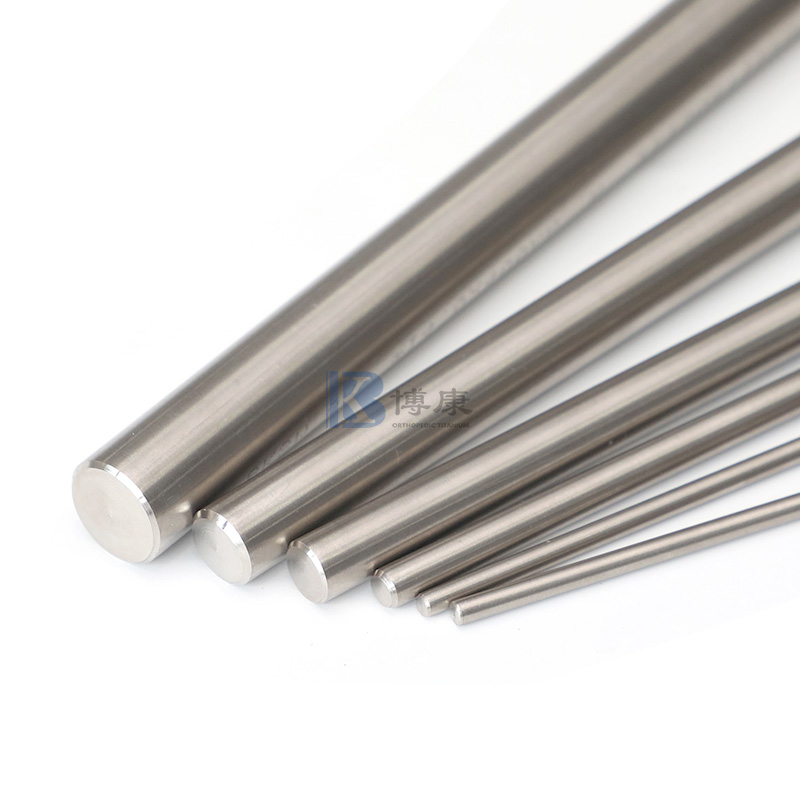
The physical dimensions of nickel titanium alloy wire influence how shape memory behavior manifests in practice. Wire diameter, cross-sectional uniformity, and surface condition all affect heating rates, recovery force, and response time.
Thinner wires typically respond more quickly to temperature changes due to lower thermal mass, while thicker wires may generate greater recovery force. Geometry also affects how the wire distributes stress during deformation and recovery.
Terms such as precision diameter control, dimensional consistency, and custom wire geometry are frequently emphasized in procurement specifications. These factors help ensure that the wire performs as expected within a given system.
Manufacturers often offer a range of diameters and tolerances to accommodate different application requirements, but careful selection is essential to achieve optimal shape memory performance.
Surface condition and its impact on shape memory behavior
Surface quality plays a subtle yet important role in the shape memory behavior of nickel titanium alloy wire. Surface defects, contamination, or irregularities can act as stress concentration points, potentially reducing fatigue life and recovery consistency.
A smooth and uniform surface supports stable deformation and recovery by minimizing localized stress. Surface treatments may also be applied to enhance corrosion resistance or compatibility with specific environments.
Search terms such as surface finish quality, wire cleanliness standards, and corrosion-resistant alloy wire are commonly used by buyers evaluating suitability for long-term use.
While surface condition does not alter the fundamental shape memory mechanism, it significantly influences durability and reliability in real-world applications.
The following table summarizes the primary factors that affect how nickel titanium alloy wire exhibits shape memory behavior and their practical implications.
Factor
Influence on shape memory behavior
Practical relevance
Alloy composition
Determines transformation temperature range
Ensures activation at intended conditions
Heat treatment
Defines reference shape and recovery stability
Critical for consistent performance
Operating temperature
Triggers phase transformation
Controls timing of shape recovery
Wire diameter
Affects response speed and recovery force
Supports application-specific design
Surface condition
Influences fatigue life and reliability
Enhances long-term usability
Applications driven by shape memory behavior
The shape memory behavior of nickel titanium alloy wire enables a wide range of functional applications. In many cases, the wire acts as an actuator, responding automatically to temperature changes without the need for complex mechanical systems.
Applications often emphasize compact actuation solutions, self-regulating mechanisms, and temperature-driven motion control. These features are particularly valuable in environments where space is limited or maintenance access is restricted.
Although specific industries are not named here, the underlying principles apply broadly wherever controlled shape recovery and repeatable motion are required. The neutral nature of the material’s response makes it adaptable across diverse use cases.
Reliability considerations for long-term use
For long-term deployment, reliability is a central concern. Shape memory behavior must remain stable across repeated cycles and varying environmental conditions. This requires careful control of operating parameters and proper material selection.
Key considerations include avoiding excessive strain, maintaining the intended temperature range, and protecting the wire from corrosive environments. When these factors are addressed, nickel titanium alloy wire can deliver predictable shape memory performance over extended service periods.
Search terms such as service life assessment, operational stability, and performance consistency reflect the concerns of buyers evaluating long-term value.
Table: Common buyer concerns related to shape memory behavior
The table below outlines common buyer concerns and how they relate to shape memory performance.
Buyer concern
Relation to shape memory behavior
Evaluation focus
Consistent recovery
Ensures predictable actuation
Batch uniformity and testing
Transformation temperature control
Prevents unintended activation
Specification accuracy
Fatigue resistance
Supports repeated cycles
Material processing quality
Dimensional accuracy
Enables system integration
Manufacturing precision
Documentation and traceability
Confirms material reliability
Quality records
Conclusion
Nickel titanium alloy wire exhibits shape memory behavior through a carefully engineered combination of composition, internal structure, and processing control. Its ability to deform at low temperature and recover a predefined shape upon heating is rooted in a reversible phase transformation rather than conventional elasticity. This behavior allows the wire to function as a reliable, temperature-responsive component in a wide range of technical applications.
Frequently asked questions (FAQ)
What makes nickel titanium alloy wire different from ordinary metal wire? Nickel titanium alloy wire exhibits shape memory behavior, allowing it to recover a predefined shape after deformation when exposed to a specific temperature range, unlike ordinary metal wire that relies only on elastic deformation.
Can the shape memory behavior be customized for different temperature ranges? Yes, the transformation temperature range can be adjusted during manufacturing through controlled composition and heat treatment.
Does repeated use reduce shape memory performance? When used within specified limits, the wire maintains stable performance over many cycles. Excessive strain or improper operating conditions can reduce effectiveness.
Is shape memory behavior affected by wire diameter? Yes, diameter influences response speed, recovery force, and heating characteristics, making proper selection important.
How important is heat treatment for shape memory behavior? Heat treatment is essential because it defines the reference shape and stabilizes the internal structure responsible for shape recovery.
References
Scientific literature on shape memory alloys and their functional behavior.
Technical standards related to alloy wire processing and quality control.
Academic research publications on phase transformation mechanisms in nickel titanium alloys.

 Send Inquiry


 EN
EN
 English
 日本語
日本語 한국어
한국어 Español
 عربى
عربى русский
 Deutsch
 中文简体
中文简体