EN
EN
 English
 日本語
日本語 한국어
한국어 Español
 عربى
عربى русский
 Deutsch
 中文简体
中文简体



Home / News / Industry News / Why is Titanium Sheet the Material of Choice for Demanding Chemical Processing Equipment?

 Send Inquiry
 Send Inquiry
The chemical processing industry operates in some of the most aggressive and unforgiving environments imaginable. Equipment in these facilities is constantly exposed to corrosive chemicals, extreme temperatures, and high pressures, where material failure is not an option. The consequences of such failures range from costly production shutdowns and product contamination to significant safety hazards. In this high-stakes arena, the selection of construction materials is a paramount decision. Among the various metals and alloys available, one material has consistently proven its superior capabilities: titanium, particularly in the form of a thin titanium sheet.
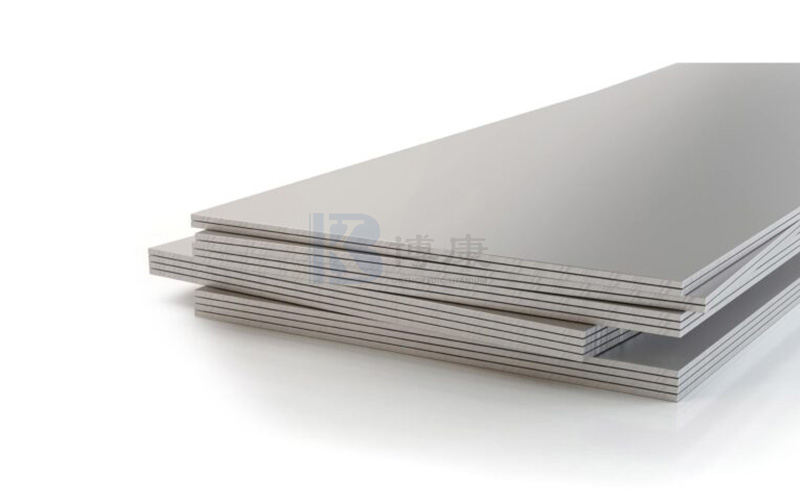
At the core of titanium’s dominance in the chemical processing industry is its exceptional resistance to corrosion. This is not a single attribute but a combination of several key characteristics that set it apart from other common metals like stainless steel, nickel alloys, and copper.
The primary reason for titanium’s remarkable corrosion resistance is the stable, continuous, and adherent oxide film that forms spontaneously on its surface when exposed to oxygen. This passive layer is primarily titanium dioxide (TiO₂), and it is highly insoluble and chemically inert. Unlike applied coatings or platings that can be scratched or degrade over time, this oxide layer is integral to the metal itself. Most importantly, it is self-repairing. If the surface is scratched or damaged, the layer instantly reforms in the presence of even minute amounts of oxygen or moisture, restoring protection and preventing further attack. This makes a thin titanium sheet an incredibly reliable material for lining vessels or fabricating components that may suffer minor abrasions or impacts during operation or maintenance. This property is crucial for handling chloride environments where other metals rapidly succumb to pitting and crevice corrosion.
Titanium’s resistance profile makes it indispensable for a wide range of specific chemicals and processes. Its performance in chloride-containing solutions is arguably its most significant advantage. While stainless steels are vulnerable to stress corrosion cracking and pitting in chloride-rich environments, titanium remains virtually unaffected across a wide range of concentrations and temperatures. This makes it ideal for equipment in plants that produce or use chlorine, as well as in processes involving seawater cooling, hypochlorite bleach, and various organic chlorides.
Furthermore, titanium exhibits excellent resistance to oxidizing acids. It performs exceptionally well in nitric acid production and handling, often outlasting stainless steels by many years. It is also highly resistant to wet chlorine, chlorites, and chlorates. However, it is important to note that titanium is not suitable for all chemicals; it is generally not recommended for use in reducing acids, such as hydrochloric or sulfuric acid, without the presence of inhibitors or oxidizing contaminants. The following table provides a simplified overview of its performance in common chemical processing environments.
| Chemical Environment | Titanium’s Performance | Typical Applications |
|---|---|---|
| Chlorides & Seawater | Excellent resistance to pitting and crevice corrosion. | Heat exchangers, condensers, reactor linings, piping. |
| Nitric Acid | Outstanding resistance across a wide range of concentrations and temperatures. | Nitric acid production vessels, heaters, pickling baskets. |
| Wet Chlorine | Superior resistance, forming a stable passive layer. | Chlorine coolers, scrubbers, cell headers. |
| Oxidizing Environments | Performs well due to the stability of its oxide layer. | Processes involving peroxides, chromates, or other oxidizers. |
This targeted resistance profile directly addresses the corrosion resistant materials needs that are a top priority for engineers searching for reliable solutions in aggressive service conditions.
While corrosion resistance is the headline feature, the successful application of a thin titanium sheet in chemical processing equipment relies heavily on its suite of complementary mechanical and physical properties. These characteristics enable the design of equipment that is not only durable but also efficient and cost-effective to operate.
Titanium boasts a strength-to-weight ratio that is among the highest of any structural metal. This means that a component fabricated from a thin titanium sheet can achieve the same structural integrity as a much thicker and heavier part made from steel, but at a fraction of the weight. This property has several practical benefits in industrial settings. Lighter-weight equipment reduces the structural support requirements for platforms and buildings, simplifies installation and handling during maintenance, and can lead to lower shipping costs. For large structures like pressure vessels, storage tanks, or large-diameter ductwork, the use of a thin, high-strength titanium sheet can make fabrication and erection significantly more manageable.
The mechanical integrity of titanium extends beyond its high strength. It maintains its properties over a wide temperature range, demonstrating good toughness and fatigue strength. This long-term reliability is a critical factor in the chemical processing industry, where planned maintenance cycles are long, and unplanned shutdowns are prohibitively expensive. Equipment lined or constructed with thin titanium sheet is known for its decades-long service life in corrosive duties, providing a lower total cost of ownership despite a higher initial material investment. This reliability makes it a key industrial metal supply for critical process units. Its non-magnetic nature and resistance to erosion and cavitation further enhance its suitability for pumps, valves, and agitators.
A common misconception is that titanium is difficult to fabricate. While it requires specific techniques and expertise, it can be successfully welded, formed, and machined. A thin titanium sheet is particularly amenable to standard metalworking processes such as rolling, pressing, and shearing. This allows for the fabrication of complex shapes required in chemical processing equipment, from intricate heat exchanger plates to large, dished vessel heads. The ability to fabricate complex components from sheet material provides engineers with significant design flexibility. They can specify custom linings for existing vessels, create double-walled structures, or design highly efficient compact heat exchangers, all leveraging the unique properties of titanium. This versatility is essential for creating tailored solutions for specific chemical equipment specifications.
The initial purchase price of titanium is undoubtedly higher than that of standard stainless steels and many other alloys. This upfront cost can be a point of hesitation for some project managers. However, a thorough economic analysis almost always reveals that titanium offers a superior life-cycle cost in demanding applications, justifying its position as a cost-effective metal solution for the long term.
The Total Cost of Ownership (TCO) for process equipment encompasses not only the initial material and fabrication costs but also all costs incurred over the asset’s operational life. These include maintenance, repairs, lost production due to downtime, and eventual replacement. When this holistic view is adopted, titanium’s economic argument becomes compelling. A heat exchanger made from a thin titanium sheet that lasts for 20 years without significant maintenance or failure is far more economical than a carbon steel unit that may require replacement every 3-5 years, with associated downtime and labor costs. The high cost of an unplanned shutdown in a continuous process plant can eclipse the entire initial cost of a titanium component. Therefore, the investment in titanium is essentially an investment in operational reliability and predictability.
When compared directly with other corrosion-resistant alloys, titanium’s value proposition becomes clear. While high-performance nickel alloys may offer resistance in some environments where titanium is not suitable, they are often denser and more expensive on a per-unit-weight basis. Stainless steels, though less expensive initially, are simply not viable in many of the highly corrosive environments where titanium excels. The frequent need for repair, replacement, and cathodic protection systems for less resistant materials quickly erodes their initial cost advantage. The use of a thin titanium sheet as a cladding or lining material over a less expensive structural substrate, such as carbon steel, is a common and highly effective strategy to optimize costs. This approach provides the corrosion resistance of titanium where it is needed, at a lower cost than a solid titanium construction, making it a popular procurement strategy for large vessels and towers. This method demonstrates a keen understanding of material selection for both performance and economy.
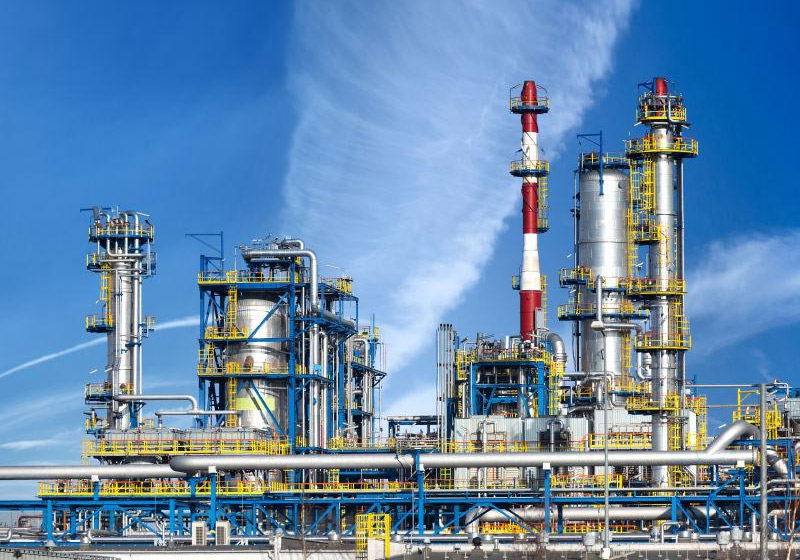
The theoretical advantages of titanium are best understood through their practical implementation. The use of thin titanium sheet is widespread across various types of critical equipment in chemical plants, where its properties directly solve complex engineering challenges.
This is one of the most common and impactful applications for titanium in the chemical industry. Shell-and-tube heat exchangers, plate-and-frame heat exchangers, and condensers often use thin-walled titanium tubing or plates. These components are typically thin-section products where corrosion failure would lead to cross-contamination of process streams or a loss of cooling/heating capacity. In services involving seawater cooling, which is highly corrosive due to chlorides, titanium is the undisputed material of choice. Its resistance to corrosion and erosion ensures long, trouble-free service, maintaining thermal efficiency and preventing costly leaks. The search for heat exchanger materials reliably leads engineers to consider titanium for the most challenging duties.
Chemical reactors, pressure vessels, and distillation towers that contain aggressive media are frequently protected with titanium. Given the high cost of solid titanium construction for large vessels, a common and economical approach is to use a thin titanium sheet as a liner or weld overlay cladding on a strong, cost-effective backing material like carbon steel. This design provides the vessel with the full corrosion resistance of titanium on the process side, while the carbon steel shell provides the necessary structural strength. This application demands a high-integrity bond between the cladding and the substrate, a specialized fabrication technique that is well-established for titanium. Linings made from thin titanium sheet are also used to refurbish and extend the life of existing vessels that have been degraded by corrosion.
The transport of corrosive fluids through a plant requires a piping system that can withstand both the chemical attack and the mechanical stresses of operation. Titanium piping, often fabricated from welded thin titanium sheet, is used for this purpose. Similarly, critical components within pumps (impellers, casings) and valves (trim, bodies) are manufactured from titanium to ensure longevity and reliability. The failure of a pump impeller or a valve in a critical process line can halt production. Specifying titanium for these components is a proactive measure to ensure the integrity of the entire process flow system, aligning with the need for durable industrial metal supply for maintenance and expansion projects.
In conclusion, the question of why titanium sheet is the material of choice for demanding chemical processing equipment is answered by a compelling convergence of factors. It is not merely one property, but the synergistic combination of exceptional corrosion resistance, particularly in chloride and oxidizing environments, with a high strength-to-weight ratio and long-term durability that solidifies its position. While the initial cost is a consideration, a sophisticated life-cycle cost analysis almost invariably demonstrates that titanium is a prudent and ultimately economical investment. Its versatility in fabrication allows for its use in everything from delicate tubing in heat exchangers to robust linings for massive reactors. The intrinsic characteristics of the thin titanium sheet—its self-repairing passive layer, its light weight, and its strength—directly address the most pressing challenges faced by the chemical industry: ensuring safety, maximizing uptime, and protecting capital investment. Therefore, the selection of titanium is not an extravagance but a rational engineering decision, grounded in proven performance and a clear understanding of total value, making it an indispensable material for building and maintaining the world’s most critical chemical processes.

Copyright © 2024 Changzhou Bokang Special Material Technology Co., Ltd. All Rights Reserved.
Custom Round Pure Titanium Rod Manufacturers Privacy