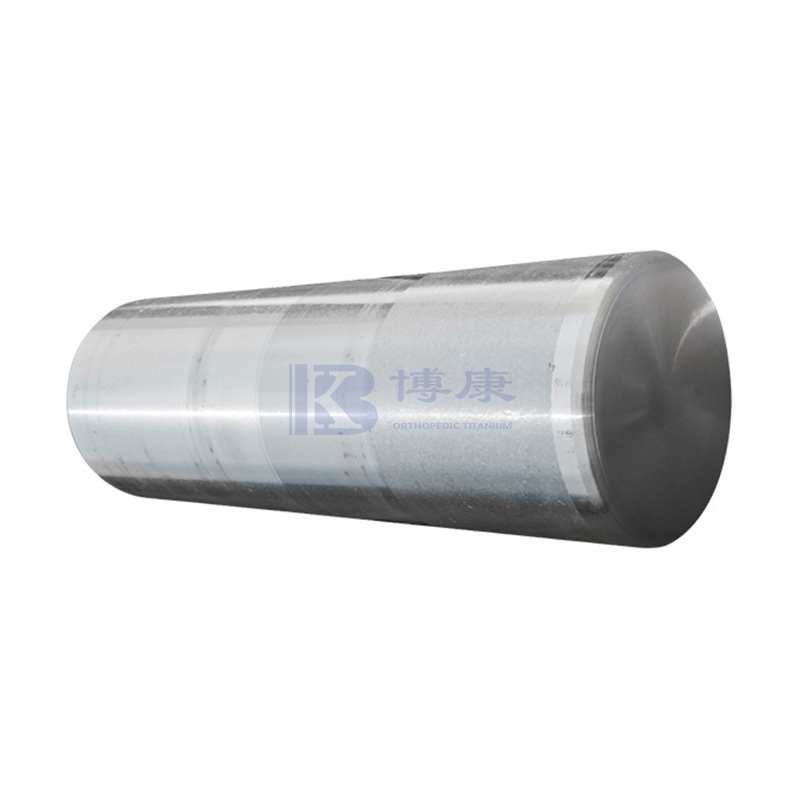
When Should Engineers Choose Grade 5 vs Grade 2 Titanium Rods?
Introduction: Why Grade Selection Matters at the System Level
Titanium rods are widely used across aerospace structures, medical devices, industrial equipment, chemical processing systems, energy infrastructure, and high-performance mechanical assemblies. Among the most commonly specified materials are Grade 2 commercially pure titanium and Grade 5 titanium alloy (Ti-6Al-4V). While both are referred to generically as “titanium,” their metallurgical structure, mechanical response, fabrication behavior, and lifecycle performance differ substantially.
In many design and procurement workflows, the decision between Grade 2 and Grade 5 is simplified to a comparison of “lower strength versus higher strength.” However, this framing can be misleading when working at the system level. Material selection for a 10mm titanium rod often influences not only static load capacity, but also fatigue life, corrosion behavior, machining strategy, inspection requirements, and total cost of ownership.
From a systems-engineering perspective, the choice between Grade 2 and Grade 5 should be evaluated in terms of:
Functional requirements and operating environment
Structural margins and safety factors
Manufacturing and fabrication constraints
Inspection and quality assurance strategy
Long-term reliability and maintenance expectations
Supply chain and certification considerations
Overview of Titanium Grades in Rod Applications
Commercially Pure Titanium (Grade 2)
Grade 2 is classified as commercially pure (CP) titanium. It contains only small amounts of interstitial and residual elements and does not rely on intentional alloying additions to achieve strength.
Key characteristics include:
Single-phase alpha titanium microstructure
High corrosion resistance in a wide range of environments
Good ductility and formability
Moderate strength relative to alloyed grades
Relatively predictable welding and forming behavior
Grade 2 is often selected where corrosion resistance, fabricability, and chemical compatibility are primary drivers.
Alpha-Beta Titanium Alloy (Grade 5 / Ti-6Al-4V)
Grade 5 is an alpha-beta titanium alloy containing aluminum and vanadium as principal alloying elements. These additions significantly increase strength and enable heat-treatable microstructures.
Key characteristics include:
Two-phase alpha + beta microstructure
High strength-to-weight ratio
Higher fatigue strength than CP titanium
Greater sensitivity to heat treatment and processing history
More demanding machining and welding requirements
Grade 5 is commonly selected for high-stress structural components where weight efficiency and mechanical performance dominate.
Mechanical Property Comparison for Rod Applications
Mechanical performance is often the first screening criterion for material selection. However, system-level design requires understanding not only ultimate values but also how properties influence deformation, damage tolerance, and load redistribution.
Table 1 — Typical Mechanical Property Ranges
Property
Grade 2 Titanium
Grade 5 Titanium (Ti-6Al-4V)
Tensile strength
Lower
Significantly higher
Yield strength
Lower
Much higher
Elongation
Higher
Lower than Grade 2
Fatigue strength
Moderate
High
Hardness
Lower
Higher
Modulus of elasticity
Similar
Similar
Key system-level implications:
Grade 5 supports higher allowable stresses, enabling smaller cross-sections for the same load.
Grade 2 allows greater plastic deformation before failure, which can be advantageous in energy absorption or deformation-tolerant designs.
For a 10mm titanium rod used in a load-bearing role, Grade 5 often provides greater structural margin, while Grade 2 may be adequate where loads are lower and corrosion or formability dominate.
Corrosion Resistance and Environmental Compatibility
One of titanium’s defining attributes is its passive oxide layer, which provides excellent corrosion resistance. However, alloying elements can slightly modify corrosion behavior.
Grade 2 Corrosion Characteristics
Grade 2 is often favored in:
Chemical processing equipment
Seawater and marine environments
Heat exchangers
Piping and fluid handling systems
System considerations:
Grade 2 generally provides very stable corrosion resistance across a wide pH range and in chloride-containing environments.
It is frequently selected where long-term material stability is prioritized over high structural loads.
For a 10mm titanium rod used as a fastener, pin, or support element in corrosive service, Grade 2 may provide longer service life with simpler inspection requirements.
Grade 5 Corrosion Characteristics
Grade 5 also offers strong corrosion resistance, but:
The presence of alloying elements can introduce slightly different electrochemical behavior
In certain aggressive chemical environments, Grade 5 may not match the corrosion margin of Grade 2
Proper surface condition and heat treatment history can influence corrosion response
System considerations:
In structural systems exposed to moderately corrosive environments, Grade 5 is commonly acceptable.
In highly aggressive chemical or marine service, Grade 2 may be preferred unless higher strength is essential.
Fatigue and Damage Tolerance in Rod Components
Fatigue behavior is often critical for rods used in cyclic loading, rotating equipment, or vibration-sensitive assemblies.
Grade 2 Fatigue Behavior
Grade 2 typically exhibits:
Lower fatigue strength compared to Grade 5
Higher ductility, which can provide some tolerance to localized deformation
Sensitivity to surface finish and surface defects
System implications:
Grade 2 rods may be suitable for low-cycle or low-stress fatigue environments.
For long-life cyclic service, conservative design margins are required.
Surface condition control becomes especially important for small-diameter rods such as 10mm titanium rods.
Grade 5 Fatigue Behavior
Grade 5 typically provides:
Higher fatigue strength
Better performance in high-cycle fatigue regimes
Greater sensitivity to microstructural condition and surface quality
System implications:
Grade 5 is often selected for rotating shafts, highly stressed pins, and structural linkages.
Fatigue performance is strongly influenced by heat treatment, surface finish, and residual stress.
Quality control and inspection strategy become more critical to ensure fatigue reliability.
Formability, Machining, and Fabrication Considerations
From a systems viewpoint, manufacturability can strongly influence cost, schedule, and yield.
Forming and Cold Working
Grade 2:
Better cold formability
Lower flow stress
More forgiving during bending and swaging
Grade 5:
Limited cold formability
Higher forming loads required
Often requires hot working for significant shape changes
Implication for rod-based systems:
If a 10mm titanium rod must be bent, flared, or mechanically formed as part of an assembly, Grade 2 generally reduces forming complexity and risk.
Machining Behavior
Titanium, in general, is considered difficult to machine due to:
Low thermal conductivity
High chemical reactivity at elevated temperatures
Tendency to cause tool wear
Grade 2:
Generally easier to machine than Grade 5
Lower cutting forces
More forgiving to tool selection and cutting parameters
Grade 5:
Higher strength leads to higher cutting forces
Greater tool wear
Requires tighter control of feeds, speeds, and cooling
System-level impact:
Grade 5 rods typically increase machining time and tooling cost.
For high-volume machining of 10mm titanium rods, Grade 2 may offer better manufacturability and cost stability.
Welding and Joining Behavior
Many rod-based systems require welding, brazing, or mechanical joining.
Grade 2 Welding
Grade 2 is generally considered:
Easier to weld
Less sensitive to heat-affected zone (HAZ) embrittlement
More tolerant of minor process variation
Grade 5 Welding
Grade 5 welding:
Requires stricter control of shielding and contamination
More sensitive to oxygen and nitrogen pickup
Can experience changes in microstructure that affect local properties
System implication:
Where rods must be welded into assemblies, Grade 2 often reduces process risk. Grade 5 welding is feasible but requires more rigorous control and inspection.
Heat Treatment and Microstructural Control
Heat treatment plays a limited role for Grade 2 but is critical for Grade 5.
Grade 2
Not typically heat treated for strength
Properties mainly controlled by cold work and annealing
More consistent from batch to batch
Grade 5
Properties strongly influenced by solution treatment and aging
Microstructure affects strength, fatigue, and fracture behavior
Greater sensitivity to thermal history during processing
System implication:
For Grade 5 rods, the specification of heat treatment conditions is an important part of system documentation and quality assurance.
Dimensional Stability and Straightness in Small-Diameter Rods
For small diameters such as 10mm, dimensional stability and straightness can influence assembly and performance.
Factors Affecting Rod Straightness
Residual stresses from drawing or rolling
Heat treatment distortion (more relevant for Grade 5)
Handling and storage practices
Grade 2:
Lower internal stresses
Typically easier to straighten
Grade 5:
Higher residual stresses possible
Straightness may be more sensitive to processing route
System consideration:
For precision alignment applications, Grade 2 may simplify tolerance control. Grade 5 may require additional straightening or inspection steps.
Cost, Availability, and Lifecycle Considerations
Material cost is only one component of total system cost.
Direct Material Cost
Grade 5 generally has:
Higher raw material cost
Higher processing cost
Greater certification and inspection overhead in some sectors
Grade 2 generally has:
Lower raw material cost
Simpler processing routes
Indirect System Costs
Key indirect cost drivers include:
Machining time
Tooling wear
Scrap and rework rates
Inspection and testing intensity
Field maintenance and replacement
System-level insight:
In some systems, selecting Grade 5 reduces component size and weight, which may reduce overall system mass and secondary structure costs. In other systems, Grade 2 may reduce manufacturing complexity and lifecycle cost.
Functional Use-Case Mapping
Rather than selecting grades in isolation, many organizations map material choices to functional roles within the system.
Table 2 — Typical Functional Alignment
Functional Priority
More Typical Choice
Rationale
High static load
Grade 5
Higher strength
High fatigue life
Grade 5
Higher fatigue resistance
Severe corrosion
Grade 2
Superior corrosion margin
Extensive forming
Grade 2
Better ductility
Ease of welding
Grade 2
Lower process sensitivity
Weight minimization
Grade 5
Higher strength-to-weight
Cost stability
Grade 2
Lower processing complexity
This mapping is not prescriptive but highlights how functional drivers influence grade selection for rod components.
Application Examples at the System Level
Structural Pins and Load-Bearing Rods
For structural pins made from a 10mm titanium rod:
Grade 5 is often selected where load and fatigue dominate
Grade 2 may be used where loads are lower and corrosion dominates
Fluid System Components
For rods used in valve stems or supports in fluid systems:
Grade 2 may be preferred for corrosion compatibility
Grade 5 may be used if higher strength is needed to reduce size
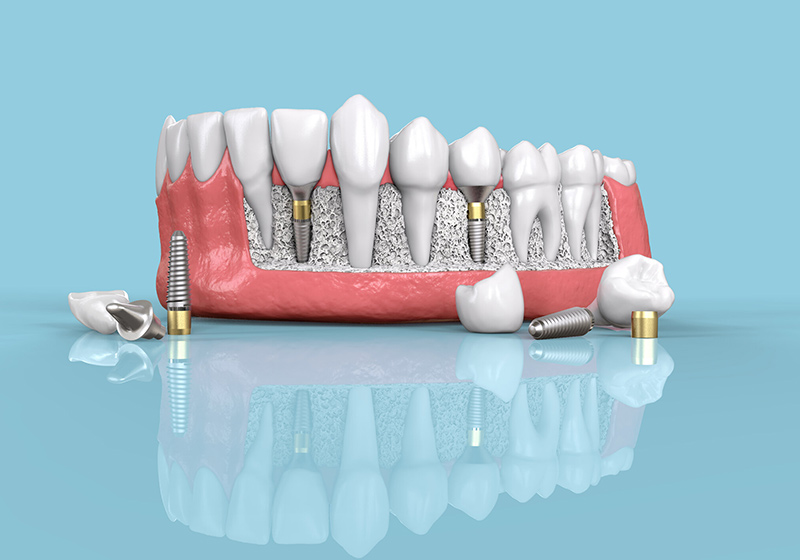
Medical and Instrumentation Components
For medical and precision instruments:
Grade 5 may be selected for strength and stiffness
Grade 2 may be selected for formability and corrosion compatibility, depending on device design and regulatory context
Quality Control and Inspection Strategy
Material grade selection influences inspection planning.
Grade 2:
Typically simpler acceptance testing
Lower sensitivity to microstructural variation
Grade 5:
Often requires closer monitoring of heat treatment
Greater importance of surface finish and defect control
Fatigue-critical applications may require more rigorous inspection
System implication:
Inspection and quality planning should be aligned with grade-specific risks and performance drivers.
Summary
Selecting between Grade 5 and Grade 2 titanium rods is not simply a question of choosing higher or lower strength. From a systems-engineering perspective, the decision should be based on how mechanical performance, corrosion behavior, fabrication complexity, fatigue life, inspection strategy, and lifecycle cost interact within the complete system.
Grade 5 titanium rods are typically chosen when high strength, fatigue resistance, and weight efficiency are dominant requirements. Grade 2 titanium rods are typically chosen when corrosion resistance, formability, weldability, and process robustness are dominant requirements.
For applications involving a 10mm titanium rod, the smaller diameter amplifies the importance of surface condition, straightness, and fatigue behavior, making grade selection particularly influential on system reliability and manufacturability.
A structured, requirement-driven evaluation process—rather than defaulting to a single grade—supports more predictable performance and better alignment between design intent and long-term system behavior.
FAQ
Q1: Is Grade 5 always stronger than Grade 2 for the same rod diameter? Yes, Grade 5 generally has significantly higher tensile and yield strength than Grade 2 for the same diameter, including 10mm rods.
Q2: Does Grade 2 always provide better corrosion resistance? Grade 2 typically offers excellent corrosion resistance and may outperform Grade 5 in some aggressive chemical environments, though both grades are corrosion resistant.
Q3: Is machining Grade 5 more difficult than Grade 2? Yes, Grade 5 usually requires more controlled machining parameters and results in higher tool wear compared to Grade 2.
Q4: Can both grades be welded? Both grades can be welded, but Grade 5 requires stricter control of shielding and contamination to maintain properties.
Q5: How does fatigue performance differ between the two grades? Grade 5 generally provides higher fatigue strength, making it more suitable for cyclic loading applications.
References
ASM Handbook, Volume on Titanium and Titanium Alloys
ASTM Standards for Titanium and Titanium Alloy Bars and Rods
Aerospace Material Specifications for Titanium Alloys
General corrosion and fatigue design guidelines for titanium materials
Manufacturing and fabrication guidance for titanium rod products

 Send Inquiry


 EN
EN
 English
 日本語
日本語 한국어
한국어 Español
 عربى
عربى русский
 Deutsch
 中文简体
中文简体