 Send Inquiry
 Send Inquiry
The integration of advanced materials into medical science has been a cornerstone of modern healthcare, enabling procedures and treatments that were once unimaginable. Among these materials, one stands out for its remarkable combination of properties that align almost perfectly with the demanding requirements of the human body: medical grade titanium. This is not a single, specific alloy but a classification encompassing several highly refined titanium alloys and commercially pure titanium grades that meet stringent international standards for surgical implant applications. Their adoption has revolutionized fields such as orthopedics, dentistry, and cardiovascular surgery, offering patients improved outcomes, greater longevity of implants, and enhanced quality of life. The story of medical grade titanium is one of interdisciplinary collaboration between metallurgy, engineering, and biology, resulting in a material that harmonizes with the very essence of human physiology.
The journey of titanium into the operating room began not in medicine, but in the aerospace and industrial sectors, where its high strength-to-weight ratio and exceptional corrosion resistance were highly valued. Researchers and surgeons soon recognized that these same properties could address many of the limitations posed by earlier implant materials like stainless steel and cobalt-chromium alloys. The key breakthrough was the discovery of titanium’s unique biocompatibility—its ability to reside within the body without eliciting a significant adverse immune response or causing toxicological effects. This biocompatibility, coupled with its physical characteristics, paved the way for its medical ascendancy. Today, the use of medical grade titanium is a standard of care for a vast array of permanent and temporary implantable devices.
The supremacy of medical grade titanium in the medical field is not attributable to a single property but to a powerful synergy of several key characteristics. This combination creates a material that is uniquely suited to the challenging environment of the human body.
Biocompatibility is arguably the most critical property. The human body is a hostile environment for foreign materials, capable of corroding metals and initiating inflammatory responses that can lead to implant rejection or failure. Medical grade titanium exhibits outstanding biocompatibility due to its passive surface oxide layer. When exposed to air or bodily fluids, titanium immediately forms a thin, adherent, and stable oxide film, primarily of titanium dioxide (TiO₂). This layer is inert, preventing the release of metal ions into surrounding tissues and effectively shielding the underlying metal from corrosive attack. This passivation makes it exceptionally well-tolerated, minimizing the risk of allergic reactions, inflammation, or toxicity.
Exceptional strength and a low modulus of elasticity are equally vital. Implants must withstand significant and cyclic mechanical loads, particularly in weight-bearing applications like hip and knee joints. medical grade titanium alloys possess high tensile and fatigue strength, ensuring the structural integrity of the implant over many years of use. Perhaps even more importantly, the elastic modulus of titanium alloys is significantly closer to that of human bone than other common implant metals like stainless steel. A significant mismatch in stiffness, where the implant is much stiffer than the bone, can lead to a phenomenon called “stress shielding.” This occurs where the implant bears the majority of the load, causing the adjacent bone to become under-stimulated and leading to bone resorption and eventual loosening of the implant. The lower modulus of medical grade titanium helps to mitigate this issue, allowing for a more natural transfer of load to the bone and promoting long-term stability.
Superior corrosion resistance is a fundamental requirement for any permanent implant. The human body presents a highly corrosive chloride environment at a temperature of approximately 37°C (98.6°F). medical grade titanium demonstrates exceptional resistance to pitting, crevice, and galvanic corrosion in this environment. Its performance in saline environments far surpasses that of many other metals, ensuring that the implant does not degrade over time, which could release particulate debris and weaken the device.
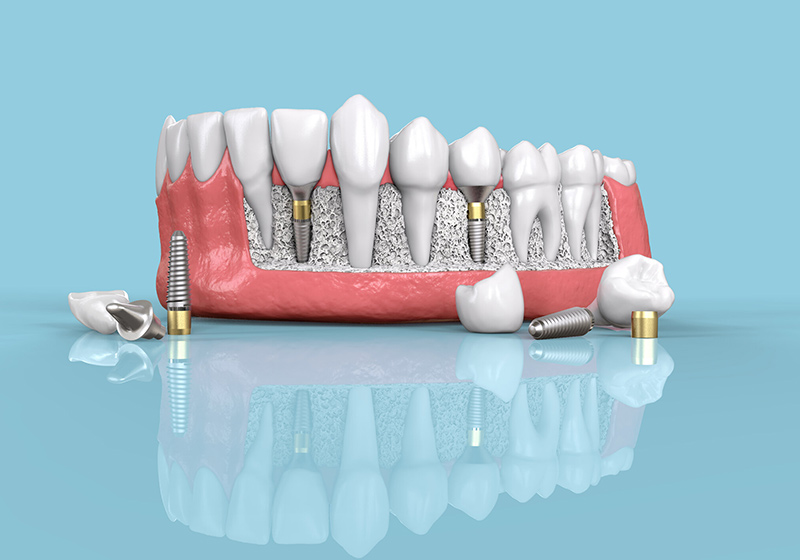
Finally, excellent osseointegration is a property that sets titanium apart, particularly in orthopedics and dentistry. Osseointegration refers to the direct structural and functional connection between living bone and the surface of a load-bearing artificial implant. The surface chemistry and topography of medical grade titanium are conducive to the migration, attachment, and proliferation of bone-forming cells (osteoblasts). Over time, new bone tissue grows into and interlocks with the microscopic pores and irregularities on the titanium surface, effectively anchoring the implant in place. This biological bonding is far more robust than mere mechanical fixation and is a primary reason for the success of modern dental implants and cementless orthopedic prostheses.
The term “medical grade titanium” encompasses several distinct grades, each tailored for specific applications based on their mechanical properties and composition. These grades are standardized by international organizations such as ASTM International and the International Organization for Standardization (ISO). They can be broadly divided into two categories: commercially pure (CP) titanium and titanium alloys.
Commercially pure titanium is available in four grades (1 through 4), which differ primarily in their oxygen and iron content. These interstitial elements act as strengtheners; as their concentration increases, so does the strength of the metal. However, this comes at the cost of reduced ductility (formability). Grade 4 CP titanium, being the strongest of the unalloyed grades, is frequently used in dental implant applications where high strength and excellent corrosion resistance are paramount.
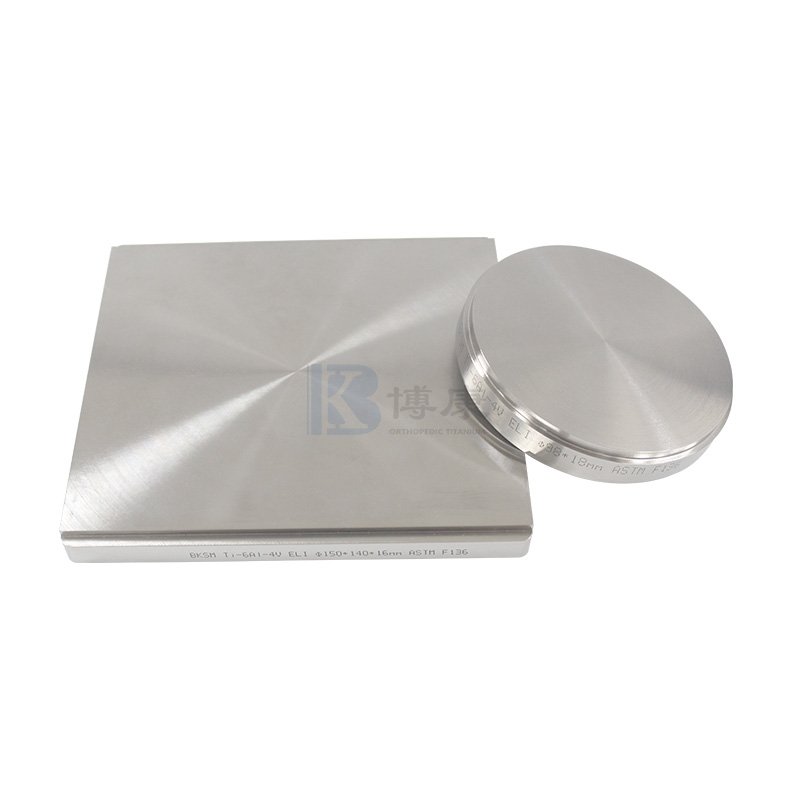
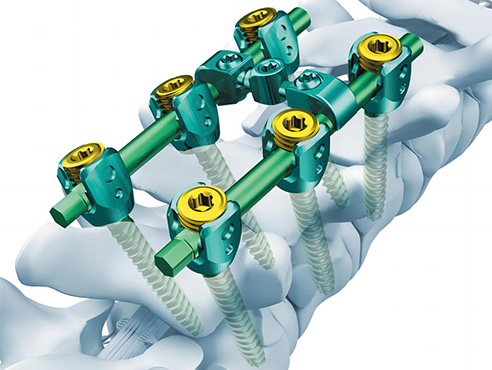
For more demanding mechanical applications, particularly in orthopedics, titanium alloys are preferred. The most prominent alloy is Ti-6Al-4V (Grade 5). This alloy, composed of titanium, 6% aluminum, and 4% vanadium, offers a superior combination of high strength, fracture toughness, and fatigue resistance. It is the workhorse alloy for joint replacements, bone screws, plates, and spinal fixation devices. A variant of this alloy, Ti-6Al-4V ELI (Extra Low Interstitial), is used for fracture-critical applications like spinal rod implants and artificial heart valves due to its enhanced ductility and fracture toughness.
More recently, vanadium-free alloys such as Ti-6Al-7Nb and Titanium CP have been developed. The driving force behind these new alloys is the desire to eliminate potentially cytotoxic elements (like vanadium) even though they are safely locked within the passive oxide layer. These alloys offer excellent biocompatibility with mechanical properties comparable to Ti-6Al-4V.
The following table provides a concise overview of these primary grades and their typical uses:
| Grade | Designation | Type | Key Properties | Primary Medical Applications |
|---|---|---|---|---|
| Grade 4 | CP Ti | Commercially Pure | High strength, excellent corrosion resistance | Dental implants, some cranial plates |
| Grade 5 | Ti-6Al-4V | Alpha-Beta Alloy | Very high strength, good fatigue resistance | Hip & knee joints, bone plates, surgical instruments |
| Grade 23 | Ti-6Al-4V ELI | Alpha-Beta Alloy | Enhanced ductility & fracture toughness | Critical fracture repair, spinal rods, cardiovascular devices |
| Grade 7 | – | Commercially Pure | Similar to Grade 2 but with higher corrosion resistance | Not applicable for this specific grade (often industrial). A better example for a newer alloy would be Ti-6Al-7Nb. |
| (Example) | Ti-6Al-7Nb | Alpha-Beta Alloy | Vanadium-free, high strength, excellent biocompatibility | Alternative to Ti-6Al-4V for hip replacements and trauma devices |
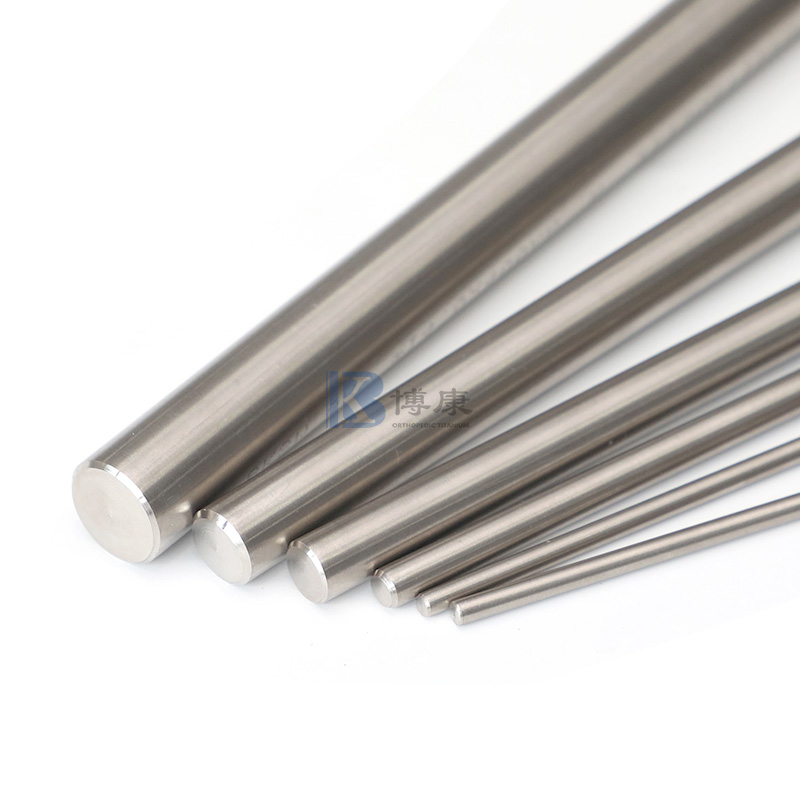
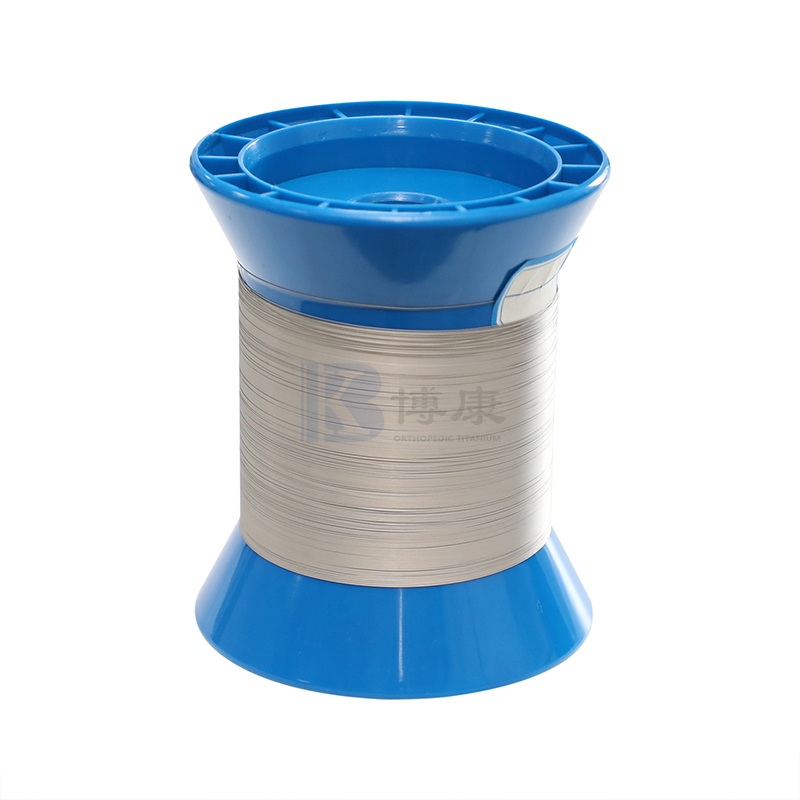
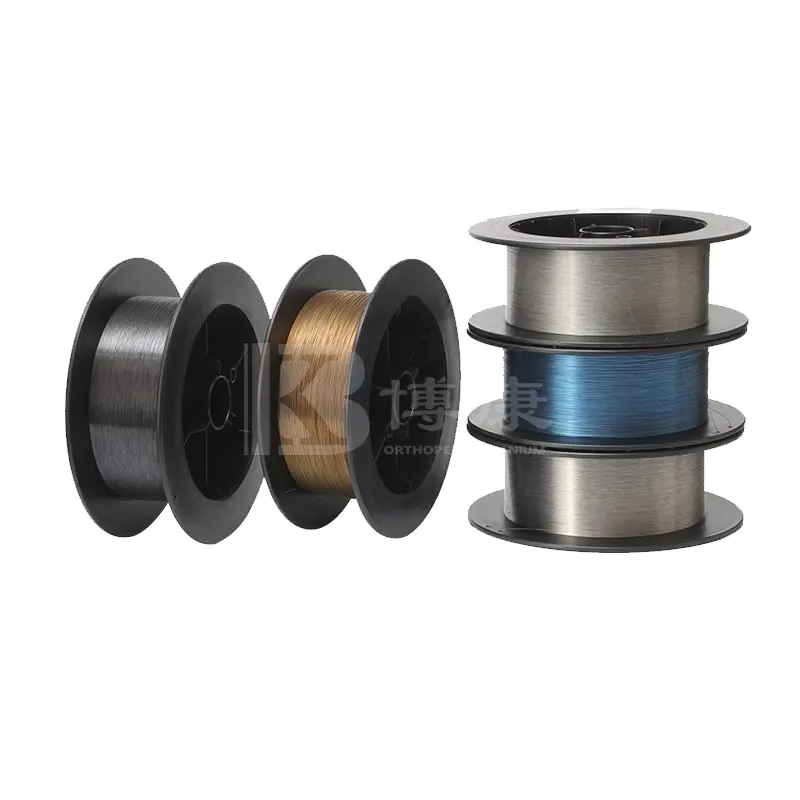
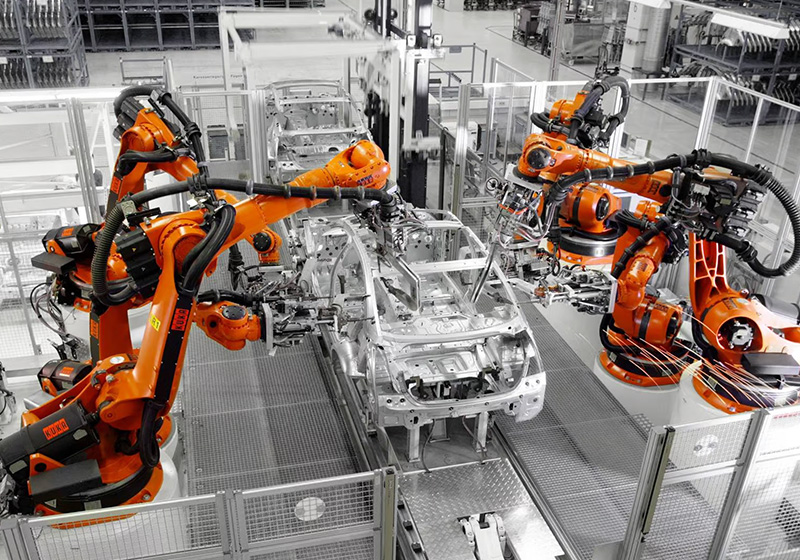
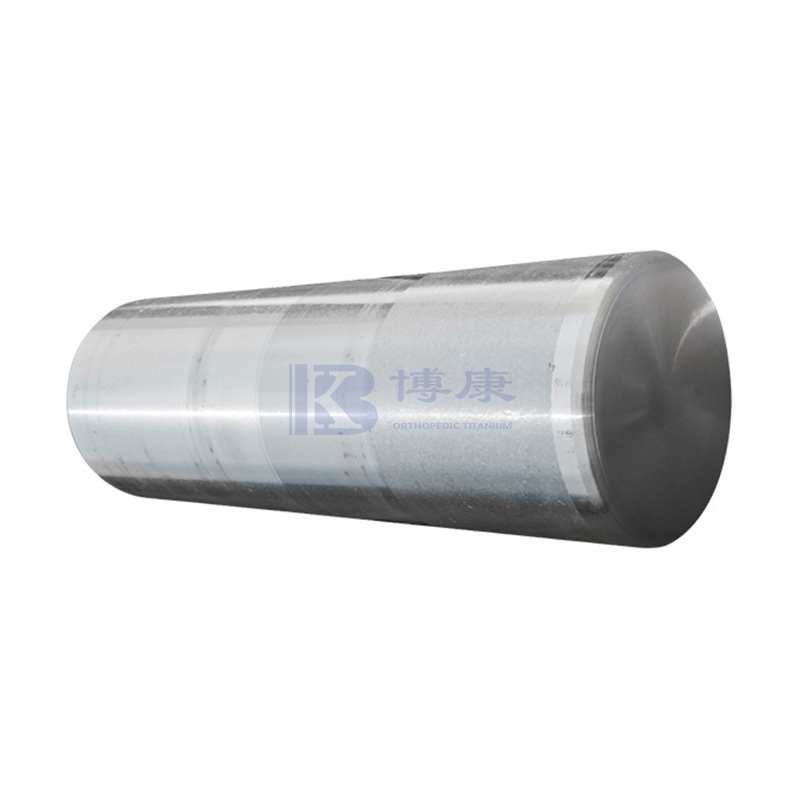
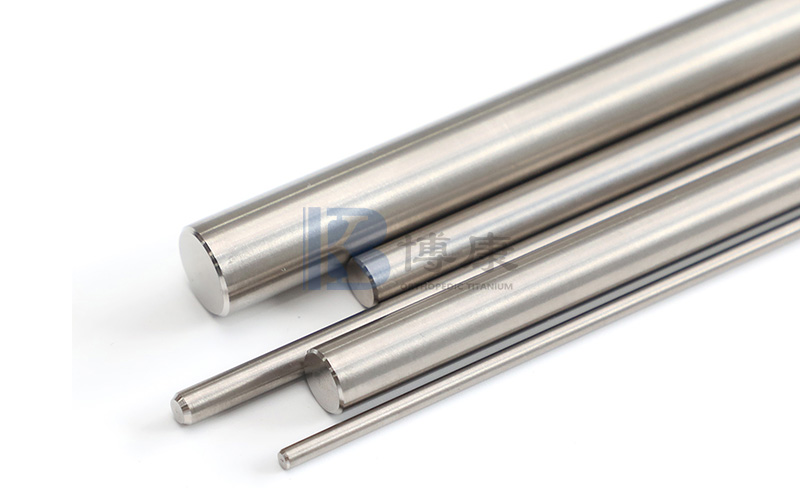
The journey from raw titanium ore to a finished medical implant is a complex and highly controlled process. It begins with the Kroll process to produce pure titanium sponge, which is then melted, often multiple times in a vacuum arc furnace, to create a homogenous ingot with minimal impurities and defects. This ingot is subsequently forged or hot-worked into billets, which are then processed into various forms—bars, rods, sheets, or wires—through machining, rolling, or drawing.
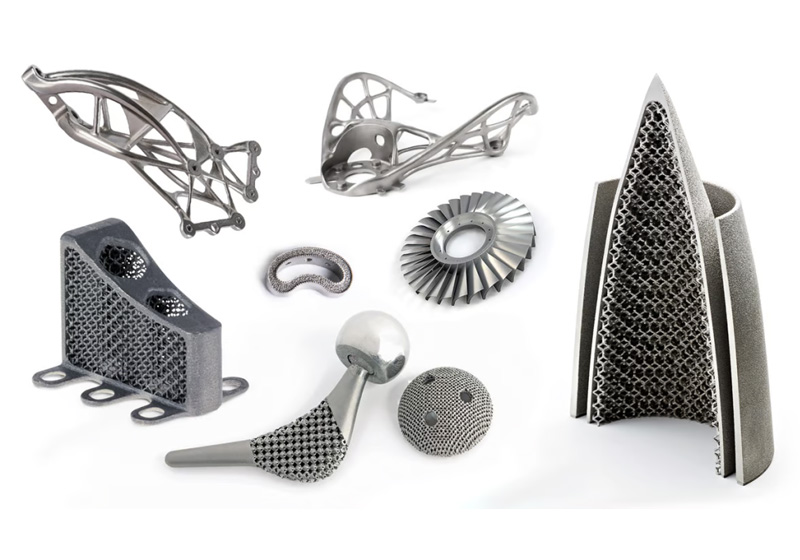
Precision machining is a critical step in manufacturing implants like hip stems or spinal cages. Given titanium’s strength and low thermal conductivity, which can cause heat buildup during cutting, specialized techniques and coolants are required to achieve the precise tolerances and complex geometries demanded by surgeons. Additive manufacturing, or 3D printing, has emerged as a transformative technology for medical grade titanium. Techniques like Electron Beam Melting (EBM) and Direct Metal Laser Sintering (DMLS) allow for the creation of highly complex, patient-specific implants that were previously impossible to manufacture. This is particularly beneficial for creating porous scaffolds that mimic the structure of bone, encouraging enhanced osseointegration.
The final surface finish of an implant is not merely cosmetic; it is functionally critical. A smooth, polished finish is essential for articulating surfaces in joint replacements to minimize wear debris. Conversely, for components intended to integrate with bone, a roughened or porous surface is created. This can be achieved through various methods such as grit-blasting, acid-etching, plasma spraying, or the additive manufacturing processes mentioned above. These techniques increase the surface area available for bone attachment, significantly improving the strength and speed of osseointegration. Every step of the manufacturing process is governed by rigorous quality control measures and standards to ensure the safety, performance, and traceability of every implant.
The advantages of medical grade titanium are profound. For patients, it translates to implants that are safer, last longer, and function more naturally. The high strength and fatigue resistance reduce the risk of mechanical failure. The excellent biocompatibility minimizes the risk of adverse biological reactions. The ability to osseointegrate provides stable, long-term fixation without the need for bone cement, which can itself degrade over time. Furthermore, titanium is radiolucent, meaning it does not significantly interfere with X-rays or MRI scans, allowing for clear postoperative imaging to assess healing and implant position.
However, there are considerations. While strong, some titanium alloys can be susceptible to fretting and wear if used on articulating surfaces. For this reason, the bearing surfaces of joint replacements are often made from harder materials like ceramics or cobalt-chromium alloys, while the stem and shell components are made from titanium. Another consideration is the potential for metallic ion release, albeit at very low levels. While the passive oxide layer is highly effective, microscopic wear and corrosion can lead to the release of titanium, aluminum, and vanadium ions into the body. The long-term biological effects of this are still a subject of ongoing research, though significant adverse effects are considered rare. This has been a driving factor in the development of vanadium-free and low-modulus beta titanium alloys.
The future of medical grade titanium is focused on enhancing its already impressive properties through advanced engineering and surface modification. Research is intensely focused on developing new alloys with even lower elastic moduli to better match bone and eliminate stress shielding entirely. Another major area of innovation is bioactive surface coatings. While titanium integrates well with bone, the process can be accelerated. Coatings with materials like hydroxyapatite (a natural component of bone) or the use of biomolecular coatings that attract specific cells are being actively investigated to create implants that heal faster and more reliably.
In conclusion, medical grade titanium represents a pinnacle of material science applied to medicine. Its unique suite of properties—superior biocompatibility, high strength-to-weight ratio, excellent corrosion resistance, and the ability to osseointegrate—has made it an indispensable material in restoring human health and mobility. From the dental implant that allows for confident smiling to the hip replacement that restores pain-free walking, its impact is deeply felt across healthcare. As manufacturing technologies like 3D printing advance and research into new alloys and surface treatments continues, the future promises even more sophisticated and effective implants, further solidifying the role of medical grade titanium as a fundamental pillar of modern surgical practice.

Copyright © 2024 Changzhou Bokang Special Material Technology Co., Ltd. All Rights Reserved.
Custom Round Pure Titanium Rod Manufacturers Privacy
 EN
EN
 English
 日本語
日本語 한국어
한국어 Español
 عربى
عربى русский
 Deutsch
 中文简体
中文简体