
ASTM F67 / F136 Certified Titanium Material for Orthopedic & Dental Implants And Surgical Devices High-precision CP ...
View DetailsAerospace Grade Titanium
Titanium materials meeting the stringent quality, performance, and traceability requirements for safety-critical aerospace and defense applications.
Product Overview
Bokang's Aerospace Grade Titanium is manufactured using advanced vacuum arc remelting technology, ensuring exceptional purity and consistent mechanical properties.
Aerospace Grade Titanium encompasses a range of titanium alloys and pure grades that are produced, tested, and certified to meet the exacting standards of the aerospace industry. This designation goes beyond basic chemical and mechanical specifications to include rigorous controls on microstructure, internal soundness (freedom from defects), and consistency across large production batches.
These materials are governed by Aerospace Material Specifications (AMS), which often impose stricter requirements than their ASTM counterparts. Key aspects include control of interstitial and trace elements, mandatory multiple melting (typically triple melt for critical rotating parts), extensive non-destructive testing (NDT), and documented thermal-mechanical processing histories. Aerospace grades are selected for their high strength-to-weight ratio, excellent fatigue and fracture toughness, and reliable performance under dynamic loads and varying temperatures. They are fundamental to modern airframe construction, jet engines, and spacecraft, where material failure is not an option.
Technical Support & Documentation
Related Products
Explore our other high-performance materials

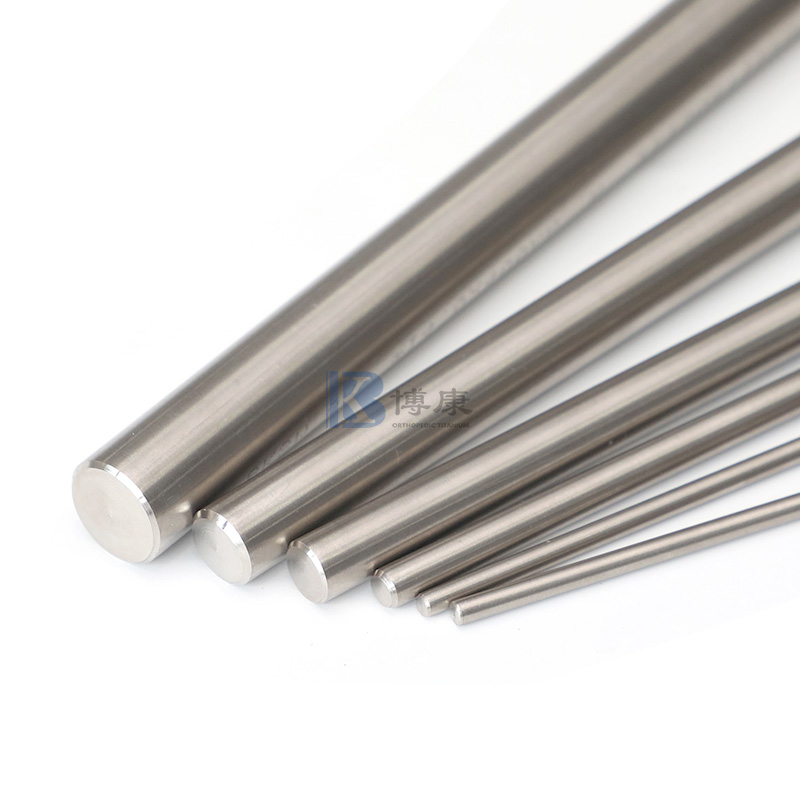
Premium Titanium Round Bars / Rods for Medical, Industrial, and Aerospace Applications Unmatched Quality & Certifica...
View Details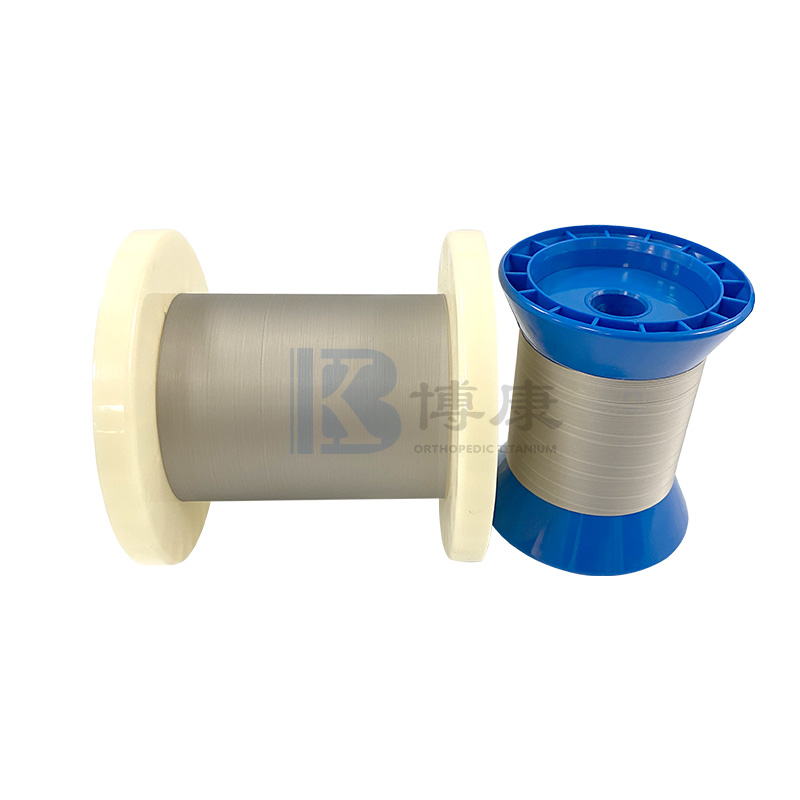
High-Purity Titanium Wire for Surgical Sutures, Staples, and Precision Medical Instruments Bokang offers premium medical...
View Details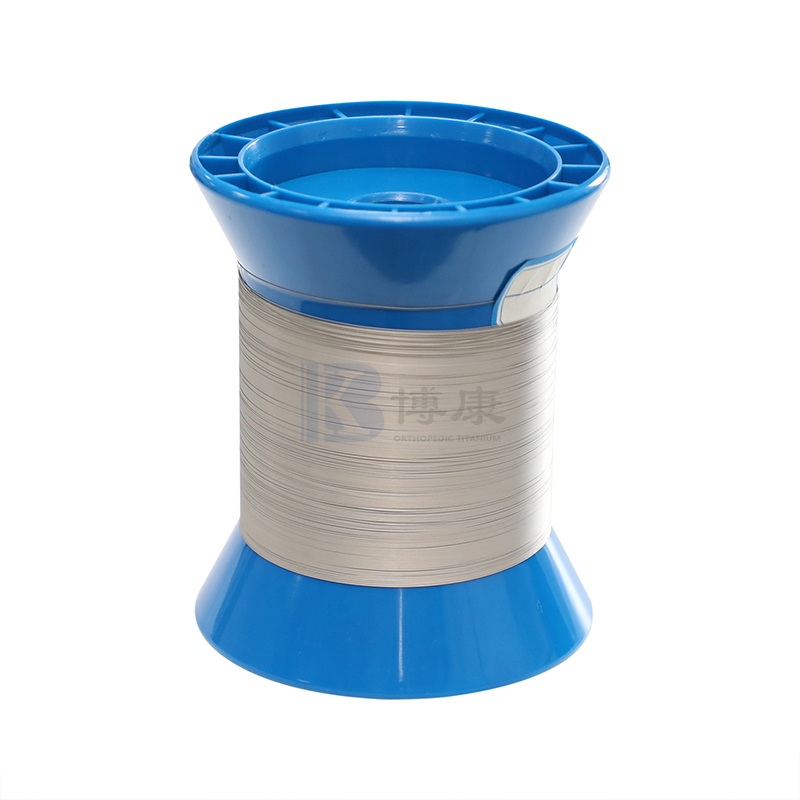
Bokang Titanium offers a wide range of high-quality titanium wires, manufactured through multiple drawing processes. Our...
View Details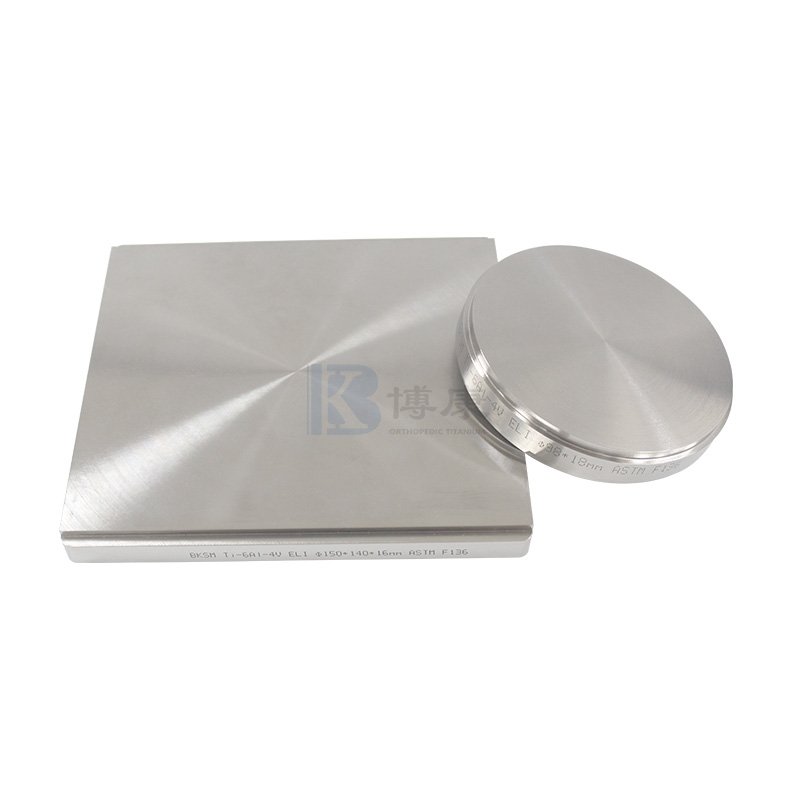
Dental Titanium Discs & Blocks – Medical Grade for CAD/CAM Milling High-quality dental titanium discs and blocks d...
View Details
Titanium Ingot (Ti Ingot) Description Our titanium ingots are made from high-purity sponge titanium and premium interme...
View DetailsTechnical Specifications
Detailed specifications for our Aerospace Grade Titanium
| Common Alloys & AMS Standards | Ti-6Al-4V: AMS 4911 (Sheet), AMS 4928 (Bar); Ti-6Al-4V ELI: AMS 4907; CP Ti Gr2: AMS 4902; Ti-3Al-2.5V: AMS 4943 (Tube) |
| Key Quality Requirements | Triple Melt (VAR + VAR + VAR or VAR + ESR), Cleanliness (Micro and Macro), Controlled Microstructure (e.g., bi-modal for fatigue) |
| Mandatory Testing | Chemistry, Tensile, Hardness, Microstructure, Ultrasonic Inspection (UT), Macroetch, Fracture Toughness (for some specs) |
| Traceability | Complete mill heat and processing lot traceability is required, documented on certified test reports. |
| Typical Product Forms | Forgings, Billets, Bars, Sheet, Plate, Seamless Tube, Fasteners |
| Governing Bodies | SAE International (AMS), NADCAP (accreditation for special processes) |
Key Advantages of Bokang Aerospace Grade Titanium
Discover why our titanium wire stands out in the industry
Uncompromising Reliability
Stringent manufacturing and testing protocols minimize the risk of material-related failures, which is critical for flight safety.
Superior Internal Soundness
Multiple melting and extensive NDT ensure extremely low levels of inclusions, porosity, and other internal defects that could initiate fatigue cracks.
Complete Process Assurance
Full documentation and traceability from raw material to finished product provide confidence for design, certification, and maintenance.
Material Comparison
Aerospace Grade Titanium vs. Competitive Alternatives
| Feature | Aerospace Grade Ti-6Al-4V (per AMS 4911) | Industrial Grade Ti-6Al-4V (per ASTM B265) | Aerospace Aluminum 7075-T73 |
|---|---|---|---|
| Governing Specification | AMS (Aerospace Material Spec) | ASTM (General Industry Spec) | AMS (e.g., AMS 4045) |
| Melting Requirement | Typically Triple Melt | Typically Double Melt | Not Applicable |
| Non-Destructive Testing | Rigorous UT, often 100% | May not be required or sampled | Dye Penetrant, UT as required |
| Fatigue Data | Extensive, design allowable databases (e.g., MMPDS) | Limited or typical values | Extensive databases available |
| Cost Driver | Process Controls, Testing, Traceability | Material & Basic Processing | Material & Heat Treatment |
Applications
Aerospace Grade Titanium applications across various industries
Airframe Structures
- Primary structures: wing spars, carry-through bulkheads, landing gear beams.
- Fuselage frames, seat tracks, and engine mounting components.
- High-stress fasteners, bolts, and attachment fittings.
Jet Engine Components
- Fan and compressor blades, discs (forgings), and spacers.
- Engine casings, compressor stators, and inlet guide vanes.
- Nacelles and thrust reverser components.
Space & Defense Systems
- Rocket motor cases, satellite fuel tanks, and launch vehicle structures.
- Missile airframes and guidance system housings.
- Helicopter rotor hubs and drive system components.
Material Selection Guide
How to choose the right titanium wire for your application
1
Identify the Application Criticality
Specify aerospace grade materials for flight-critical, fracture-critical, or rotating components where material integrity directly impacts system safety and performance.
2
Select the Appropriate AMS Specification
Choose the specific AMS number based on alloy, product form, and required condition (e.g., annealed, solution treated and aged). Consider supplemental requirements for NDT or special tests.
3
Define Microstructure & Property Requirements
For critical forgings or fatigue-sensitive parts, specify microstructure requirements (e.g., bi-modal alpha-beta) and mechanical properties beyond minimums, such as fracture toughness or fatigue crack growth rate.
4
Engage with Qualified Suppliers Early
Work with mills and forgers that hold relevant NADCAP accreditations (for heat treating, NDT) and have a proven track record of supplying to aerospace prime contractors.
Production Process & Quality Control
Our rigorous manufacturing process ensures consistent quality
Triple Melting for Defect Elimination
The alloy undergoes three successive melting cycles (e.g., VAR + VAR + VAR) to achieve exceptional homogeneity and eliminate volatile impurities and inclusions.
→
Precision Forging & Thermomechanical Processing
Ingots are forged under controlled conditions (temperature, strain rate) to refine the grain structure and develop the specified microstructure (equiaxed, bi-modal, etc.).
→
Rigorous Intermediate Inspection
Billets and semi-finished products undergo ultrasonic testing (UT) and macroetch inspection to verify internal soundness before further processing.
→
Controlled Heat Treatment
Material is heat treated in furnaces calibrated per NADCAP requirements. Temperature uniformity surveys and precise control are mandatory to achieve repeatable properties.
→
Final Machining & Surface Enhancement
Components are machined to final dimensions. Surface treatments like shot peening or laser shock peening are applied to induce compressive stresses and improve fatigue life.
→
Comprehensive Certification & Release
A final, detailed Certificate of Conformance is issued, documenting all test results, heat numbers, process parameters, and compliance with the specified AMS standard.
Frequently Asked Questions
Common questions about pure titanium wire
Double melt refers to ingots that have been melted twice (typically Vacuum Arc Remelted). Triple melt indicates a third melting cycle, which further refines the structure, reduces chemical segregation, and virtually eliminates defects like hard alpha inclusions or high-density inclusions. Triple melt is a standard requirement for critical rotating aerospace components (e.g., jet engine discs) where any internal defect could lead to catastrophic failure.
No, substitution is generally not acceptable for aerospace applications. The AMS specification includes mandatory requirements for melting practice, NDT, macro/microstructure, and testing procedures that are not part of the ASTM standard. Using an ASTM grade would lack the necessary process controls, traceability, and certification, violating design and airworthiness requirements.
A bi-modal (or duplex) microstructure in Ti-6Al-4V consists of primary alpha grains within a transformed beta matrix. This structure is engineered through specific thermomechanical processing. It offers an optimal balance of strength, ductility, and fatigue crack growth resistance. Aerospace specifications often call for this microstructure for critical components like airframe forgings to ensure superior damage tolerance.
Engine components, especially rotating parts like discs and blades, are subject to the most stringent requirements: triple melting is almost always mandatory, cleanliness standards are higher, and properties like fracture toughness and creep resistance are closely controlled. Airframe components (beams, bulkheads) also use high-quality material but may have slightly different microstructural goals focused more on fatigue and static strength.
NADCAP (National Aerospace and Defense Contractors Accreditation Program) is a global cooperative accreditation program for aerospace engineering, defense, and related industries. For titanium, NADCAP accreditation is required for suppliers performing special processes like heat treating, chemical processing, and non-destructive testing. It provides independent verification that a supplier's processes meet stringent industry consensus standards, ensuring consistency and reliability.
Why Choose Bokang Titanium?
18+ years of experience in high-quality titanium materials
18+
Years Experience
28+
Patents & Certifications
200+
Skilled Employees
ISO 13485:2016
Medical Device Certification
Our Commitment to Quality
Changzhou Bokang Special Material Technology Co., Ltd. is Wholesale Aerospace Grade Titanium Manufacturers and Custom Aerospace Grade Titanium Suppliers. At Bokang Titanium, we adhere to the strictest quality control protocols throughout our manufacturing process. Every batch of pure titanium wire undergoes rigorous testing including dimensional verification, mechanical property testing, surface quality inspection, and chemical analysis to ensure compliance with international standards.
Our quality management system is certified to ISO 9001:2015 and ISO 13485:2016 for medical device applications, ensuring full traceability from raw material to finished product. We maintain comprehensive documentation including material certifications, test reports, and process validation records.
With 18+ years of experience in titanium material production, we have developed specialized expertise in medical-grade, aerospace-grade, and industrial-grade titanium alloys. Our products are trusted by leading medical device manufacturers, aerospace companies, and industrial clients worldwide. We offer OEM/ODM Aerospace Grade Titanium for sale.